Introduction
The US–Canada trade war in 2026 has entered a new and potentially more damaging phase. After trade negotiations between Washington and Ottawa collapsed in August, the United States introduced new 50% tariffs on a range of Canadian imports, while Canada prepared a dollar-for-dollar response.
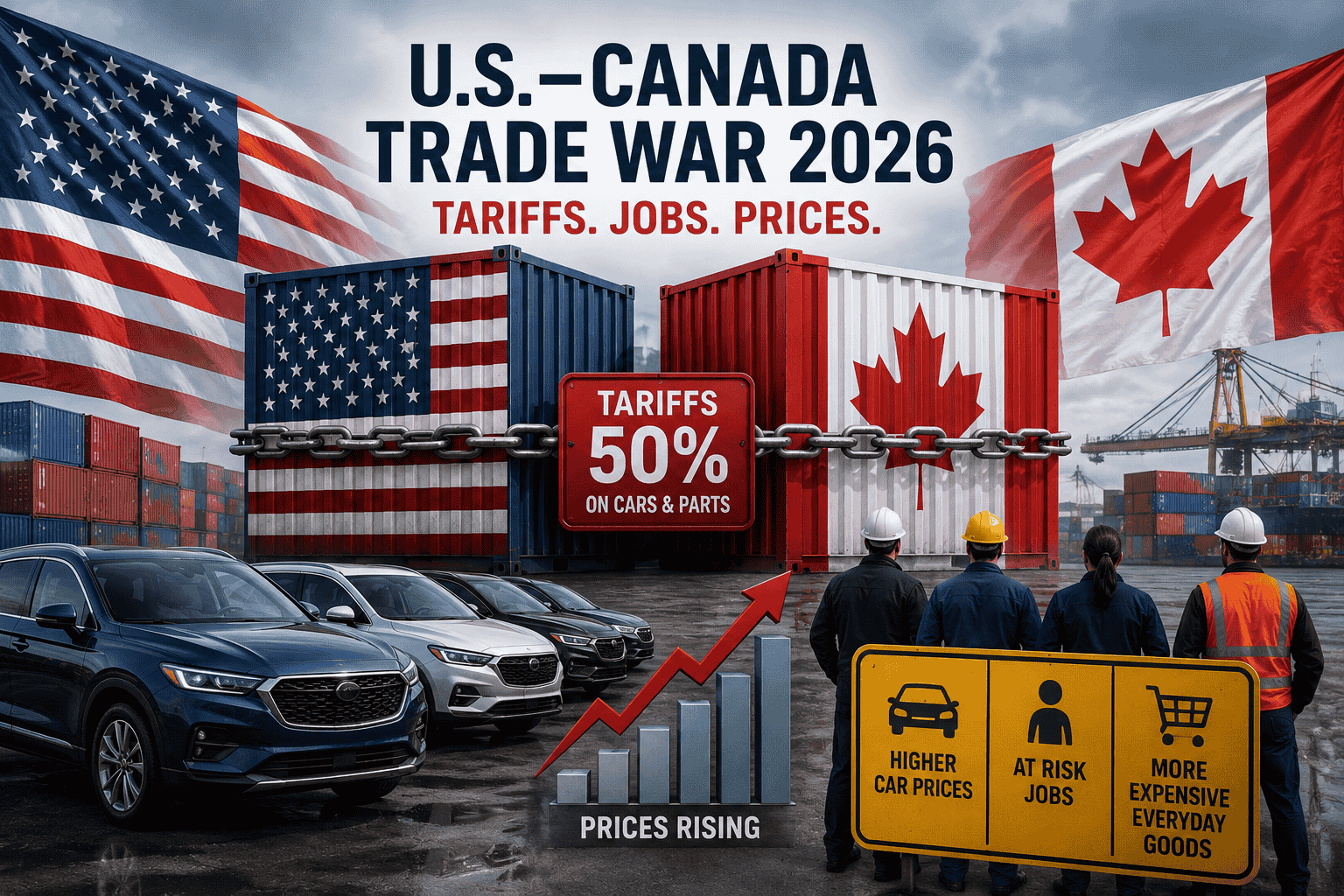
The latest escalation is particularly important for the automotive industry. President Donald Trump has announced plans to raise tariffs on Canadian cars, trucks, auto parts, and steel to 50% beginning January 1, 2027. This could put pressure on one of North America’s most integrated manufacturing networks.
The consequences could extend beyond Canada. American consumers could face higher vehicle prices, businesses could experience rising costs, and workers on both sides of the border could face uncertainty.
Why the US–Canada Trade War Relationship Matters
The United States and Canada have one of the world’s largest bilateral trading relationships. Their economies are deeply connected through manufacturing, energy, agriculture, transportation and retail.
In 2025, U.S. imports from Canada were worth approximately $383 billion. The two countries also conduct roughly $900 billion in annual trade across goods and services.
This means tariffs between Washington and Ottawa are different from tariffs imposed on a distant trading partner. Products often cross the border several times before reaching customers.
A vehicle assembled in the United States, for example, can contain engines, transmissions, metals and other components manufactured in Canada.
That makes the current trade dispute especially important for the American auto industry.
What are the New US–Canada trade War Tariffs?
The latest escalation followed the collapse of trade negotiations in August 2026.
The United States has imposed 50% tariffs on approximately $20 billion worth of Canadian goods, representing about 5% of Canada’s exports to the United States. The affected products include a variety of consumer and industrial goods.
However, the biggest potential change concerns automobiles and steel.
Trump has announced that tariffs on Canadian cars, trucks, auto parts and steel could rise to 50% from January 1, 2027.
These proposed measures would add significant pressure to Canadian manufacturers and could also create problems for American companies that depend on Canadian suppliers.
Why Cars Are at the Center of the Dispute
The North American auto industry operates as a highly integrated system.
Parts and materials can cross the US–Canada trade war border multiple times during production. A vehicle assembled in one country may depend on suppliers located across the border.
A 50% tariff can therefore affect much more than the final vehicle.
For example, if an American factory imports a Canadian-made component, the tariff increases the company’s cost. The manufacturer then has several choices: absorb the cost, negotiate with suppliers, find another source or increase the vehicle’s price.
Replacing established suppliers is not always easy.
Building a new supply chain can require new factories, equipment, transportation networks and certification processes. This means tariffs can create costs even when companies eventually move production.
How Tariffs Could Affect Car Prices
One of the biggest concerns for American consumers is higher vehicle prices.
A tariff is effectively an additional cost on imported goods. While companies do not always pass the entire cost directly to customers, a large tariff can create strong pressure for price increases.
Canadian-made vehicles entering the United States could become substantially more expensive if the proposed 50% tariff takes effect.
American manufacturers could also face higher costs because many US–Canada trade war vehicles rely on Canadian parts and materials.
The result could be higher prices for:
- New cars
- Trucks
- Replacement parts
- Repairs
- Commercial vehicles
- Some used vehicles
The impact will depend on how manufacturers restructure their supply chains and whether the tariffs remain in place.
Could American Auto Workers Be Affected?
Tariffs are designed partly to encourage companies to manufacture more products inside the United States.
That could create investment and employment opportunities in some American manufacturing communities.
However, the transition could also create job losses.
The US–Canada trade war affects auto industries are connected through factories, suppliers, transportation companies and dealerships. If production falls because components become more expensive, American factories could also experience reduced demand.
This creates a complicated situation.
Some American workers could benefit from increased domestic production, while others could be hurt by disrupted supply chains.
The overall employment impact will depend heavily on how long the tariffs remain in place.
Canada Is Preparing Retaliation
Canada has responded to the new American tariffs by preparing its own retaliatory measures.
Ottawa has indicated that it intends to respond dollar for dollar, with additional tariffs expected on selected American products.
Potentially affected industries include areas such as steel, dairy, electronics and other manufactured goods.
Retaliatory tariffs create another problem for American businesses.
A company exporting products to Canada could suddenly become less competitive because Canadian customers face higher prices.
This could reduce sales and put pressure on American manufacturers, farmers and exporters.
Small Businesses Could Feel the Pressure
Large corporations often have more resources to restructure supply chains, negotiate contracts and absorb temporary costs.
Small businesses have fewer options.
In a US–Canada trade war, companies importing Canadian materials may have to choose between paying the tariff, finding a more expensive alternative, or raising prices.
Restaurants, construction companies, retailers, manufacturers and transportation businesses could all face higher operating expenses depending on the products affected.
For small companies operating with narrow profit margins, even moderate cost increases can become significant.
What Could Happen to Consumer Prices?
The impact on prices could spread beyond cars.
Tariffs can increase the cost of imported products and materials, while retaliatory tariffs can make American exports more expensive in Canada.
Potentially affected products include:
- Automotive parts
- Steel and manufactured goods
- Building materials
- Food and agricultural products
- Consumer products
- Household goods
- Industrial equipment
Not every product will become dramatically more expensive. Companies may absorb part of the additional cost or find alternative suppliers.
However, if the trade war continues for an extended period, businesses may increasingly pass higher costs to consumers.
Housing Could Also Be Affected
The US–Canada trade war relationship includes important flows of construction materials.
Canadian lumber has historically played a major role in the American housing market.
Higher tariffs on Canadian building materials can increase costs for builders, contractors and developers.
Those costs can eventually influence the price of new homes and renovations.
At a time when housing affordability is already a major concern for many Americans, additional construction costs could create another challenge.
The Risk of Supply Chain Disruption
The biggest long-term concern may be supply-chain uncertainty.
Businesses need predictable costs to make investment decisions. When tariffs can change quickly, companies may delay factory expansions, hiring and major purchases.
Automakers could begin searching for alternative suppliers outside Canada.
That process could make North American manufacturing less efficient in the short term.
Companies may also increase inventories to protect themselves against future disruptions, adding storage and financing costs.
Three Possible Outcomes
1. A New Trade Agreement
The most positive outcome would be renewed negotiations.
If Washington and Ottawa reach an agreement, some tariffs could be reduced or removed. This would give businesses greater certainty and could ease pressure on prices.
2. A Long-Term Tariff War
If both governments maintain high tariffs and retaliation continues, businesses could face years of uncertainty.
Companies may gradually move supply chains away from Canada, potentially changing North American manufacturing patterns.
3. Escalation
The most damaging scenario would involve additional tariffs and restrictions on strategically important products.
Further escalation could increase prices, reduce trade and weaken investment on both sides of the border.
What Americans Should Watch
The most important developments over the coming months will include:
- Whether the proposed 50% auto tariffs take effect in January 2027
- Canadian retaliatory tariffs
- Vehicle prices
- Auto manufacturing employment
- Steel and aluminum costs
- Lumber prices
- Inflation data
- New US–Canada trade war negotiations
- Corporate decisions about manufacturing locations
- Changes to North American supply chains
These factors will determine whether the current dispute remains limited or develops into a much broader economic confrontation.
Conclusion
The US–Canada trade war in 2026 is becoming a major economic issue for both countries. The latest 50% tariffs on selected Canadian goods have already increased tensions, while the proposed 50% tariffs on Canadian automobiles, auto parts and steel from January 2027 could have a much wider impact.
For American consumers, the biggest concern is potentially higher prices for cars, parts, building materials and other products. For businesses, supply-chain disruption and uncertainty could become increasingly expensive.
At the same time, tariffs could encourage some companies to expand American manufacturing and create new domestic investment.
The final outcome will depend largely on whether Washington and Ottawa return to negotiations or continue escalating their trade dispute.
For now, one thing is clear: because the US–Canada trade war economies are so deeply connected, the US-Iran crisis of 2026 can affect far more than the border—it can influence American jobs, prices, businesses and consumers across the country.