Introduction: Is Wall Street Losing Its Appetite for AI Debt?
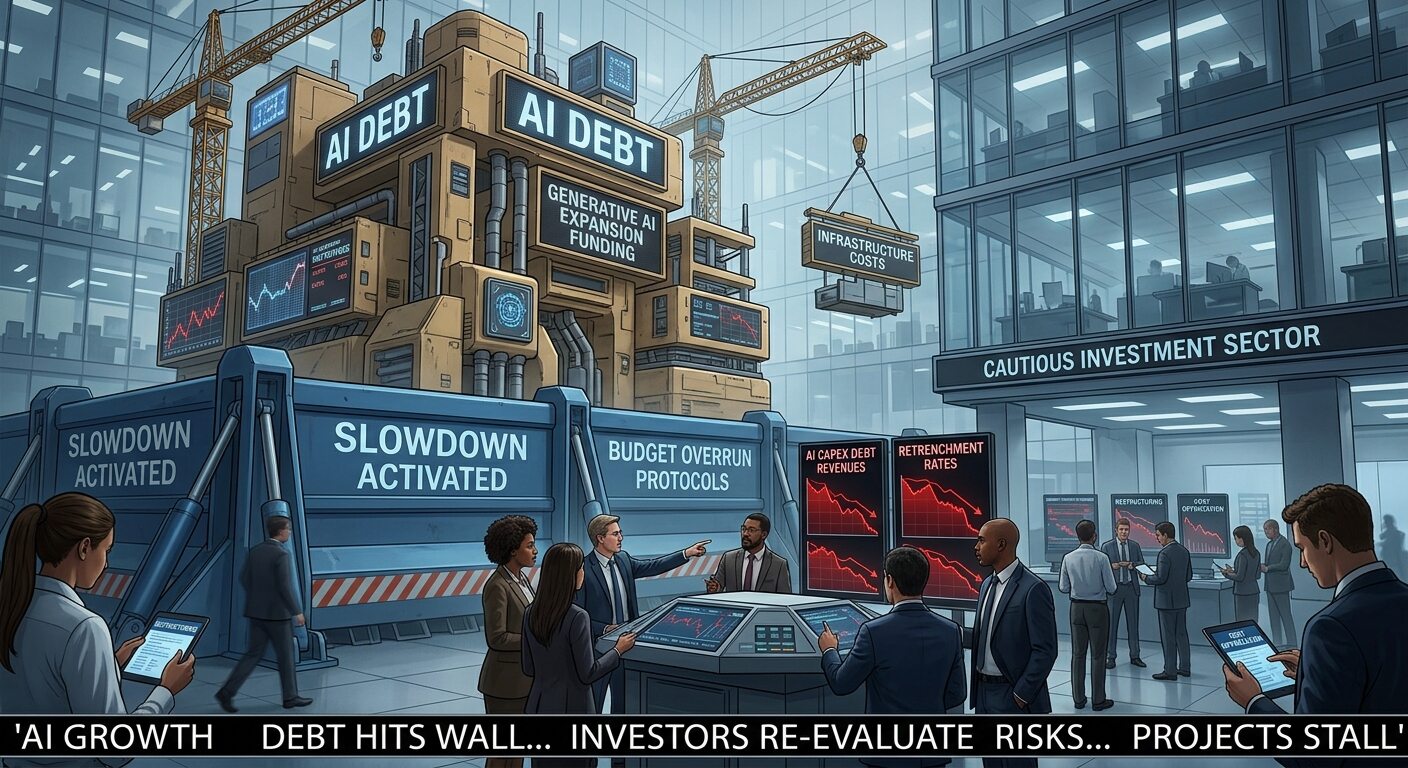
AI Debt Slowdown: Artificial intelligence has become one of the biggest investment themes of 2026, attracting enormous funding for advanced chips, cloud computing, data centers, and AI-powered applications. However, a recent slowdown in AI-related borrowing suggests that Wall Street is becoming more selective about financing the industry’s rapid expansion.
Global AI-related debt issuance dropped to approximately $23 billion in September, less than half the amount raised in August, according to reporting published on October 10. The decline follows a record financing peak in June, when companies raised approximately $113 billion for AI infrastructure and related investments.
This development raises an important question for investors: can technology companies generate enough revenue from artificial intelligence to justify their growing financial commitments?
The answer will influence corporate borrowing costs, technology valuations, infrastructure investment, and the future direction of financial markets.
Why Is AI-Related Borrowing Slowing in 2026?
1. The cost of building AI infrastructure is rising
Developing advanced AI systems requires more than software engineers and powerful algorithms. Companies must secure specialized processors, high-performance servers, data center capacity, cooling systems, and reliable electricity supplies.
These facilities require substantial upfront investment before they generate meaningful returns. Businesses increasingly use corporate bonds, bank loans, private credit, and other financing structures to cover these expenses.
According to reported Morgan Stanley figures, companies raised an estimated $466 billion in AI-linked debt during 2026 through September, compared with approximately $101 billion during the same period in 2025.
The rapid increase demonstrates how financing has become central to the AI industry’s expansion. It also explains why lenders are examining whether borrowers can support their debt through future earnings.
2. Investors want clearer evidence of profitability
AI companies frequently promise productivity improvements, lower operating costs, and new revenue opportunities. Yet the financial benefits do not always arrive as quickly as infrastructure spending.
A company may invest billions in computing capacity while customer adoption, pricing, and revenue growth remain uncertain.
Investors are therefore asking several critical questions:
- How quickly will AI investments generate measurable revenue?
- Can companies maintain profit margins as computing costs increase?
- Will customers pay enough for advanced AI services?
- Can future cash flow cover interest expenses and repayment obligations?
Businesses that provide established cloud services or have diversified revenue streams may be better positioned to answer these questions than speculative ventures with limited commercial traction.
3. Data center projects face practical obstacles
Financing is only one part of the AI infrastructure challenge. Developers must also secure land, electricity connections, equipment, permits, and community support.
Recent difficulties surrounding a major New Mexico data center project associated with Oracle and infrastructure investor Blue Owl have highlighted the financial consequences of construction delays and power constraints.
When a project is delayed, developers may continue paying financing costs before the facility can generate expected revenue. These delays can weaken investment returns and create pressure on lenders.
How the AI Debt Slowdown Could Affect Wall Street
Higher borrowing costs for riskier companies
When lenders become cautious, they may demand higher interest rates, stronger collateral, stricter loan conditions, or additional financial protections.
This can make AI infrastructure more expensive to build, particularly for companies without strong credit ratings or predictable revenue.
Established technology companies may retain access to capital, but smaller AI businesses could face greater difficulty securing funding on favorable terms.
Greater scrutiny of technology valuations
The AI investment boom has helped fuel enthusiasm for semiconductor companies, cloud providers, and technology infrastructure businesses. However, high valuations depend partly on expectations of future earnings growth.
If companies must spend more on infrastructure while generating lower-than-expected returns, investors may reassess how much they are willing to pay for future growth.
This does not mean every AI stock is overvalued. Instead, financial performance and the ability to convert AI demand into sustainable profits may become more important in determining which companies outperform.
Potential consequences for private credit
Private credit funds and institutional lenders have become important sources of financing for large infrastructure projects. Complex arrangements involving loans, equipment leases, and corporate guarantees can make it difficult to assess where financial risks ultimately sit.
A slowdown in new borrowing allows investors to review existing exposure, evaluate project assumptions, and demand more transparent financing structures.
Which Companies Could Be Better Positioned?
Not every AI-related business faces the same financial risks.
Companies with established customers, recurring revenue, strong balance sheets, and disciplined capital expenditure may be better equipped to withstand tighter credit conditions.
Potentially vulnerable businesses include highly leveraged infrastructure developers, speculative AI startups, and projects that depend on optimistic assumptions about future computing demand.
Investors should distinguish between companies selling essential infrastructure today and businesses relying primarily on uncertain future growth.
The distinction matters because demand for AI technology can remain strong even when some financing models become unsustainable.
What Does the AI Debt Slowdown Mean for Investors?
For investors, the current environment calls for more detailed financial analysis rather than simply abandoning the AI sector.
Examine cash flow, not just revenue growth
Rapid revenue growth can be encouraging, but it does not automatically mean a business is financially healthy. Investors should compare operating cash flow with capital expenditure, debt repayments, and interest costs.
Review debt maturity and financing terms
Companies with large repayment obligations may face greater pressure if interest rates remain elevated or refinancing becomes more expensive.
Investors should examine debt maturity schedules, borrowing costs, credit ratings, and whether financing depends on future projects meeting ambitious targets.
Evaluate the economics of AI infrastructure
Data centers and AI processors can create substantial economic value, but their profitability depends on utilization, pricing, electricity costs, equipment depreciation, and customer demand.
Projects with realistic revenue assumptions and reliable access to power may offer a stronger financial foundation than developments built around speculative demand forecasts.
These considerations are particularly important for institutional investors, fund managers, and lenders assessing exposure to the AI infrastructure market.
Is the AI Boom Coming to an End?
The September borrowing decline should not automatically be interpreted as the end of the AI boom.
Reported market data indicates that financing activity has fallen from its earlier peak, but companies continue pursuing major infrastructure projects and negotiating substantial financing packages.
The slowdown may instead mark a transition from abundant capital toward more selective investment.
During the early stages of a technological boom, investors may prioritize growth and market share. As the industry matures, attention often shifts toward profitability, cash generation, and financial discipline.
AI could follow a similar path. Businesses that demonstrate genuine productivity gains and sustainable demand may continue attracting investment, while weaker projects could struggle to secure affordable financing.
What Happens Next?
Three developments will help determine the direction of AI financing in the coming months.
First, corporate earnings: Investors will look for evidence that AI-related revenue and productivity gains justify infrastructure spending.
Second, credit conditions: Bond yields, lending standards, and investor demand will influence how easily companies can refinance existing obligations or fund new projects.
Third, infrastructure execution: Access to electricity, construction progress, equipment availability, and customer commitments will determine whether planned investments translate into productive assets.
Together, these factors will help reveal whether the current slowdown represents a temporary pause or a more lasting change in how Wall Street finances artificial intelligence.
Frequently Asked Questions
Why is AI-related borrowing slowing in 2026?
Investors are becoming more cautious about the enormous cost of AI infrastructure, uncertain returns, increasing debt exposure, and delays affecting some data center projects.
How much did AI-related debt issuance fall in September 2026?
Global AI-related debt issuance declined to approximately $23 billion in September, less than half August’s total, according to reported Morgan Stanley data.
Does the AI debt slowdown mean an AI bubble is about to burst?
Not necessarily. A decline in borrowing can reflect more selective financing rather than collapsing demand. The larger risk is that some companies may be unable to generate sufficient returns to justify their investments.
Which businesses could benefit from tighter AI financing?
Companies with strong cash flow, established customers, manageable debt, and proven AI-related revenue may be better positioned than highly leveraged businesses dependent on speculative growth.
What should investors monitor?
Investors should monitor operating cash flow, capital expenditure, debt maturities, borrowing costs, infrastructure delays, and evidence that AI products are generating sustainable commercial returns.
Conclusion
The AI debt slowdown is an important signal for global investors. After months of aggressive financing, lenders and financial institutions are paying closer attention to the risks associated with building the next generation of AI infrastructure.
Artificial intelligence may continue transforming industries, but technological potential alone cannot guarantee investment success.
For Wall Street, the next phase of the AI boom will increasingly depend on a fundamental financial question: Can companies turn enormous AI investments into sustainable profits and reliable cash flow?
Businesses that can demonstrate convincing answers may continue attracting capital. Those that cannot could face higher borrowing costs, tighter financing conditions, and greater pressure to rethink their expansion plans.