Rising oil prices are once again becoming a major challenge for businesses, investors and consumers as escalating Middle East tensions create uncertainty across global energy markets. The recent increase in crude prices has renewed concerns about inflation, borrowing costs and economic growth.
The combination of expensive energy, higher financing costs and geopolitical uncertainty is creating a difficult environment for companies across transportation, manufacturing, retail, agriculture, aviation and technology.
Why Oil Prices Are Rising
Oil markets are highly sensitive to geopolitical developments, particularly in regions that play an important role in global energy supplies.
Growing tensions in the Middle East have increased concerns about potential disruptions to crude production and transportation. Even the possibility of supply interruptions can push oil prices higher as traders and businesses prepare for tighter energy markets.
When companies expect oil prices to remain elevated, they often begin adjusting budgets, transportation contracts and production costs.
Higher Oil Prices Are Raising Business Costs
Oil affects much more than gasoline prices. It is an important input across the global economy.
When fuel becomes more expensive, trucking companies face higher operating costs. Airlines pay more for jet fuel, manufacturers face increased energy expenses, and logistics companies must spend more to move products.
Oil prices can also influence the cost of plastics, chemicals, packaging materials, and other petroleum-based products.
Businesses generally have three choices when costs increase:
- Absorb higher expenses and accept lower profit margins.
- Increase prices for customers.
- Reduce spending, production or hiring.
Each option can create additional pressure on businesses.
Inflation Is Becoming a Bigger Concern
Higher energy prices can contribute to broader inflation because energy is connected to almost every stage of the supply chain.
A manufacturer that pays more for electricity, fuel, and transportation may eventually increase the price of its products. Retailers can then pass some of those higher costs to consumers.
This creates a chain reaction:
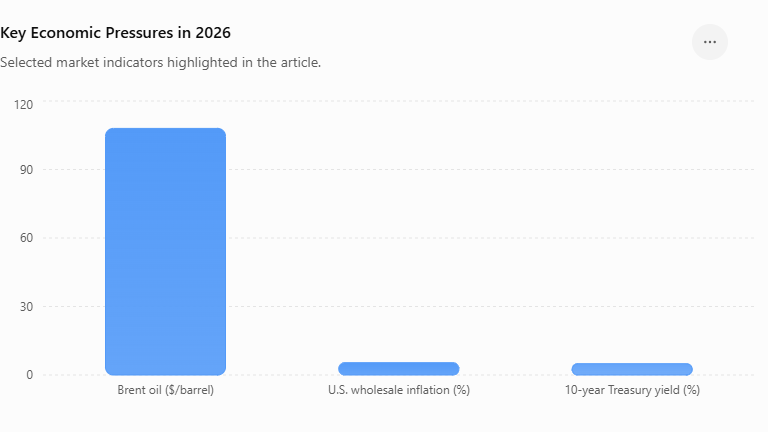
Higher oil prices → higher transportation costs → higher production costs → higher consumer prices → stronger inflation pressure.
If oil prices remain elevated for an extended period, inflation could become more difficult for central banks to control.
Treasury Yields Are Adding Another Problem
Businesses are facing another challenge at the same time: higher borrowing costs.
When Treasury yields rise, financing costs across the economy can also increase. Companies may have to pay more when refinancing existing debt or borrowing money for expansion.
Higher interest rates can affect decisions involving new factories, technology investments, acquisitions and hiring.
For companies carrying substantial debt, rising interest expenses combined with higher energy costs can put significant pressure on profitability.
Federal Reserve Faces a Difficult Decision
The oil-price surge creates a complicated situation for the Federal Reserve.
If inflation continues to rise, the central bank may need to maintain restrictive monetary policy for longer. However, higher interest rates can slow economic activity and make it more expensive for businesses and consumers to borrow.
This creates a difficult balancing act.
The Federal Reserve wants to keep inflation under control without causing unnecessary damage to economic growth. A prolonged increase in energy prices could make that challenge even more complicated.
Which Businesses Are Most Exposed?
Some industries are particularly vulnerable to higher oil prices.
Transportation
Trucking, shipping, and aviation companies are among the first businesses affected by rising fuel expenses. Higher operating costs can eventually result in increased transportation prices.
Manufacturing
Factories depend on energy and transportation throughout their supply chains. Higher costs can reduce profit margins and increase the price of finished goods.
Agriculture
Farmers depend heavily on fuel, machinery, fertilizers and transportation. Rising energy costs can therefore affect agricultural profitability and eventually influence food prices.
Retail
Retail businesses can face higher shipping, warehouse, and distribution costs. At the same time, consumers may become more cautious about spending because of inflation.
Construction and Real Estate
Higher borrowing costs can make construction projects more expensive and reduce demand for property. Developers may delay projects if financing becomes too costly.
Small Businesses Could Face Greater Pressure
Large corporations often have more financial resources and greater negotiating power with suppliers.
Small businesses typically have less flexibility.
A restaurant, delivery company, construction firm or local retailer may struggle to absorb sudden increases in fuel, transportation and financing costs.
Some businesses may respond by raising prices, reducing expenses or delaying expansion plans.
Global Businesses Face Additional Risks
The impact of higher oil prices extends far beyond the United States.
European and Asian businesses can also face higher energy and transportation expenses. Countries that depend heavily on imported energy may be particularly vulnerable.
For multinational companies, the situation creates additional uncertainty around currencies, consumer demand, supply chains, and international trade.
Businesses must therefore consider not only the direct cost of oil but also its potential impact on the wider global economy.
What Investors Are Watching
Investors are closely monitoring several factors as the oil market remains volatile.
Key areas include:
- Crude oil prices
- Middle East geopolitical developments
- Inflation data
- Treasury yields
- Federal Reserve policy
- Corporate earnings
- Consumer spending
- Global economic growth
If energy prices continue rising, investors may favor companies with strong balance sheets, stable cash flows, and the ability to pass higher costs to customers.
Companies with heavy debt burdens and weak pricing power could face greater pressure.
How Businesses Can Prepare
Companies cannot control geopolitical developments, but they can improve their ability to handle sudden cost increases.
Businesses can review energy consumption, diversify suppliers, improve logistics efficiency, and maintain stronger cash reserves.
Companies with significant debt can also review refinancing schedules and prepare for potentially higher interest expenses.
For many businesses, the goal is not simply to reduce costs but to build enough financial flexibility to survive periods of market volatility.
The Outlook for Oil Prices and Inflation
The direction of oil prices will depend heavily on geopolitical developments and the stability of global energy supplies.
If tensions ease and energy shipments return to normal, oil prices could decline and reduce inflationary pressure.
However, prolonged disruptions could keep energy prices elevated and create a more difficult environment for businesses, consumers and investors.
The longer high oil prices remain in the economy, the greater the risk that temporary energy inflation becomes a broader economic problem.
Conclusion
Rising oil prices are becoming an important economic challenge for businesses in 2026. Higher energy costs can increase transportation and production expenses while putting additional pressure on inflation and corporate profit margins.
At the same time, higher Treasury yields can increase borrowing costs and make business expansion more difficult.
For companies, the combination of higher energy costs, expensive financing and uncertain consumer demand could create a challenging business environment.
Businesses with strong balance sheets, efficient supply chains, pricing power and disciplined financial management may be better positioned to withstand continued economic uncertainty.