The global semiconductor industry has become one of the most important battlegrounds in the world economy. From artificial intelligence and smartphones to electric vehicles, military systems, and data centers, almost every major technology depends on semiconductors.
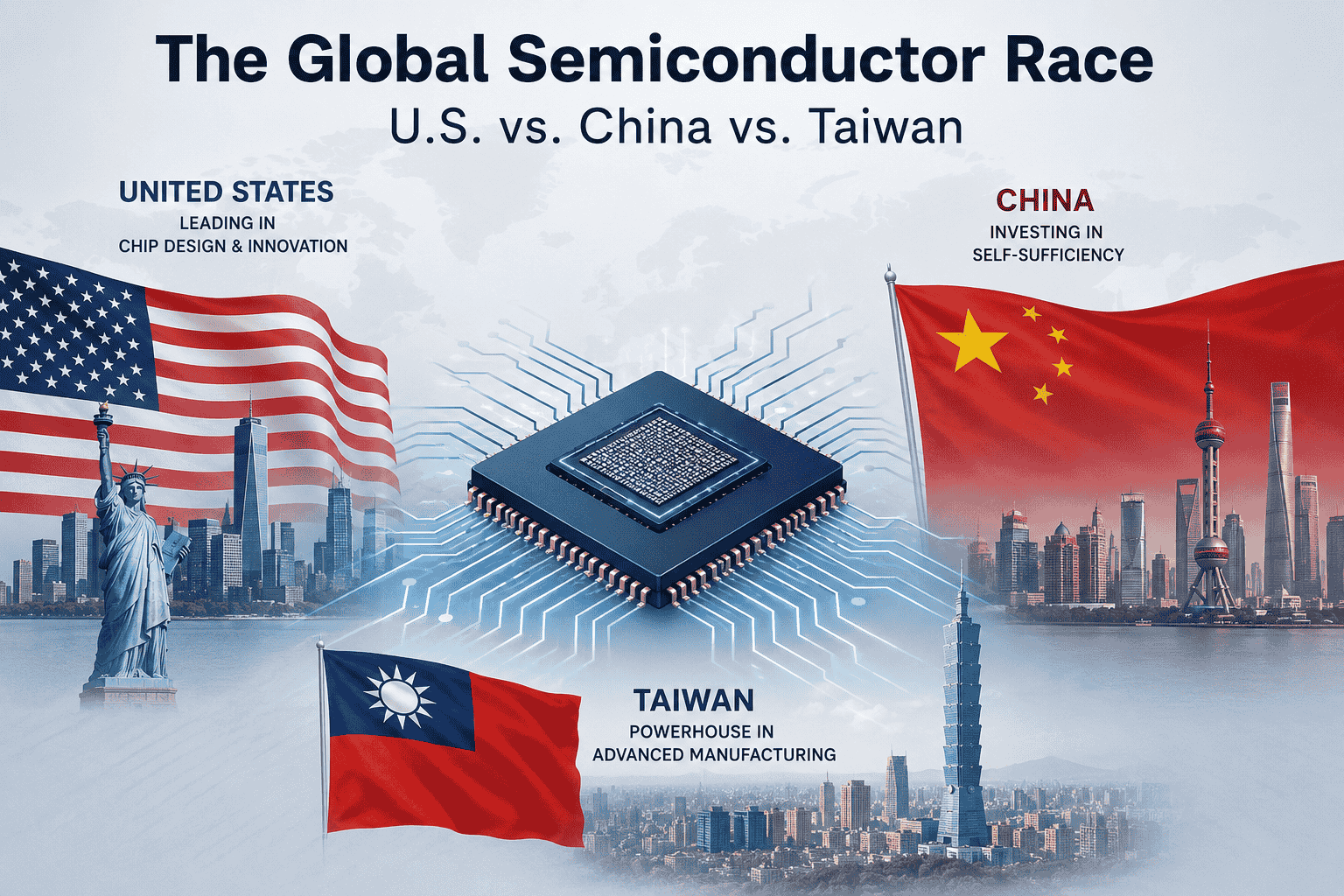
In 2026, the competition will intensify between the United States, China, and Taiwan. Each has a different advantage. The U.S. leads in chip design, artificial intelligence, and semiconductor technology. Taiwan remains the world’s most important center for advanced chip manufacturing, largely because of TSMC. China is rapidly expanding its domestic semiconductor industry as it attempts to reduce dependence on foreign technology.
The semiconductor race is therefore no longer simply a technology competition. It has become an economic, geopolitical and national-security issue.
Why Semiconductors Matter in 2026
Semiconductors are the foundation of the modern digital economy. They are required to operate AI systems, cloud infrastructure, automobiles, telecommunications networks, consumer electronics, and defense technologies.
The rapid growth of artificial intelligence has made advanced chips even more valuable. AI companies require powerful processors and specialized accelerators, while data centers require huge quantities of memory and networking components.
This has created a new wave of semiconductor investment around the world.
Governments are also trying to reduce dependence on foreign suppliers. The result is a global push toward domestic chip manufacturing, supply-chain diversification and technological independence.
The United States: Leader in Chip Design and AI
The United States remains one of the strongest players in the semiconductor ecosystem.
American companies have major positions in chip design, semiconductor software and artificial intelligence. Companies such as NVIDIA, AMD, Intel and Qualcomm have helped establish the U.S. as a technology powerhouse.
NVIDIA and the AI Chip Boom
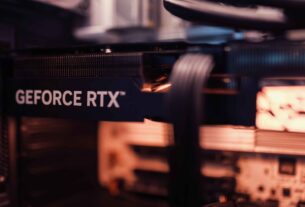
NVIDIA has become particularly important because its processors are widely used for AI training and inference.
The explosive growth of generative AI has transformed demand for high-performance computing chips. As technology companies build increasingly powerful AI models, demand for advanced processors, high-bandwidth memory and networking equipment continues to increase.
This gives the U.S. a major advantage beyond manufacturing: it controls important parts of the technology architecture powering the AI economy.
America’s Push for Domestic Manufacturing
The United States is also attempting to rebuild its domestic semiconductor manufacturing capacity.
Government incentives and private investment have encouraged companies to construct and expand semiconductor facilities across the country.
TSMC is also expanding its U.S. presence, particularly in Arizona. These investments are designed to bring more advanced chip production closer to American technology companies and reduce supply-chain risks.
However, the U.S. still faces challenges, including high construction costs, a shortage of specialized workers and the difficulty of developing an entire semiconductor ecosystem domestically.
Taiwan: The Center of Advanced Chip Manufacturing
Taiwan occupies a unique position in the global semiconductor industry.
Its most important company is Taiwan Semiconductor Manufacturing Company, or TSMC.
TSMC operates the world’s leading dedicated semiconductor foundry business and manufactures advanced chips for some of the biggest technology companies.
Why TSMC Is So Important
TSMC does not primarily compete by designing consumer products. Instead, it manufactures chips designed by other companies.
This business model has made Taiwan a critical manufacturing hub for the global technology industry.
Advanced processors used in AI systems, smartphones and high-performance computing increasingly depend on TSMC’s manufacturing capabilities.
Taiwan’s semiconductor strength is therefore sometimes described as a strategic “silicon shield.” Any major disruption to Taiwan’s chip industry could affect technology companies and manufacturers worldwide.
TSMC Expands Beyond Taiwan
While Taiwan remains TSMC’s manufacturing center, the company is expanding internationally.
TSMC is investing heavily in the United States and Japan while continuing to expand advanced production capacity in Taiwan.
In 2026, Taiwanese companies are also planning additional major investment in the United States, reflecting growing cooperation between the two semiconductor ecosystems.
The strategy could make global chip production more geographically diversified while keeping Taiwan at the heart of advanced manufacturing.
China: Building Semiconductor Self-Sufficiency
China is taking a different approach.
Beijing wants to reduce the country’s dependence on American and other foreign semiconductor technologies.
China has invested enormous resources in domestic chip manufacturing, semiconductor equipment, memory technology and research.
China’s Domestic Chip Industry
Companies including SMIC, Huawei-related technology businesses, CXMT and YMTC are working to strengthen China’s semiconductor capabilities.
China has made notable progress in memory chips. Domestic manufacturers are gaining market share in areas such as DRAM and NAND memory.
Although China still faces challenges in accessing some of the world’s most advanced manufacturing equipment, its growing domestic ecosystem is becoming increasingly important.
China’s Biggest Advantage
China’s biggest advantage is scale.
The country has a huge electronics manufacturing industry, enormous domestic demand and a large industrial base.
This gives Chinese semiconductor companies a significant market in which to develop and commercialize their technologies.
The long-term goal is not necessarily to replace every foreign technology immediately. Instead, China is attempting to build a semiconductor ecosystem that can operate with far less dependence on Western suppliers.
The U.S.-China Semiconductor War
The competition between Washington and Beijing has become one of the defining technology conflicts of the decade.
The United States has introduced restrictions designed to limit China’s access to certain advanced semiconductor technologies, manufacturing equipment and high-performance computing capabilities.
The reasoning is partly economic and partly related to national security.
China, meanwhile, is responding by accelerating domestic semiconductor development.
This has created a cycle:
U.S. restrictions → Chinese investment → domestic innovation → stronger competition → tighter technology controls.
The result is a semiconductor industry that is becoming increasingly divided between competing technology ecosystems.
Why Taiwan Is Caught in the Middle
Taiwan sits at the center of the semiconductor competition because of its enormous importance to advanced chip manufacturing.
The island has close economic and technology relationships with the United States while maintaining deep economic connections with the broader Asian supply chain.
At the same time, tensions between China and Taiwan create additional risks for global businesses.
A serious disruption to semiconductor manufacturing or transportation around Taiwan could affect industries ranging from automobiles and smartphones to AI data centers and defense technology.
That is why companies are increasingly looking for alternative manufacturing locations.
AI Is Changing the Semiconductor Race
Artificial intelligence has made the semiconductor competition even more intense.
Traditional computing already required large numbers of chips, but modern AI systems require massive computing infrastructure.
AI data centers need:
- High-performance GPUs
- AI accelerators
- CPUs
- High-bandwidth memory
- Networking processors
- Advanced storage
- Power-management chips
This creates opportunities throughout the semiconductor supply chain.
The companies that control advanced chips and manufacturing capacity could therefore benefit enormously from the continued expansion of AI.
The Global Semiconductor Supply Chain Is Changing
The future semiconductor industry is unlikely to depend on one country alone.
The U.S. is expanding domestic production. Taiwan is increasing overseas manufacturing. China is developing domestic alternatives. South Korea remains a major force in memory and advanced chips, while Japan and Europe are strengthening their semiconductor industries.
This could create a more diversified supply chain.
However, diversification also comes with higher costs. Building semiconductor fabs requires enormous amounts of capital, highly trained workers, specialized equipment and reliable supplies of electricity and water.
For companies, supply-chain security may increasingly become more important than simply finding the cheapest manufacturing location.
Who Is Winning the Semiconductor Race?
There is no simple winner.
United States
Strengths:
- AI technology
- Chip design
- Semiconductor software
- Research and development
- Major technology companies
Weaknesses:
- Limited domestic manufacturing compared with its historical position
- High production costs
- Skilled-worker shortages
Taiwan
Strengths:
- Advanced chip manufacturing
- TSMC
- Highly developed semiconductor ecosystem
- Strong engineering expertise
Weaknesses:
- Geopolitical risks
- Heavy concentration of advanced manufacturing
China
Strengths:
- Massive manufacturing ecosystem
- Large domestic market
- Government support
- Rapid investment in semiconductor technology
Weaknesses:
- Restrictions on advanced foreign technology
- Challenges obtaining cutting-edge manufacturing equipment
- Gap with the leaders in the most advanced chip production
What the Semiconductor Race Means for Businesses
The semiconductor competition will have consequences far beyond technology companies.
Automakers, smartphone manufacturers, cloud providers and industrial businesses all depend on reliable chip supplies.
Businesses may increasingly need to maintain multiple suppliers and manufacturing locations.
This could raise production costs but also reduce the risk of sudden shortages.
For investors, semiconductor companies could remain attractive because AI, cloud computing, robotics and electric vehicles are all increasing demand for advanced chips.
However, investors also need to consider geopolitical risk, export restrictions, trade policies and the enormous cost of semiconductor expansion.
The Future of the Global Semiconductor Industry
The semiconductor industry is entering a new era.
The old model focused heavily on efficiency and global specialization. The new model places much greater emphasis on security, resilience and strategic independence.
The United States will continue investing in domestic manufacturing and AI technology.
Taiwan is likely to remain the center of advanced chip manufacturing while expanding its international footprint.
China will continue investing heavily in semiconductor self-sufficiency.
Meanwhile, other countries will attempt to capture parts of the growing semiconductor market.
The result could be a world where semiconductor production is more geographically diversified but also more expensive and politically divided.
Conclusion
The global semiconductor race between the U.S., China and Taiwan is shaping the future of technology, artificial intelligence and international business.
The United States has enormous strength in chip design, AI and technology innovation. Taiwan remains indispensable because of its advanced manufacturing capabilities and TSMC. China has the scale, investment and determination to build a more independent semiconductor ecosystem.
The competition will not be decided by one company or one technology.
It will be determined by who can secure the complete semiconductor ecosystem—from research and chip design to manufacturing, equipment, materials, talent and global distribution.
As AI becomes more powerful and digital infrastructure expands, semiconductors will become even more strategically important.
The chip race is therefore not just a technology story. It is a race for economic and technological power in the 21st century.
Frequently Asked Questions (FAQs)
1. Why are semiconductors important in the global economy?
Semiconductors power smartphones, computers, AI systems, automobiles, data centers, telecommunications equipment and many modern industrial technologies. They are essential to the digital economy.
2. Is the U.S. ahead of China in semiconductor technology?
The U.S. maintains major advantages in chip design, AI computing, semiconductor software and research. China, however, is rapidly expanding domestic manufacturing and investing heavily in semiconductor independence.
3. Why is Taiwan so important to the semiconductor industry?
Taiwan is home to TSMC, one of the world’s most important advanced semiconductor manufacturers. A large portion of the world’s most advanced chips depends on Taiwanese manufacturing capabilities.
4. What is TSMC?
TSMC, or Taiwan Semiconductor Manufacturing Company, is a leading semiconductor foundry that manufactures chips designed by technology companies around the world.
5. Why is China investing heavily in semiconductors?
China wants to reduce its dependence on foreign semiconductor technology and protect its technology and manufacturing industries from international trade restrictions.
6. How is AI affecting the semiconductor industry?
AI requires enormous amounts of computing power. This is increasing demand for GPUs, AI accelerators, high-bandwidth memory, networking chips and advanced semiconductor manufacturing.
7. Could the semiconductor race affect consumers?
Yes. Semiconductor shortages or higher manufacturing costs can affect the prices and availability of smartphones, cars, computers, electronics and other products.
8. Will the U.S. become independent from Taiwan for advanced chips?
The U.S. is increasing domestic production, including major investments by TSMC and other manufacturers. However, creating a completely independent semiconductor ecosystem is extremely difficult and will take years.
9. Who is likely to dominate the semiconductor industry in the future?
There may not be a single winner. The U.S., Taiwan, China, South Korea, Japan and other regions are likely to dominate different parts of the semiconductor ecosystem.
10. Why is the semiconductor race important for investors?
Semiconductors are at the center of AI, cloud computing, robotics, electric vehicles, and advanced technology. Changes in chip demand, manufacturing capacity, and geopolitical policies can therefore have major effects on technology companies and financial markets.