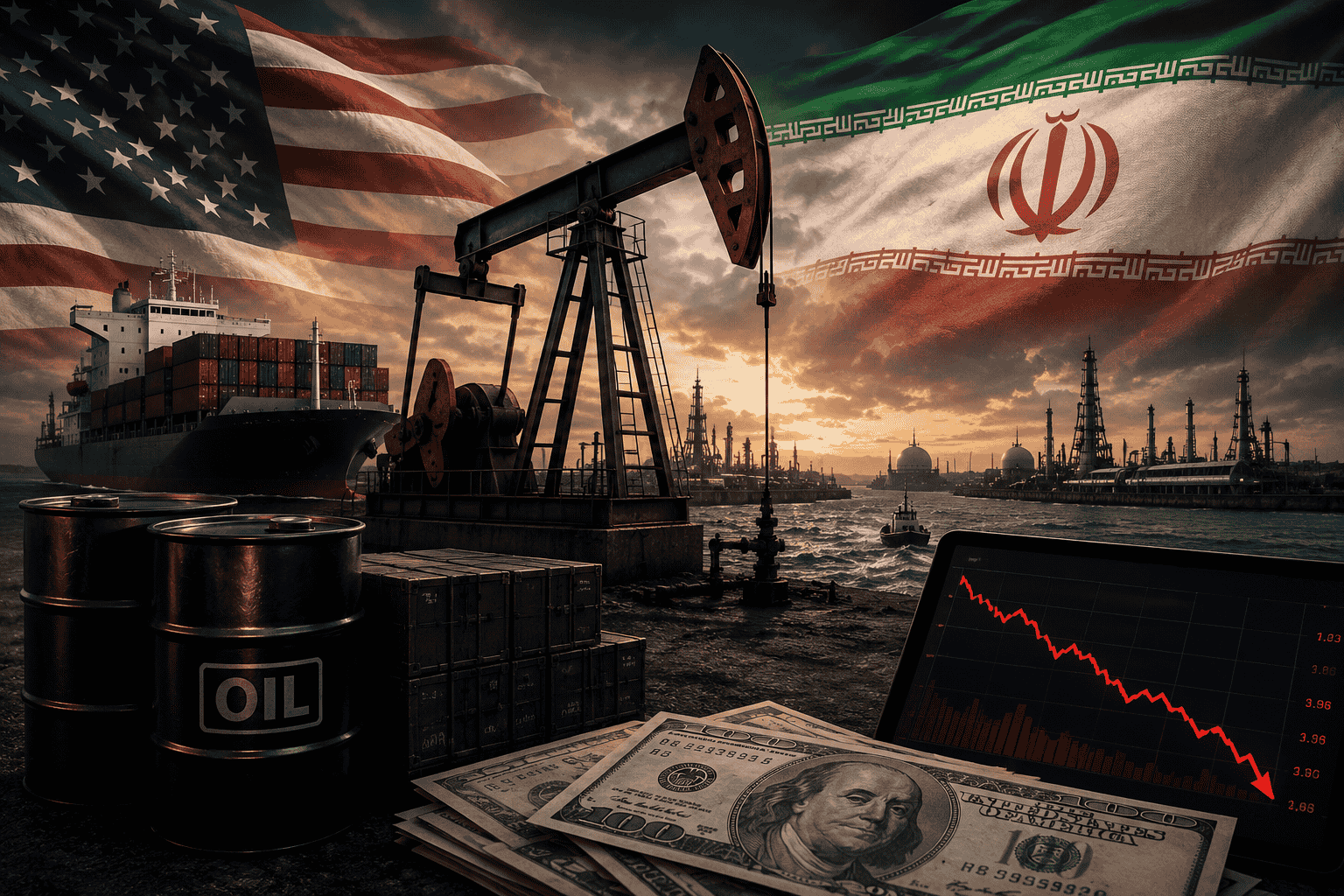
Introduction
The US-Iran conflict in 2026 has become one of the most important geopolitical and economic developments of the year. What began as a major confrontation between Washington and Tehran has developed into a wider crisis involving energy supplies, international shipping, sanctions, trade, inflation, and financial markets.
The Strait of Hormuz remains at the center of the crisis. The narrow waterway is one of the world’s most important energy routes, connecting the Persian Gulf with international shipping lanes. Disruptions in the strait have significantly reduced maritime traffic and increased concerns about global oil and gas supplies.
As of August 20, 2026, Brent crude had climbed to around $94.60 per barrel, marking a significant increase as markets reacted to continuing tensions and uncertainty surrounding shipping through Hormuz. West Texas Intermediate crude was trading in the mid-$80s. Oil prices have now become one of the clearest indicators of how geopolitical developments are affecting the global economy.
At the same time, the United States is preparing additional economic pressure on Iran, while Tehran continues to reject Washington’s demands. The combination of military tension, sanctions, disrupted shipping, and uncertain diplomacy has created a complicated environment for governments, businesses, investors, and consumers.
What Is Happening Between the US and Iran?
Relations between the United States and Iran have deteriorated sharply during 2026.
The US-Iran Conflict has involved military confrontation, economic restrictions, sanctions, shipping disruptions, and disagreements over the future of the Strait of Hormuz.
On August 20, 2026, US officials announced plans for what Treasury Secretary Scott Bessent described as the “toughest sanctions in history” against Iran. US President Donald Trump also threatened serious economic consequences for countries that provide Iran with economic support.
Iran has strongly rejected the latest American pressure and has described the new sanctions as an attack on its economy.
Diplomatic efforts have continued, including discussions involving regional intermediaries, but negotiations have failed to produce a durable solution to the wider US-Iran Conflict.
This uncertainty is particularly important for financial markets because investors are attempting to determine whether the crisis will escalate, continue at its current level, or move toward a diplomatic settlement.
Why the Strait of Hormuz Is So Important
The Strait of Hormuz is a narrow maritime passage between Iran and Oman.
Despite its relatively small geographic size, it plays an enormous role in the global economy.
Before the current crisis, roughly one-fifth of global petroleum consumption moved through the waterway. Millions of barrels of crude oil and petroleum products normally pass through the strait every day, along with significant quantities of liquefied natural gas.
The current disruption has sharply reduced shipping activity.
Recent tracking indicated that only a small number of commodity vessels were passing through the waterway during some periods, compared with normal traffic levels.
This is important because alternative routes cannot completely replace the capacity of Hormuz.
Some Gulf producers have pipelines that can bypass the strait, but those systems have limited capacity compared with the enormous volume normally transported by sea.
Consequently, prolonged disruption could create significant pressure on international energy markets.
Oil Prices Rise as Supply Risks Increase
Oil markets react quickly to geopolitical uncertainty.
The US-Iran conflict has created a substantial geopolitical risk premium in crude prices.
On August 20, Brent crude reached approximately $94.60 per barrel, while West Texas Intermediate remained around the mid-$80 range.
The increase reflects concerns about the possibility of continued supply disruptions.
The impact of higher oil prices can spread through almost every part of the economy.
Transportation
Airlines, shipping companies, trucking businesses, and logistics providers depend heavily on fuel.
Higher oil prices therefore increase transportation expenses.
Manufacturing
Energy is an important input for factories and industrial operations.
Higher energy costs can raise the price of producing:
- Chemicals
- Plastics
- Industrial equipment
- Construction materials
- Consumer products
Consumer Prices
Businesses may eventually transfer higher operating expenses to consumers.
This can increase inflation, particularly if energy prices remain elevated for several months.
How the US-Iran Conflict Is Affecting Global Trade
The economic impact extends far beyond oil.
International shipping companies are facing increased security concerns around the Middle East. When vessels avoid dangerous routes, they may need to take longer journeys or wait for safer conditions.
That can increase:
- Shipping costs
- Insurance premiums
- Fuel consumption
- Delivery times
- Inventory costs
Companies that depend on just-in-time supply chains are particularly vulnerable.
For example, manufacturers that receive raw materials from overseas may have to maintain larger inventories to protect against delivery delays.
This can increase operating costs and reduce profit margins.
The crisis, therefore, demonstrates how the geopolitical US-Iran Conflict can affect businesses thousands of miles away from the actual US-Iran Conflict zone.
Impact on Asian Economies
Asian economies are among the most exposed to the current energy crisis.
Countries including China, India, Japan, and South Korea are major energy consumers and depend significantly on imported oil and gas.
Higher energy prices can increase production and transportation costs throughout the region.
China is particularly important because it is a major buyer of Iranian crude. More than 80% of Iran’s exported oil has been going to China, according to recent estimates.
This creates an additional complication for US sanctions.
Washington is attempting to increase economic pressure on Tehran while also warning countries and companies that continue doing business with Iran.
For Chinese businesses, this creates a difficult balance between maintaining energy supplies and managing potential exposure to US sanctions.
Effects on Europe
Europe may not depend on the Strait of Hormuz to the same degree as some Asian economies, but European businesses are still exposed to higher global energy prices.
Oil is traded through international markets, meaning a supply disruption in the Middle East can affect prices worldwide.
Higher energy costs can lead to:
- More expensive transportation
- Higher manufacturing costs
- Increased import prices
- Greater inflationary pressure
- Reduced consumer spending
European policymakers therefore have to monitor the US-Iran Conflict closely.
If energy prices remain high for an extended period, central banks could face a difficult situation in which inflation remains elevated while economic growth slows.
Developing Economies Face Greater Risks
Emerging and developing economies can be particularly vulnerable to energy shocks.
Many developing countries depend heavily on imported fuel, meaning higher international oil prices can quickly increase domestic costs.
The consequences can affect:
- Electricity
- Transportation
- Agriculture
- Food distribution
- Manufacturing
- Public services
Higher fuel costs can also increase food prices because farmers, transport companies, wholesalers, and retailers all depend on energy.
Countries with weaker currencies may experience additional pressure because oil is generally purchased in US dollars.
As a result, the US-Iran conflict could create significant economic challenges for countries that have limited financial resources to absorb higher energy costs.
Inflation Could Become a Global Concern
One of the most important economic risks is renewed inflation.
Energy is connected to almost every major sector of the global economy.
The potential chain reaction is straightforward:
US-Iran tensions → Shipping disruption → Higher oil prices → Higher transportation costs → Higher production costs → Higher consumer prices
If the disruption is temporary, the inflationary impact could remain limited.
However, a prolonged crisis could create more serious problems.
Central banks may have to choose between fighting inflation and supporting economic growth.
This is particularly challenging because higher interest rates can slow economic activity, while lower rates can make inflation harder to control.
A prolonged energy shock could therefore increase concerns about stagflation, a combination of weak economic growth and persistent inflation.
Financial Markets React to Geopolitical Uncertainty
Financial markets are also responding to developments between the US and Iran.
When geopolitical risks increase, investors often become more cautious.
This can lead to:
- Greater stock-market volatility
- Higher oil prices
- Currency fluctuations
- Increased demand for safe-haven assets
- Higher risk premiums
Energy companies can benefit from higher crude prices, while airlines, transportation companies, manufacturers, and other energy-intensive businesses may face higher expenses.
The longer the crisis continues, the more significant these differences could become across industries.
Impact on the United States
The United States is less dependent on Middle Eastern oil than many other major economies because of its significant domestic energy production.
However, American consumers are still affected by international oil prices.
A rise in global crude prices can increase:
- Gasoline prices
- Transportation costs
- Manufacturing expenses
- Inflation expectations
US energy producers may benefit from higher oil prices, but other parts of the economy can experience increased costs.
The US government also faces the challenge of balancing military pressure, sanctions, diplomacy, energy security, and global economic stability.
New US Economic Pressure on Iran
Economic sanctions have become a major part of Washington’s strategy.
The latest US approach is focused heavily on restricting Iran’s access to international commerce and financial resources.
The United States has warned that countries helping Iran economically could face consequences.
This strategy could affect international companies involved in:
- Iranian oil
- Shipping
- Banking
- Trade
- Energy services
- Financial transactions
For businesses, compliance with sanctions is becoming increasingly important.
Companies must carefully examine their international transactions to avoid violating changing regulations.
What Could Happen Next?
The future of the US-Iran conflict remains uncertain.
Several scenarios are possible.
Diplomatic De-escalation
A successful agreement could allow shipping through Hormuz to gradually return to normal.
This could push oil prices lower and reduce pressure on global trade.
Prolonged US-Iran Conflict
If negotiations continue to fail, restrictions on shipping and energy could remain in place.
Oil prices could remain elevated, while businesses face continuing supply-chain uncertainty.
Wider Regional Escalation
A broader US-Iran Conflict could threaten additional shipping routes and energy infrastructure.
Such an outcome could create a much larger shock for the global economy.
The duration and geographic expansion of the crisis will ultimately determine its economic impact.
What Businesses Should Watch
Companies should closely monitor several developments during the coming weeks.
Oil Prices
Sustained prices above $90 per barrel could increase operating expenses for many industries.
Strait of Hormuz Traffic
A return toward normal shipping levels could reduce energy-market pressure.
Continued disruption would signal greater supply risks.
US Sanctions
New restrictions could affect companies that conduct business with Iranian entities.
Shipping Costs
Higher insurance and freight costs could increase the price of imported goods.
Supply Chains
Businesses should identify alternative suppliers and transportation routes to reduce exposure to geopolitical disruptions.
Conclusion
The US-Iran conflict in 2026 has developed into an economic issue with global consequences.
The Strait of Hormuz remains the central concern because of its importance to international energy transportation. Disrupted shipping has increased uncertainty, while Brent crude reached approximately $94.60 per barrel on August 20, demonstrating how strongly markets are reacting to the crisis.
The US-Iran Conflict is affecting more than oil.
It is influencing shipping costs, international trade, inflation, investment decisions, supply chains, and economic policy around the world.
The ultimate impact will depend on whether diplomatic negotiations succeed, whether shipping through Hormuz returns to normal, and whether the US-Iran Conflict escalates or moves toward de-escalation.
For businesses and investors, the crisis provides an important lesson: geopolitical events can quickly become economic events.
As Washington and Tehran remain locked in confrontation, the global economy will continue watching oil prices, shipping activity, sanctions, and diplomatic negotiations closely. The outcome could influence energy markets and international trade well beyond the Middle East