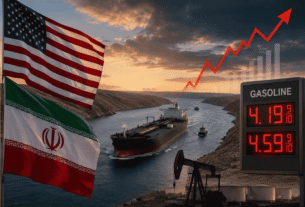
Introduction
The global business environment is undergoing one of its biggest transformations in decades. In 2026, companies are no longer making decisions based only on consumer demand, costs, and competition. Artificial intelligence, tariffs, geopolitical tensions, and supply-chain security have become central factors in corporate strategy.
Businesses are investing heavily in AI while simultaneously dealing with changing trade policies, higher geopolitical risks, and pressure to make supply chains more resilient. At the same time, competition between major economies is influencing where companies manufacture products, source technology, and invest capital.
This new environment is creating significant challenges, but it is also opening opportunities for companies that can adapt quickly.
AI Is Becoming a Core Business Strategy
Artificial intelligence has moved beyond being a technology experiment. In 2026, companies across finance, manufacturing, retail, healthcare, logistics, and professional services are integrating AI into everyday operations.
Businesses are using AI to automate repetitive tasks, analyze large amounts of data, improve customer service, forecast demand, and develop products faster. Generative AI and increasingly autonomous AI systems are also changing how employees interact with software.
The biggest change is that companies are now viewing AI as a competitive advantage rather than simply an IT investment.
Organizations that successfully integrate AI can potentially reduce operating costs and increase productivity. However, the enormous investment required for computing infrastructure, data centers, chips, and specialized talent is also creating financial pressure.
For business leaders, the question is no longer whether to use AI. It is increasingly about where AI creates measurable value and how quickly that value can be delivered.
Tariffs Are Changing Corporate Supply Chains
Tariffs have become another major force shaping the business landscape in 2026.
For years, multinational companies built global supply chains around efficiency and low production costs. Today, that strategy is being reconsidered as governments introduce tariffs, export restrictions, and other trade measures for economic and national-security reasons.
Companies that depend heavily on imported components can face higher costs when tariffs increase. Those costs can eventually influence product prices, profit margins and investment decisions.
As a result, businesses are exploring alternative manufacturing locations and suppliers. Countries across Southeast Asia, India and other emerging markets are increasingly important in global supply-chain strategies.
The goal is not necessarily to abandon existing manufacturing centers. Instead, many companies are pursuing a “China plus one” or multi-country strategy to reduce dependence on a single market.
Geopolitics Is Becoming a Boardroom Issue
Tariffs and geopolitical risk have moved from government policy departments into corporate boardrooms.
The relationship between the United States and China remains particularly important for technology, manufacturing, energy, and international investment. Meanwhile, conflicts and tensions in other regions can affect shipping routes, commodity prices, and access to critical resources.
For businesses, geopolitical uncertainty can make long-term planning much more difficult.
A company may have a profitable market today but face new export restrictions or sanctions tomorrow. Similarly, a supply route that has worked for years can suddenly become more expensive or unreliable.
This means corporate executives increasingly need to evaluate geopolitical risks alongside traditional business factors such as revenue growth and profitability.
Supply-Chain Resilience Is More Important Than Ever
The traditional business model prioritized efficiency. The 2026 model increasingly prioritizes resilience.
Companies are building larger supplier networks, increasing inventory buffers and developing alternative sources for critical materials.
Semiconductors are a particularly important example. Modern industries depend on advanced chips for everything from smartphones and automobiles to data centers and AI systems.
The growing importance of AI is also increasing demand for chips, data-center equipment and electricity. This creates opportunities for semiconductor manufacturers, infrastructure providers and countries seeking to attract advanced technology investment.
Businesses that can secure reliable access to critical components may gain an advantage over competitors operating with more fragile supply chains.
Companies Are Rethinking Globalization
Globalization is not disappearing, but it is changing.
Instead of building one highly integrated global production system, companies are increasingly developing regional strategies. North America, Europe and Asia are becoming more important as individual production and consumption hubs.
This trend can increase costs, but it may reduce exposure to sudden disruptions.
Companies are also paying greater attention to political relationships between countries when choosing locations for factories, warehouses and technology infrastructure.
The result is a business world where economic efficiency and geopolitical security must increasingly work together.
AI and Employment Are Creating New Challenges
AI is also transforming the workforce.
Automation can help companies accomplish more with fewer resources, but it is raising concerns about job displacement and changing skill requirements.
Some traditional administrative, customer-service, marketing and programming tasks are becoming increasingly automated. At the same time, demand is growing for employees who can work with AI systems, analyze data and manage advanced technology.
This means businesses are likely to place greater emphasis on employee training and reskilling.
The companies that benefit most from AI may not simply be those that eliminate the most jobs. They may be those that combine AI with human expertise to increase productivity.
The Cost of Doing Business Is Changing
The combination of tariffs, AI investment, energy requirements and geopolitical uncertainty is also affecting corporate costs.
AI infrastructure requires enormous amounts of computing power and electricity. Manufacturing diversification can increase production expenses. Tariffs can raise the price of imported materials. Geopolitical disruptions can increase transportation and insurance costs.
Businesses therefore face a difficult balancing act.
They must invest for future growth while protecting profitability in an uncertain economic environment.
This is encouraging companies to become more selective about capital spending. Investments increasingly need to demonstrate clear strategic value.
New Opportunities Are Emerging
Despite the challenges, the new business landscape is creating significant opportunities.
AI infrastructure, cybersecurity, robotics, semiconductors, renewable energy, logistics, and supply-chain technology are attracting strong corporate attention.
Emerging manufacturing markets can also benefit as companies diversify production.
For entrepreneurs, this creates opportunities to provide specialized services that help larger companies manage complexity. Businesses offering AI implementation, cybersecurity, logistics optimization, compliance and supply-chain management could see increasing demand.
The companies that succeed may be those that identify these structural changes early.
What Businesses Should Expect for the Rest of 2026
The remainder of 2026 is likely to remain highly competitive and unpredictable.
Companies will continue balancing AI investment against financial discipline while monitoring tariffs and geopolitical developments. Supply-chain diversification will remain an important corporate strategy, particularly for industries dependent on semiconductors, energy and critical minerals.
At the same time, AI competition between major technology ecosystems could accelerate.
Business leaders will therefore need to remain flexible. Long-term strategies may increasingly depend on the ability to adjust quickly when trade policies, technology or geopolitical conditions change.
Conclusion
The new business landscape of 2026 is being shaped by three powerful forces: AI, tariffs and geopolitics.
Artificial intelligence is changing productivity and competition. Tariffs are forcing companies to rethink sourcing and manufacturing. Geopolitical tensions are making supply-chain security and market diversification more important than ever.
The result is a global economy where companies can no longer focus exclusively on efficiency. They must also prioritize resilience, technological innovation and strategic flexibility.
For businesses willing to adapt, 2026 could become more than a year of uncertainty. It could be a period when new industries emerge, supply chains are redesigned and companies that embrace technology and strategic flexibility gain a lasting competitive advantage.