Introduction
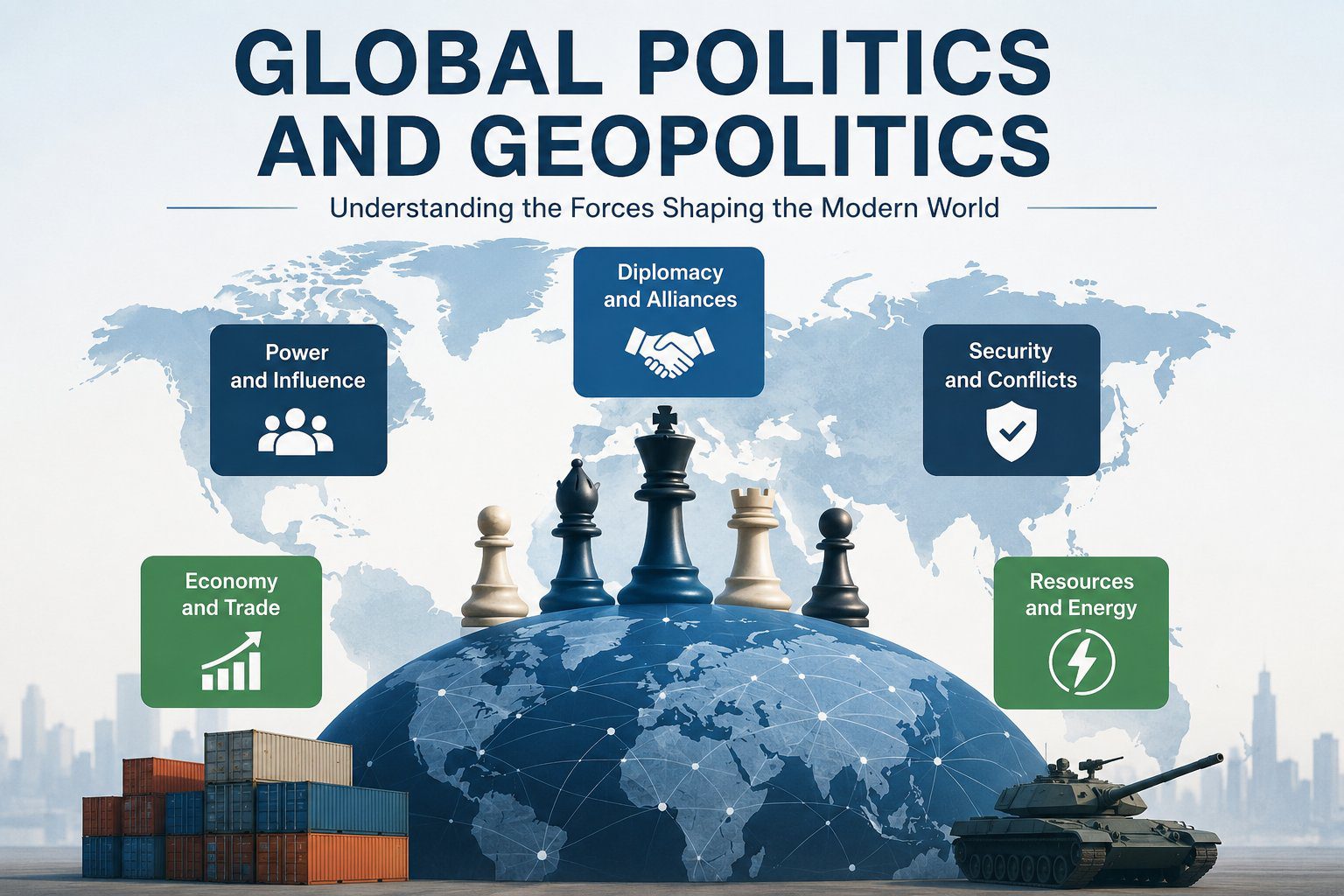
Global politics and geopolitics have become some of the most influential forces shaping the 21st century. From international conflicts and economic competition to technological innovation and climate diplomacy, geopolitical developments affect governments, businesses, and individuals worldwide.
In 2026, geopolitical tensions continue to dominate international headlines. Strategic competition among major powers, regional conflicts, energy security, trade disputes, and the rise of emerging economies are redefining the global balance of power. Experts increasingly describe the current international system as a transition from a unipolar world toward a more fragmented and multipolar order. Recent assessments identify geoeconomic confrontation and interstate conflict as two of the most significant global risks facing the international community.
This article explores the key factors driving global politics and geopolitics, analyzes current trends, and examines what the future may hold for international relations.
What Is Global Politics?
Global politics refers to the interactions between nations, international organizations, multinational corporations, and non-state actors. It encompasses diplomacy, international trade, military alliances, environmental agreements, and global governance.
Unlike domestic politics, which focuses on internal government affairs, global politics examines how countries cooperate and compete on the international stage.
Several institutions influence global politics, including:
- The United Nations
- International financial institutions
- Regional organizations
- Military alliances
- Trade organizations
These institutions establish rules, encourage cooperation, and provide mechanisms for resolving international disputes.
Understanding Geopolitics
Geopolitics is the study of how geography influences political power and international relations. It analyzes how factors such as territory, natural resources, strategic locations, demographics, and economic capabilities shape a country’s foreign policy.
Geopolitical analysis often focuses on questions such as:
- Why do countries compete for strategic regions?
- How do natural resources influence international relations?
- Why are certain waterways considered critical to global security?
- How do alliances affect the global balance of power?
Historically, geography has played a decisive role in shaping civilizations and empires. Today, geopolitical competition extends beyond land and maritime borders to include cyberspace, technology, artificial intelligence, and space exploration.
The Rise of a Multipolar World
For decades after the Cold War, the United States dominated global politics. However, the international landscape has changed significantly.
Several countries have expanded their political and economic influence, contributing to the emergence of a multipolar world. Analysts suggest that the next decade will be characterized by a fragmented international system in which multiple powers compete for influence. Approximately 68% of experts surveyed by the World Economic Forum expect a fragmented or multipolar order to define the future global landscape.
The major geopolitical players include:
The United States
The United States remains one of the world’s most influential powers because of its military capabilities, technological leadership, and extensive alliance network.
American foreign policy continues to influence international security, global trade, and financial markets. However, recent geopolitical developments have raised questions about America’s future role in maintaining the international order.
China
China has transformed into an economic and technological superpower.
Its expanding global influence is evident through investments in infrastructure, trade agreements, technological innovation, and military modernization. China’s strategic interests in the Indo-Pacific region continue to influence international diplomacy and security policies.
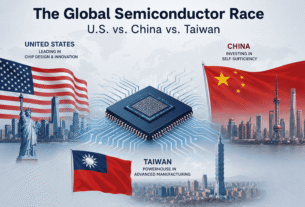
Growing tensions surrounding Taiwan remain one of the most significant geopolitical concerns in 2026. Experts warn that increased political, economic, and military pressure could trigger a severe regional crisis.
Russia
Russia continues to play a central role in global geopolitics.
The Russia-Ukraine conflict remains one of the most important geopolitical developments affecting Europe and the international community. The war has transformed military alliances, increased defense spending, and reshaped global energy markets. Renewed escalation remains a significant international concern. (Council on Foreign Relations)
Emerging Powers
Countries such as India, Brazil, and Indonesia are increasingly influencing global governance, economic policy, and climate negotiations.
These emerging economies represent a growing shift in international power, particularly among nations in the Global South. Their expanding influence is gradually changing traditional geopolitical structures.
Energy Security and Geoeconomic Competition
One of the defining characteristics of modern geopolitics is the relationship between energy and international security.
Energy resources have always influenced foreign policy, but recent events have demonstrated just how interconnected global markets have become.
The Strait of Hormuz remains one of the world’s most strategically important waterways because a substantial portion of global oil shipments passes through it. Tensions in the region have highlighted the vulnerability of international energy supplies and their impact on inflation, transportation, and economic growth.
The World Economic Forum identifies geoeconomic confrontation as the leading global risk in 2026. Competition over trade, manufacturing, supply chains, and strategic resources is increasingly replacing traditional military competition as a primary source of international tension.
Countries are implementing policies designed to reduce dependence on foreign suppliers, strengthen domestic industries, and secure access to critical resources.
Technology and the New Geopolitical Battlefield
Technology has become one of the most important dimensions of geopolitical competition.
Artificial intelligence, cybersecurity, semiconductor manufacturing, and quantum computing are now central components of national security strategies.
Recent reports have highlighted concerns regarding AI-enabled cyberattacks targeting critical infrastructure and government institutions. Security experts warn that cyber warfare may become as significant as conventional military conflict in the coming decades.
Competition in technology extends beyond cybersecurity. Nations are investing heavily in:
- Artificial intelligence
- Semiconductor production
- Quantum computing
- Space technology
- Telecommunications infrastructure
Technological superiority increasingly determines economic competitiveness and military capability.
Climate Change and Geopolitical Transformation
Climate change is rapidly becoming a geopolitical issue.
Environmental challenges affect migration, food security, water resources, and economic development. Rising temperatures and extreme weather events have increased pressure on governments to cooperate on climate policies.
However, climate diplomacy remains challenging because countries often prioritize national interests over collective environmental action.
Developing nations continue to demand greater financial assistance from industrialized economies, while advanced economies face pressure to reduce emissions without disrupting economic growth.
Climate-related migration and resource competition may become major geopolitical challenges in the coming decades.
The Decline of Multilateralism
Another significant trend shaping global politics is the weakening of multilateral institutions.
Declining trust in international organizations, increasing protectionism, political polarization, and the spread of misinformation have reduced cooperation among nations. According to recent findings, multilateralism is under significant pressure as governments increasingly prioritize national interests over collective solutions.
This shift has several consequences:
- Reduced diplomatic cooperation
- Increased trade disputes
- Greater political instability
- Higher risks of armed conflict
Although international institutions continue to play important roles, their ability to address global challenges is being tested.
What Does the Future of Geopolitics Look Like?
Several trends are likely to define the future of global politics:
1. Increased competition among major powers.
The United States, China, and other influential nations will continue competing for political, economic, and technological leadership.
2. Greater emphasis on economic security.
Supply chains, trade networks, and strategic resources will become central components of foreign policy.
3. Technological competition.
Artificial intelligence, cybersecurity, and digital infrastructure will increasingly influence geopolitical strategies.
4. Regional alliances will become more important.
Countries will strengthen partnerships to address security, economic, and environmental challenges.
5. Climate change will reshape international relations.
Environmental policies will become deeply integrated into foreign policy and global governance.
Conclusion
Global politics and geopolitics are entering a transformative era. Traditional military competition is evolving into a broader struggle involving economics, technology, energy, and information.
The rise of emerging powers, growing geopolitical tensions, technological innovation, and climate-related challenges are reshaping the international order. Understanding these developments is essential for governments, businesses, investors, and citizens seeking to navigate an increasingly interconnected world.
As the international system becomes more complex, geopolitical awareness will no longer be limited to policymakers and diplomats. It will become a necessary skill for anyone hoping to understand the forces shaping the future of the global economy and international society.