Introduction
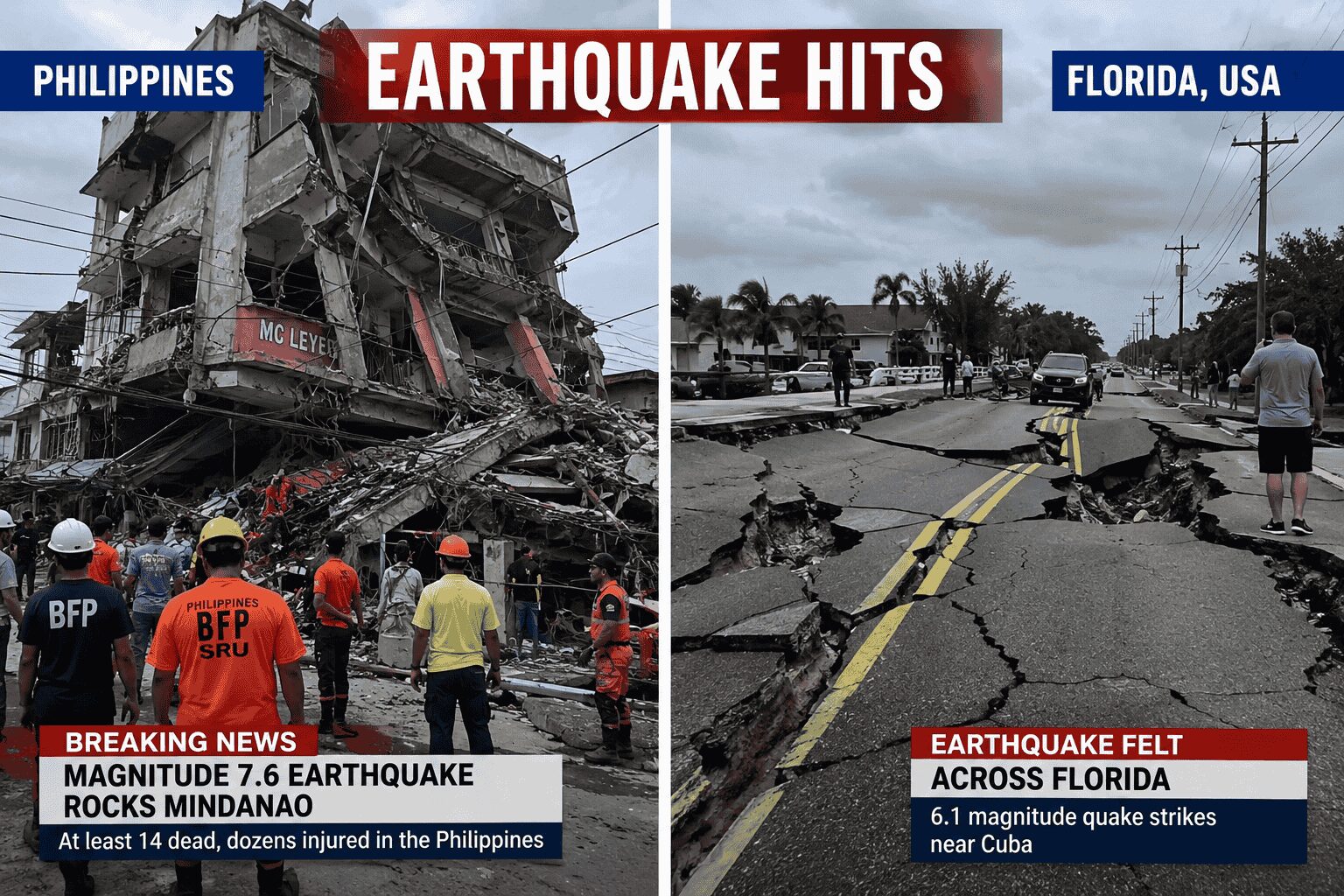
Earthquake have once again captured global attention following two significant seismic events reported on June 8, 2026. A devastating earthquake struck the southern Philippines, causing widespread destruction, casualties, and tsunami alerts, while a separate earthquake near Cuba sent tremors across parts of Florida, alarming residents throughout the state.
Although the two events occurred in different regions, they highlight the importance of disaster preparedness and the growing need for resilient infrastructure in areas vulnerable to seismic activity. This article examines the major figures, impacts, emergency responses, and key facts surrounding both earthquakes.
Powerful Earthquake Strikes the Philippines
The Philippines experienced one of its strongest earthquakes in recent years when a magnitude 7.8 earthquake struck off the coast of Mindanao on June 8, 2026. The earthquake occurred near Sarangani Province and was strongly felt across southern regions including General Santos City and Davao. Authorities immediately issued tsunami warnings as emergency services began assessing the damage.
Key Figures
- Magnitude: 7.8
- Location: Off the coast of Mindanao, near Sarangani Province
- Confirmed deaths: At least 35
- Injured: More than 200 people
- Missing persons: More than 12 reported
- Strongest aftershock: Magnitude 6.5
- Tsunami waves: Approximately 1 meter (3 feet) reported in some coastal areas
- Hundreds of buildings damaged or destroyed
Areas Most Affected
General Santos City suffered extensive structural damage. Several residential buildings, schools, commercial centers, and public facilities were damaged or collapsed due to the strong shaking. Emergency responders conducted rescue operations throughout the day as aftershocks continued to affect the region.
One of the most widely shared videos showed the collapse of a commercial building during the earthquake. The footage quickly spread across social media and highlighted the force of the tremor.
Landslides and Secondary Hazards
The earthquake triggered multiple landslides across mountainous regions of Mindanao. One of the deadliest incidents occurred in Glan, Sarangani Province, where a landslide reportedly killed at least 13 people. Rescue teams continued searching for survivors while monitoring unstable slopes for additional movement.
Experts warned residents not to return to damaged structures due to the risk of powerful aftershocks and further collapses.
Impact on Schools and Students
The earthquake occurred on the first day of classes for millions of students across Mindanao. Videos showed frightened children taking cover as school structures shook violently. Several schools sustained damage, prompting authorities to suspend classes in affected areas.
Reports indicated that dozens of classrooms were damaged or destroyed, impacting educational activities for thousands of students. UNICEF and local authorities announced plans to assist affected communities and educational institutions.
Government Response
Philippine President Ferdinand Marcos Jr. directed national disaster response agencies to coordinate rescue and relief operations. Emergency shelters were opened for displaced families, while medical teams were deployed to affected regions.
Authorities also temporarily evacuated coastal communities after tsunami warnings were issued. Fortunately, the tsunami alert was later lifted after only limited wave activity was recorded.
Why the Philippines Is Earthquake-Prone
The Philippines lies along the Pacific Ring of Fire, one of the most active seismic zones in the world. This region experiences frequent earthquakes and volcanic activity due to the interaction of multiple tectonic plates.
Because of its geographic location, the country regularly faces seismic hazards, making earthquake preparedness an essential national priority.
Earthquake Near Cuba Felt Across Florida
On the same day, a magnitude 6.1 earthquake struck near Cuba and was felt across large parts of Florida. While the earthquake did not cause significant damage in Florida, many residents reported feeling shaking and unusual vibrations in buildings and homes.
Key Figures
- Magnitude: 6.1
- Epicenter: Near Mantua, Cuba
- Areas affected: South Florida, Central Florida, and portions of the Gulf Coast
- Tsunami threat: None reported
- Major structural damage in Florida: None confirmed
- Casualties: No significant injuries reported in Florida
Tremors Reported Across Florida
Residents in cities including Miami, Orlando, Tampa, Jacksonville, and other parts of Florida reported feeling the earthquake. Social media platforms quickly filled with posts describing swaying buildings, shaking furniture, and unusual vibrations.
Meteorologists and emergency agencies confirmed that the shaking originated from the earthquake near Cuba rather than any local geological activity within Florida.
No Tsunami Threat for Florida
Following the earthquake, emergency management officials and weather agencies monitored the situation closely. The United States Geological Survey (USGS) and National Weather Service confirmed there was no significant tsunami threat for Florida residents.
Although the event caused concern among residents unfamiliar with earthquakes, officials emphasized that the risk level remained low.
Comparing the Two Earthquakes
| Category | Philippines Earthquake | Florida/Cuba Earthquake |
| Magnitude | 7.8 | 6.1 |
| Date | June 8, 2026 | June 8, 2026 |
| Death Toll | 35+ | None reported |
| Injuries | 200+ | None significant |
| Tsunami Alert | Yes | No |
| Major Structural Damage | Extensive | Minimal |
| Aftershocks | Numerous | Limited |
| Emergency Response | Large-scale rescue operations | Monitoring and public advisories |
The comparison clearly demonstrates the vastly different impacts of the two events. While the Philippines experienced severe destruction and loss of life, Florida primarily experienced shaking without major consequences.
Lessons and Preparedness
These earthquakes serve as important reminders that seismic activity can occur with little warning. Experts recommend:
- Maintaining emergency preparedness kits.
- Establishing family communication plans.
- Following official evacuation orders.
- Securing heavy furniture and appliances.
- Staying informed through trusted government agencies.
Preparedness remains one of the most effective ways to reduce risks associated with natural disasters.
Conclusion
The June 2026 earthquakes in the Philippines and Florida illustrate the varying impacts seismic events can have depending on location, magnitude, population density, and infrastructure resilience. The magnitude 7.8 earthquake in the Philippines resulted in significant casualties, widespread damage, landslides, and tsunami alerts, while the magnitude 6.1 earthquake near Cuba caused tremors across Florida without major destruction.
As rescue and recovery efforts continue in the Philippines, the global community is reminded of the importance of disaster readiness, rapid emergency response, and resilient infrastructure. These events will likely remain significant topics of discussion among geologists, emergency planners, and policymakers for years to come.