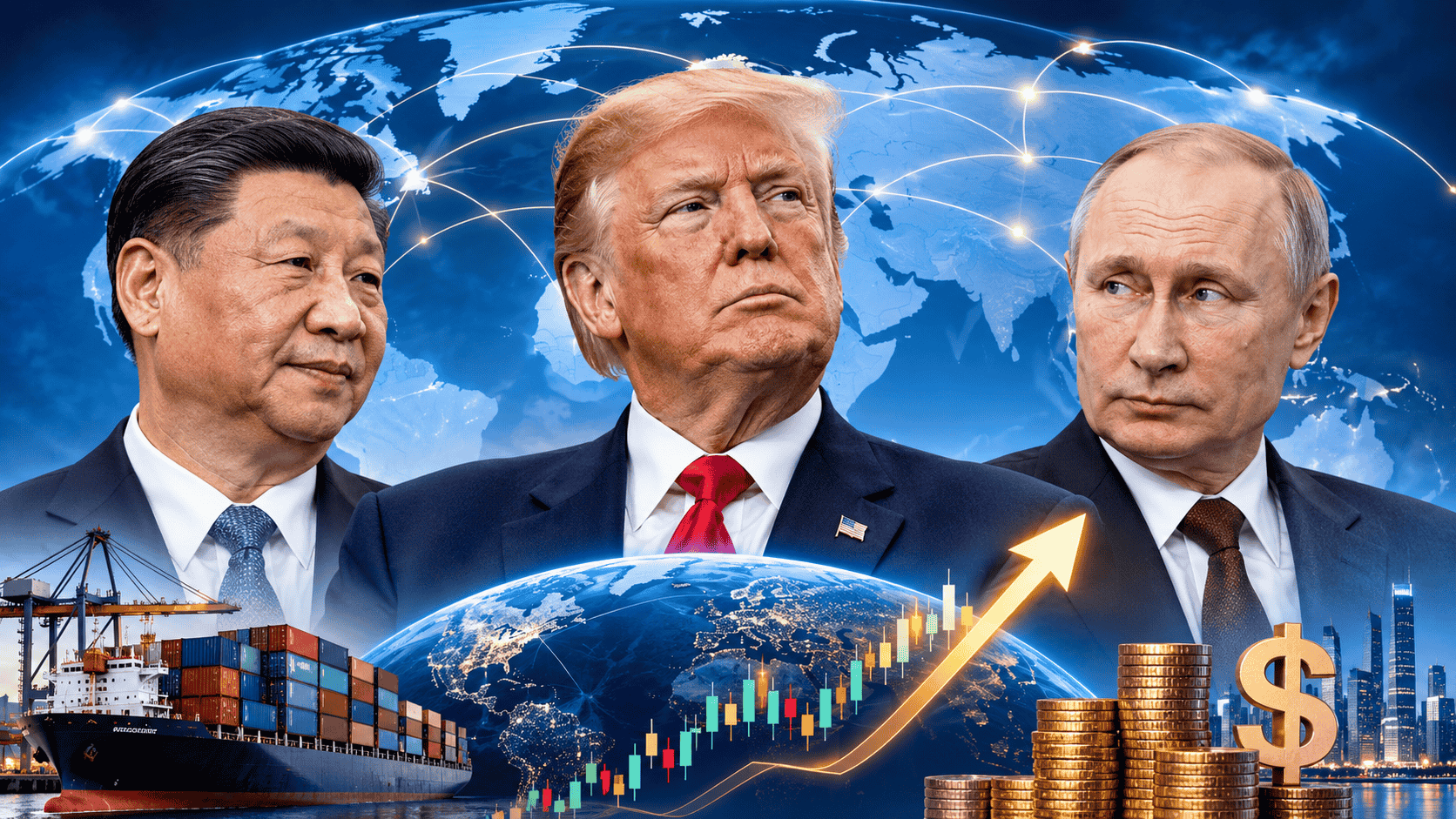
Introduction: A Historic Meeting That Could Reshape Global Economics
The global political and economic landscape is approaching a potentially historic moment as US President Donald Trump, Chinese President Xi Jinping, and Russian President Vladimir Putin prepare for an unprecedented trilateral meeting in Shenzhen, China, on November 19, 2026. Scheduled alongside the Asia-Pacific Economic Cooperation (APEC) summit, the gathering brings together three leaders whose countries hold enormous influence over international trade, energy markets, military security, and technological development.
The proposed meeting has already attracted international attention, with comparisons to the 1945 Yalta Conference, where major Allied powers discussed the post-war international order. However, today’s geopolitical environment is significantly more complicated. The United States, China, and Russia share certain economic interests but remain competitors with conflicting political objectives.
The central question is whether this summit could establish the foundation for a new global economic order or simply represent another diplomatic effort to manage growing international tensions.
For investors, multinational corporations, and financial institutions, the outcome could influence everything from international supply chains and commodity prices to investment strategies and emerging-market opportunities.
Why the Trump-Xi-Putin Summit Matters in 2026
The significance of this meeting extends beyond diplomatic relations. These three countries represent major centers of global economic and strategic influence.
The United States remains a dominant financial and technological power, with the US dollar playing a central role in international finance. China is a manufacturing powerhouse with substantial influence over global supply chains, industrial production, and critical minerals. Russia remains an important energy and commodity producer despite extensive Western sanctions.
Their economic relationships are interconnected, even when their political interests conflict.
According to reporting ahead of the meeting, the leaders may discuss several sensitive issues, including the Iran conflict, Ukraine, nuclear arms control, trade restrictions, and artificial intelligence. However, expectations for immediate agreements remain limited.
The gathering is therefore important not only because of what the leaders might announce but also because of the diplomatic signals they send to global markets and other governments.
1. Global Trade Could Enter a New Phase
International trade is one of the most important areas that could be influenced by the summit.
For years, the United States and China have experienced disagreements over tariffs, technology restrictions, industrial subsidies, and market access. Although previous negotiations have helped reduce certain tensions, the underlying economic competition remains unresolved.
A productive meeting could create opportunities for renewed trade negotiations and more predictable commercial relationships.
For American businesses, improved relations with China could provide greater access to manufacturing networks, consumer markets, and industrial supply chains. Chinese companies could benefit from reduced trade uncertainty and improved opportunities to access international markets.
Russia could also seek to strengthen its economic relationships with both countries, particularly as Moscow continues to face restrictions on its access to Western financial and commercial systems.
However, a three-country economic partnership is unlikely to emerge quickly. The United States and China have competing industrial and technological priorities, while Russia’s geopolitical position creates additional complications.
Our perspective: Even a limited agreement on trade cooperation could improve investor confidence. Businesses generally prefer predictable regulations and stable international relationships over prolonged economic confrontation.
2. Energy Markets Could Become a Major Negotiating Point
Energy security represents another significant area of potential cooperation.
Russia possesses substantial oil and natural gas resources, China is one of the world’s largest energy consumers, and the United States remains a major energy producer.
These economic realities create opportunities for negotiations involving energy supplies, international transportation, investment, and commodity pricing.
China has maintained extensive energy relationships with Russia, while American energy policies remain closely connected to global oil and gas markets.
The conflict involving Iran and wider Middle Eastern instability have added further uncertainty to international energy security. Any diplomatic progress involving these geopolitical tensions could influence oil prices, shipping costs, and energy investment decisions.
For international investors, the implications could be significant.
A more stable geopolitical environment may reduce the risk premium attached to energy commodities. Conversely, unsuccessful negotiations or escalating conflicts could increase market volatility.
Energy companies, shipping operators, infrastructure developers, and commodity traders will therefore have reasons to monitor the summit closely.
3. Could the US Dollar Face a New Challenge?
One of the most important long-term economic questions concerns the international financial system.
The US dollar continues to dominate international financial transactions, central-bank reserves, and global trade settlement. However, several countries, including China and Russia, have explored alternative payment arrangements to reduce their exposure to dollar-based financial restrictions.
China has promoted the international use of its currency, while Russia has expanded financial and commercial relationships outside traditional Western channels.
A potential diplomatic understanding between Washington, Beijing, and Moscow could influence the future direction of international financial cooperation.
Nevertheless, replacing the dollar would be an extremely difficult task.
The dollar benefits from the depth of US financial markets, international liquidity, institutional infrastructure, and widespread investor confidence. Neither the Chinese yuan nor the Russian ruble currently offers an equivalent combination of international financial advantages.
A more realistic possibility is the gradual expansion of a multipolar financial system in which different currencies play larger roles in regional and bilateral transactions.
For investors, this development could increase the importance of currency diversification, international payment infrastructure, and exposure to emerging financial markets.
4. Technology and Artificial Intelligence Could Shape Future Competition
Artificial intelligence and semiconductor technology have become central elements of modern economic power.
The United States and China are competing for leadership in advanced chips, AI infrastructure, cloud computing, robotics, and next-generation technologies.
The competition is particularly visible in China’s domestic AI chip industry, where local technology companies are working to reduce dependence on American semiconductor suppliers. The changing competitive landscape is explored further in our analysis of Nvidia and Huawei’s competition in China’s AI chip market.
Russia also has an interest in expanding its technological independence and strengthening cooperation with countries outside Western technology networks.
The three leaders could potentially discuss AI safety, international technology standards, and the risks associated with advanced artificial intelligence.
However, meaningful technological cooperation may be difficult because each country considers advanced computing capabilities strategically important.
The economic consequences extend far beyond technology companies.
As artificial intelligence becomes a major driver of global economic competition, companies are investing heavily in advanced chips and computing infrastructure. Nvidia’s financial performance reflects the growing demand for AI technology, highlighting how the semiconductor industry is becoming increasingly important to the global economy. Read more about Nvidia’s record earnings and AI-driven growth.
Any reduction in US-China technology tensions could benefit global technology supply chains. On the other hand, increased restrictions could accelerate the development of separate technological ecosystems.
For investors, semiconductor companies, AI infrastructure providers, and data-center operators remain important sectors to watch.
5. Russia-Ukraine Conflict and Its Economic Consequences
The Russia-Ukraine conflict remains one of the most significant sources of geopolitical uncertainty affecting international markets.
Western sanctions, restrictions on financial transactions, energy-market adjustments, and increased European defense spending have reshaped several economic relationships.
Putin may view the trilateral meeting as an opportunity to strengthen Russia’s diplomatic position and discuss the future of the conflict.
However, Ukraine and European governments are concerned about any arrangement that could determine their security interests without their direct participation.
For global businesses, the economic implications of a potential diplomatic breakthrough would be substantial.
A credible peace process could encourage reconstruction investment, improve regional trade prospects, and reduce certain geopolitical risks.
However, investors should not assume that a single meeting will produce a lasting settlement. Security guarantees, territorial disagreements, sanctions policies, and international political commitments remain difficult obstacles.
A sustainable agreement would require more than diplomatic statements.
6. What a New Global Economic Order Could Mean for Investors
The possibility of a changing global economic order creates both opportunities and risks for international investors.
Traditional investment strategies have often relied on relatively predictable relationships between major economies. However, Another important development is the growing financial exposure associated with artificial intelligence infrastructure. As technology companies borrow and invest billions in data centers, advanced chips, and computing capacity, AI financing is becoming an important consideration for global investors. Our analysis of the AI debt boom and its impact on financial markets explores these emerging investment risks.
A more multipolar economic environment could produce several important investment trends:
Emerging markets: Countries positioned between major economic powers could attract investment as businesses diversify manufacturing and trade relationships.
Energy infrastructure: Oil, natural gas, electricity networks, and alternative energy projects may receive additional investment as governments prioritize energy security.
Technology independence: Semiconductor manufacturing, domestic AI infrastructure, cybersecurity, and advanced industrial technology could remain major investment priorities.
Commodity markets: Changes in trade relationships and geopolitical risks could influence demand for industrial metals, energy products, and agricultural commodities.
Currency diversification: International investors may increasingly examine currency exposure and regional financial opportunities.
However, these opportunities also carry risks. Political uncertainty, sanctions, sudden policy changes, and trade restrictions can quickly affect asset valuations.
Investors should therefore distinguish between diplomatic optimism and actual economic agreements.
7. Is This a New Yalta Conference or Just Diplomatic Symbolism?
Comparisons with the 1945 Yalta Conference have become a major part of the discussion surrounding the Trump-Xi-Putin meeting.
The historical comparison is understandable because both situations involve major powers discussing international security and geopolitical influence.
However, the modern global economy is far more interconnected.
Unlike the post-World War II environment, today’s international system includes numerous influential economies, multinational corporations, regional alliances, international institutions, and independent financial markets.
Countries such as India, Japan, Germany, France, and other emerging economies have important economic and political interests that cannot simply be ignored.
Furthermore, the three leaders do not share a unified strategic vision.
Washington wants to maintain its international influence, Beijing seeks greater economic and technological leadership, and Moscow wants to strengthen its geopolitical position.
Their interests may overlap on selected issues, but that does not automatically create a lasting partnership.
A new global economic order, if one emerges, will probably develop through gradual changes in trade, finance, technology, and international alliances rather than through a single historic agreement.
Our Outlook: What Should Global Investors Expect?
The Trump-Xi-Putin summit represents an important diplomatic development, but investors should approach expectations carefully.
The meeting could improve communication between three major powers and create opportunities for future negotiations. Even limited progress on trade, energy security, or international conflict management could influence market sentiment.
Nevertheless, a comprehensive economic agreement remains unlikely without substantial compromises.
Our assessment is that the greatest potential impact may come from the summit’s longer-term diplomatic consequences rather than immediate policy announcements.
If the three countries establish more predictable communication channels, international businesses could benefit from reduced uncertainty. If disagreements dominate the discussions, geopolitical fragmentation and economic competition could continue.
For investors, the most sensible strategy is to monitor concrete policy developments rather than make investment decisions based solely on diplomatic headlines.
Conclusion
The Trump-Xi-Putin summit could become an important moment in the evolution of international economic relations.
The United States, China, and Russia have the political influence and economic resources to shape global markets. Their decisions affect trade, energy, technology, financial systems, and international security.
However, a new global economic order cannot be established through symbolism alone. It requires sustainable agreements, mutual economic benefits, and cooperation that respects the interests of other countries.
Whether this meeting becomes the beginning of a new geopolitical arrangement or remains a high-profile diplomatic encounter, its significance should not be underestimated.
The world economy is already experiencing a period of transformation. For businesses and investors, understanding the relationship between geopolitics and economic power will become increasingly important in the years ahead.
Frequently Asked Questions (FAQs)
1. What is the Trump-Xi-Putin summit about?
The proposed trilateral meeting brings together Donald Trump, Xi Jinping, and Vladimir Putin to discuss major international issues, potentially including trade, nuclear security, the Iran conflict, Ukraine, and global economic stability.
2. When and where will the Trump-Xi-Putin summit take place?
The unprecedented meeting is scheduled for November 19, 2026, in Shenzhen, China, on the sidelines of the APEC summit.
3. Could the summit create a new global economic order?
It could contribute to changes in international trade, financial cooperation, and geopolitical relationships. However, a completely new economic order is unlikely to emerge from one meeting.
4. How could the summit affect global financial markets?
Potential diplomatic progress could improve investor confidence, influence oil prices, reduce certain geopolitical risks, and affect currency and commodity markets.
5. Could China and Russia challenge the US dollar?
Both countries support greater use of alternative currencies in international transactions. However, replacing the US dollar’s global position would require major structural changes in international finance.
6. Which industries could benefit from improved relations?
Energy, international trade, infrastructure, manufacturing, logistics, semiconductors, and technology companies could benefit from greater geopolitical stability.
7. Why are investors watching the summit?
Investors are monitoring the possibility of changes in trade policies, sanctions, energy supplies, international investment flows, and geopolitical risk.
About DailyPress.it.com
DailyPress.it.com covers global business, finance, technology, economic developments, and international news, offering readers insights into the trends shaping markets and investment decisions.
Follow Daily Press on X for the latest news and updates: @dailypressit.