Introduction
Hollywood is experiencing a new entertainment revolution, and this time it is happening vertically on smartphone screens. Microdramas, also known as vertical dramas or short-form serialized dramas, are becoming one of the fastest-growing formats in entertainment. These short episodes combine the addictive storytelling of television soap operas with the speed and convenience of TikTok, Instagram Reels, and YouTube Shorts.
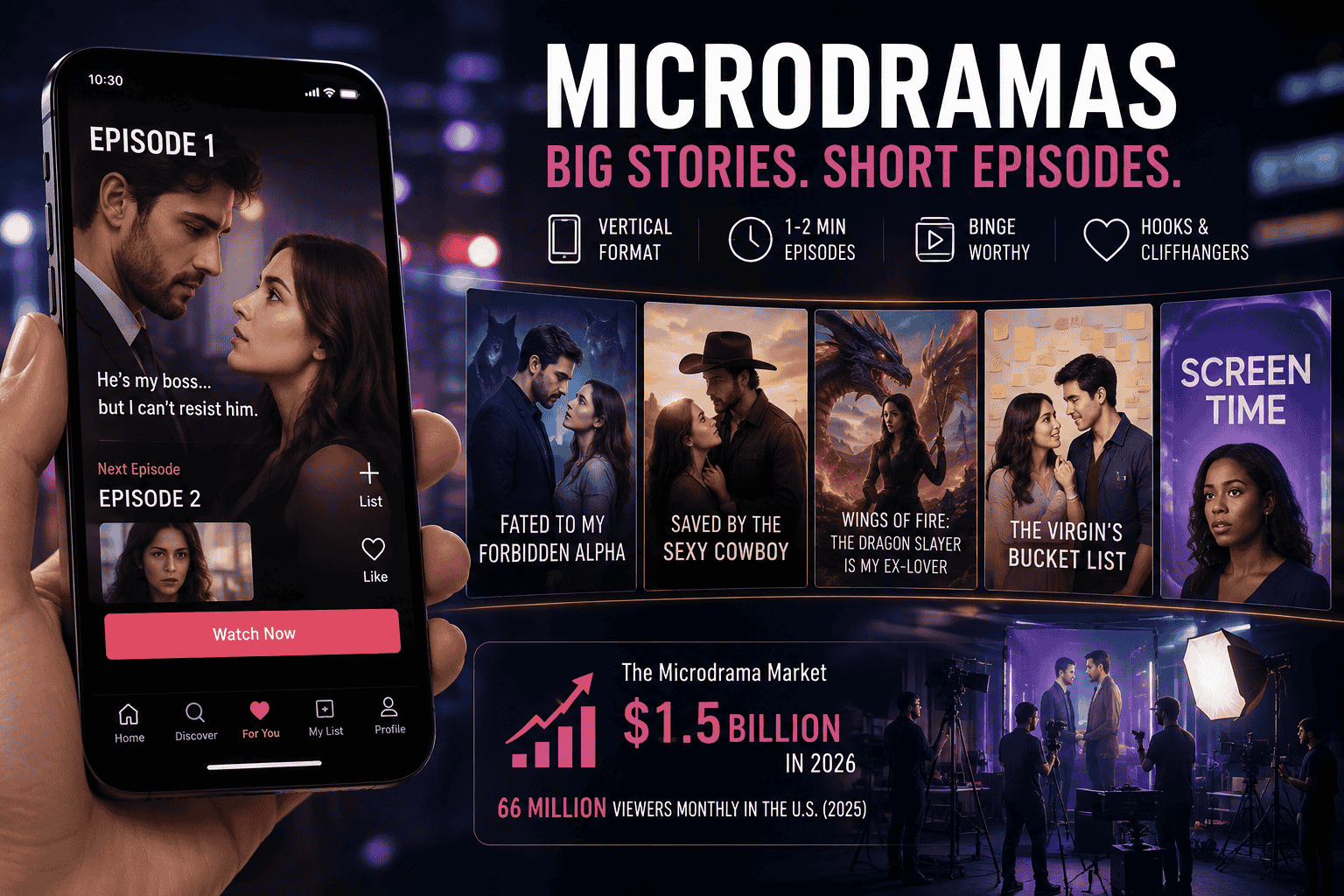
Unlike traditional television episodes that can run for 30 to 60 minutes, microdrama episodes commonly last between 45 seconds and two minutes. A single story can contain dozens of episodes, encouraging viewers to continue watching one episode after another.
The format has become particularly successful through platforms such as ReelShort, DramaBox, DramaWave, GoodShort, and NetShort. Their success is now attracting Hollywood producers, actors, studios, advertisers, and technology companies.
With millions of viewers discovering these stories through social media, microdramas are no longer simply a niche internet trend. They are becoming an important part of the future of entertainment.
What Are Microdramas?
Microdramas are short, serialized fictional stories specifically designed for mobile viewing.
Most are filmed vertically in a 9:16 format, allowing viewers to watch comfortably while holding a smartphone. Episodes are usually only a few minutes long, with many series containing 50 or more episodes.
The storytelling style is deliberately fast.
Instead of spending 20 minutes introducing characters and establishing a storyline, a microdrama may begin with a dramatic argument, shocking discovery, romantic encounter, betrayal, or unexpected twist.
The episode then ends with a cliffhanger, encouraging viewers to immediately watch the next part.
This structure is perfectly suited to the attention-driven environment created by TikTok and other short-video platforms.
Why Microdramas Are Becoming So Popular
The biggest reason behind the rise of microdramas is simple: people are spending more time watching entertainment on smartphones.
Modern audiences often consume content while commuting, waiting, taking breaks, or relaxing before sleeping. A viewer may not have time for a traditional two-hour movie but may easily watch ten one-minute episodes.
Microdramas remove the commitment required by traditional television.
The format also combines several psychological elements that make serialized entertainment highly engaging:
- Immediate drama
- Short episodes
- Frequent cliffhangers
- Emotional storytelling
- Easy mobile access
- Personalized recommendations
- Continuous episode releases
Recent industry data shows just how quickly the audience is expanding. In the United States, approximately 66 million people watched microdramas monthly in 2025, compared with about 26 million in 2024.
That growth has caught Hollywood’s attention.
The Microdrama Business Is Growing Rapidly
Microdramas are not only attracting viewers; they are generating significant revenue.
The US microdrama market was estimated at approximately $1.5 billion in 2026, with further growth expected. Industry forecasts estimate that microdrama revenue outside China could rise from about $2.7 billion in 2025 to $3.6 billion in 2026.
ReelShort has emerged as one of the most successful companies in the space. The platform reportedly generated around $1.2 billion in gross consumer spending during 2025, while DramaBox generated approximately $276 million.
These numbers help explain why traditional entertainment companies are beginning to take microdramas seriously.
Hollywood has discovered that short-form storytelling is not simply competing for attention with traditional television. It has created an entirely new business model.
Trending Microdrama Series Attracting Viewers
One of the easiest ways to understand the popularity of microdramas is to look at the titles driving interest.
Fated to My Forbidden Alpha
Fated to My Forbidden Alpha became one of the recognizable titles associated with the early microdrama boom. The story combines romance, supernatural themes, forbidden relationships, and dramatic twists.
Its popularity demonstrates the effectiveness of combining familiar genres with rapid storytelling.
Saved by the Sexy Cowboy
Saved by the Sexy Cowboy is another ReelShort title that reflects the genre’s emphasis on romance and highly dramatic characters.
Stories built around romance, powerful personalities, unexpected relationships, and emotional conflicts are particularly well suited to microdrama audiences.
Wings of Fire: The Dragon Slayer Is My Ex-Lover
Wings of Fire: The Dragon Slayer Is My Ex-Lover demonstrates how microdramas are expanding beyond conventional romance.
Fantasy, supernatural storytelling, revenge, and relationship drama are increasingly being combined to create highly bingeable series.
The Virgin’s Bucket List
The Virgin’s Bucket List is another ReelShort title that highlights the platform’s focus on relationship-driven entertainment and emotionally charged storylines.
Screen Time
Hollywood involvement is becoming even more visible through projects such as Screen Time, a thriller created by Issa Rae for TikTok.
The series reportedly attracted approximately 500 million views in one month, demonstrating how established Hollywood talent can use microdramas to reach enormous social-media audiences.
These titles reveal an important trend: microdramas are increasingly becoming franchises rather than disposable short videos.
Hollywood Is Starting to Embrace Vertical Storytelling
Hollywood traditionally focused on cinemas, television networks, and streaming services.
Microdramas are challenging that model.
Major entertainment companies are beginning to experiment with vertical storytelling because they recognize that audiences are increasingly comfortable consuming scripted entertainment on smartphones.
Peacock, for example, introduced unscripted microdrama projects including Salon Confessionals with Madison LeCroy and Campus Confidential: Miami. The episodes are designed around the short, mobile-first format.
Paramount+ has also been preparing microdrama content as part of its broader strategy to increase mobile engagement.
This represents a major change in Hollywood thinking.
Instead of asking audiences to move from TikTok to traditional television, entertainment companies are increasingly asking how television can adapt to the viewing habits created by TikTok.
Why the Format Works So Well
The secret behind microdramas is not simply that the episodes are short.
It is the storytelling structure.
Traditional television often builds tension gradually.
Microdramas do the opposite.
The story begins with a powerful event, delivers new information quickly, and ends with another unanswered question.
For example:
Episode 1: A woman discovers her fiancé has betrayed her.
Episode 2: She discovers the betrayal is connected to her family.
Episode 3: She meets someone who knows the truth.
Episode 4: The mysterious character reveals another secret.
The audience is constantly given a reason to continue.
This cliffhanger-based structure makes microdramas particularly effective for mobile audiences who are already accustomed to endlessly scrolling through short videos.
Microdramas Are Changing How Hollywood Produces Content
Traditional television production can require enormous budgets, long development periods, large crews, and extensive post-production.
Microdramas operate differently.
Short episodes can be produced quickly, with smaller sets and more streamlined production processes.
Many productions also reuse locations and sets across multiple stories.
This makes it possible for production companies to test new ideas much faster than traditional studios.
If a storyline performs well, producers can create additional episodes or related series.
If it fails, the financial loss can be significantly smaller than a traditional television production.
This creates a new form of data-driven entertainment production.
Audience reactions can influence what stories are produced next.
Artificial Intelligence Is Also Entering Microdrama Production
Technology is becoming another major part of the microdrama business.
Some companies are experimenting with artificial intelligence to accelerate parts of the production process.
AI can potentially assist with:
- Story development
- Script organization
- Translation
- Localization
- Marketing
- Audience analysis
- Pre-production planning
The technology is particularly attractive to companies producing large numbers of episodes.
However, human actors, writers, directors, and creative teams remain important because emotional performances and compelling characters are central to the format.
The future is likely to involve a combination of human creativity and increasingly sophisticated production technology.
A New Opportunity for Actors and Writers
Microdramas are also creating new opportunities for entertainment professionals.
Actors who might struggle to secure roles in traditional television can find work in vertical productions.
Writers can develop stories specifically designed for rapid episode structures.
Directors can experiment with mobile-first cinematography.
Producers can create entire franchises with smaller budgets.
This could make microdramas an important entry point for emerging talent.
At the same time, the rapid production model has raised concerns about working conditions, compensation, creative ownership, and labor protections. As the industry grows, these issues are likely to become increasingly important.
The Challenges Facing Microdramas
Despite their impressive growth, microdramas face several challenges.
Formulaic Storytelling
Many productions rely heavily on similar themes, including wealthy billionaires, forbidden romance, revenge, secret identities, werewolves, and dramatic family conflicts.
This can make the content feel repetitive.
Aggressive Monetization
Many platforms offer the first episodes for free before requiring users to purchase coins or subscriptions to continue watching.
This model can generate substantial revenue, but some viewers may find it frustrating.
Quality Concerns
Rapid production can sometimes result in weaker acting, predictable scripts, or limited production quality.
Competition
As major studios enter the market, competition for viewers will increase.
The companies that succeed will need to combine fast production with better storytelling and stronger characters.
The Future of Microdramas and Hollywood
The growth of microdramas does not necessarily mean traditional movies and television will disappear.
Instead, entertainment is becoming more fragmented.
Audiences can watch a three-hour blockbuster at a cinema, a 45-minute streaming series at home, or a one-minute drama on their smartphone.
All three formats can coexist.
However, microdramas are changing what Hollywood considers a successful entertainment product.
The industry is learning that a story does not need to be long to become valuable.
A well-designed two-minute episode can attract millions of viewers, generate subscription revenue, create recognizable characters, and eventually develop into a larger entertainment franchise.
Conclusion
The rise of microdramas represents one of the most important changes taking place in entertainment in 2026.
Platforms such as ReelShort and DramaBox have demonstrated that audiences are willing to consume scripted stories in extremely short, mobile-friendly episodes. The rapid growth of titles such as Fated to My Forbidden Alpha, Saved by the Sexy Cowboy, Wings of Fire: The Dragon Slayer Is My Ex-Lover, The Virgin’s Bucket List, and Screen Time shows that the format can attract significant attention.
Hollywood is now responding.
Major entertainment companies are experimenting with vertical storytelling, while actors, writers, producers, and technology companies are entering the growing market.
The biggest lesson is that the future of entertainment may not be about choosing between movies, television, streaming, and social media.
It may be about combining all of them.
Microdramas are proving that shorter storytelling can still create long-lasting audience engagement. As smartphone viewing continues to dominate everyday entertainment, vertical dramas could become one of Hollywood’s most influential formats of the next decade.