Introduction
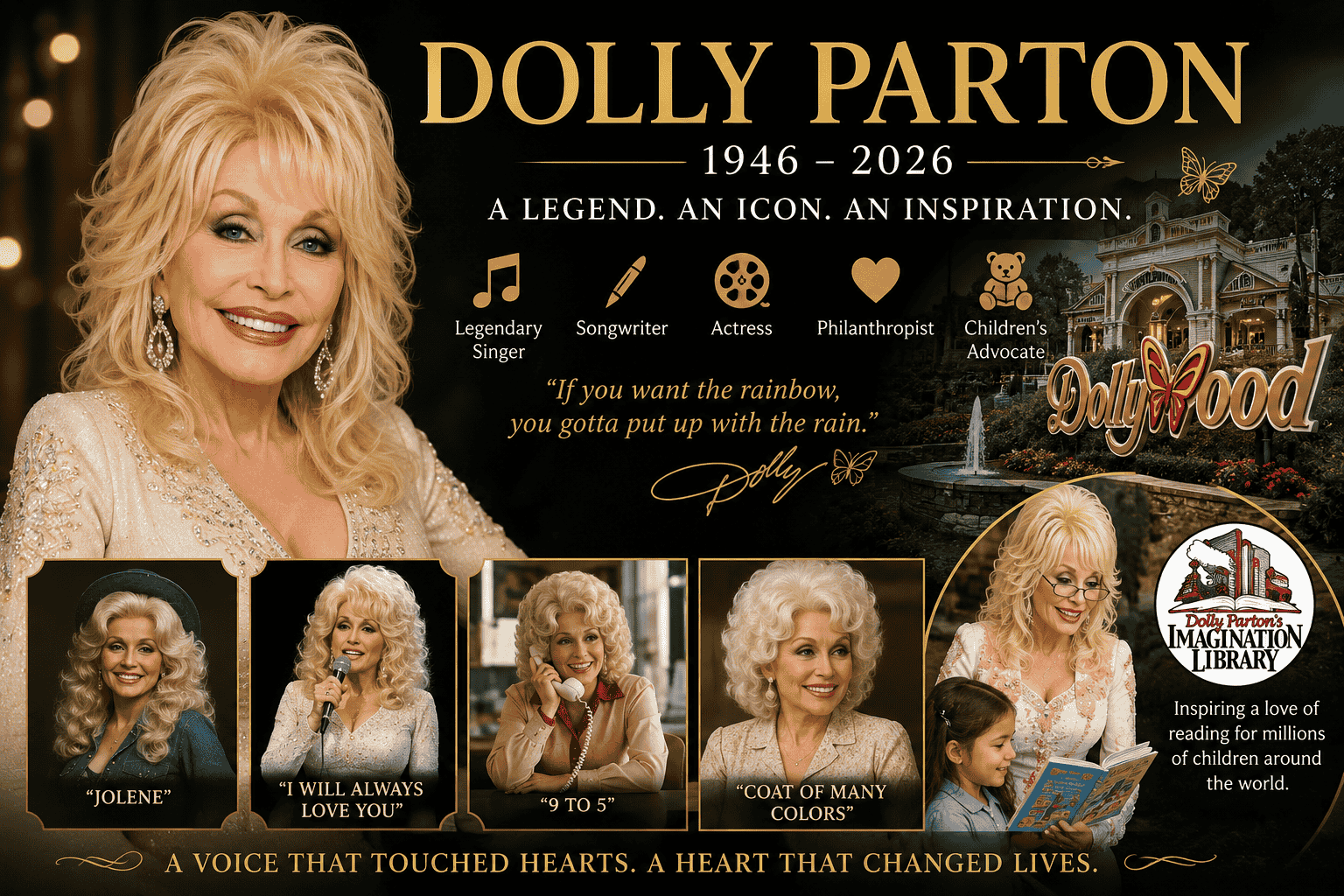
Dolly Parton was one of the most recognizable and influential entertainers in American history. Over a career spanning nearly six decades, she became a legendary singer, songwriter, actress, businesswoman and philanthropist whose work reached far beyond country music.
Dolly Parton cause of death is cancer at age 80 on August 25, 2026, many people have been asking an important question: What cancer did Dolly Parton have?
The answer requires an important clarification. Dolly Parton’s representatives confirmed that she had been battling cancer, but they did not publicly disclose the specific type of cancer she had. Her representatives described it as a brief battle with cancer.
Because the specific diagnosis was never publicly identified, claims naming a particular type of cancer should not be treated as confirmed information.
What Cancer Did Dolly Parton Have?
Her Cancer Type Was Not Publicly Disclosed
The most accurate answer is that the specific type of cancer Dolly Parton had remains undisclosed.
Her representatives confirmed her cancer diagnosis after her death but did not reveal the organ affected, the stage of the disease, when exactly she was diagnosed or what treatment she received.
Parton had experienced several health problems during the year before her death. She had previously discussed issues involving her immune and digestive systems, dizziness, dehydration and other complications related to treatment. She also postponed and eventually canceled planned Las Vegas performances because of continuing health concerns.
However, those earlier health reports should not automatically be interpreted as the specific cancer diagnosis.
Her Final Health Battle
Just days before her death, Parton publicly acknowledged that she was dealing with health problems. Despite those difficulties, she spoke about continuing to work and remaining committed to projects she wanted to complete.
She was admitted to a Nashville-area hospital on August 21, 2026, and died four days later at Vanderbilt-Ingram Cancer Center.
Her representatives characterized her cancer battle as brief, but further medical details have not been released publicly.
Dolly Parton’s Early Life and Biography
Growing Up in Tennessee
Dolly Rebecca Parton was born on January 19, 1946, in Tennessee and grew up in a large, financially struggling family.
Music became an important part of her childhood. She was exposed to Appalachian musical traditions and began writing songs and performing while still young.
Her early experiences with poverty, family, faith and rural life later became important themes in her songwriting.
Rather than allowing her difficult upbringing to limit her ambitions, Parton used those experiences as inspiration.
Her First Major Breakthrough
Parton’s professional career began gaining momentum during the 1960s.
Her debut album, “Hello, I’m Dolly,” was released in 1967 and introduced audiences to a songwriter and performer who would eventually become one of country music’s most successful figures.
Her career accelerated after she joined The Porter Wagoner Show, where she performed alongside country star Porter Wagoner.
Eventually, Parton established herself as a solo performer, creating a remarkable catalog of songs that crossed the boundaries between country, pop, bluegrass and gospel.
Dolly Parton’s Most Memorable Songs
“Jolene”
One of Parton’s most famous songs is “Jolene.”
Released in 1973, the song tells the story of a woman pleading with another woman not to take her partner away.
Its simple but emotionally powerful storytelling helped make it one of the most recognizable songs in country music.
“I Will Always Love You”
Parton also wrote “I Will Always Love You,” originally recording it herself before Whitney Houston’s dramatically successful version introduced the song to a worldwide pop audience.
The song became one of the clearest examples of Parton’s extraordinary ability as a songwriter.
“9 to 5”
Another defining Parton song was “9 to 5,” created for the 1980 film of the same name.
The song became a cultural anthem about workplace frustration and women’s experiences in professional environments.
“Coat of Many Colors”
“Coat of Many Colors” drew directly from Parton’s childhood and her family’s financial struggles.
Rather than focusing only on material poverty, the song emphasized family love, pride and emotional wealth.
It remains one of the clearest examples of how Parton transformed personal experiences into universal stories.
Dolly Parton as an Actress
Parton’s talents extended beyond music.
She became a successful Hollywood actress, appearing in movies including “9 to 5,” “The Best Little Whorehouse in Texas,” “Rhinestone,” “Steel Magnolias,” “Straight Talk” and “Joyful Noise.”
Her performance in “9 to 5” helped establish her as more than a country singer, while “Steel Magnolias” demonstrated her ability to take on more dramatic material.
Her acting career also introduced her personality and humor to audiences who might not have previously followed country music.
Dolly Parton and Dollywood
Building a Business Empire
Parton was also an accomplished businesswoman.
One of her most recognizable business achievements was Dollywood, the major theme park in Tennessee that became an important tourism destination and economic contributor to the region.
The park combined entertainment with elements of Appalachian culture, helping transform Parton’s connection to her home region into a major business and cultural institution.
Her career demonstrated how an entertainer could build a brand extending across music, television, film, tourism and business.
Dolly Parton’s Imagination Library
A Global Literacy Legacy
Perhaps Parton’s most powerful contribution outside entertainment was her Imagination Library.
The program provides books to young children, encouraging early childhood reading and literacy.
The initiative grew from a personal connection to education and Parton’s belief that children should have access to books regardless of their family’s financial circumstances.
By the time of her death, the program had distributed hundreds of millions of books to children.
This philanthropic work became one of the defining parts of her legacy.
Dolly Parton’s Contributions to Medical Research
Parton’s philanthropy also extended into medical research.
During the COVID-19 pandemic, she donated $1 million to Vanderbilt University Medical Center to support research that contributed to the development of the Moderna COVID-19 vaccine.
Her contribution became an unusual example of a celebrity using personal wealth to support scientific research.
Parton also supported healthcare projects in her home region and contributed to causes involving children, disaster relief and other community needs.
Awards and Achievements
Parton’s career produced an extraordinary collection of awards and honors.
She received numerous Grammy Awards, including a Grammy Lifetime Achievement Award, and was recognized with the Kennedy Center Honors and the National Medal of Arts.
She was also inducted into the Rock & Roll Hall of Fame, reflecting the influence her music had beyond traditional country audiences.
Her songwriting has been recorded by artists across multiple generations, demonstrating how her compositions continued to find new audiences.
Dolly Parton’s Personal Life
Parton’s personal life was generally less public than her professional career.
She married Carl Dean in 1966, and they remained together for nearly 60 years until his death in March 2025.
Dean largely avoided the entertainment spotlight, while Parton continued building her public career.
His death was a significant personal loss for Parton, and she later acknowledged that caring for him had affected how she paid attention to her own health.
Dolly Parton’s Legacy
More Than a Country Music Star
Dolly Parton’s influence cannot be measured only by record sales or awards.
She became a symbol of determination, creativity, humor and generosity.
Her songs have been recorded by artists from different musical genres. Her films remain popular, Dollywood continues to attract visitors, and the Imagination Library continues her commitment to childhood literacy.
Her ability to connect with people from very different backgrounds helped make her one of America’s most broadly admired entertainers.
Conclusion
The question “What cancer did Dolly Parton have?” currently has no publicly confirmed specific answer.
Her representatives confirmed that Parton battled cancer before her death on August 25, 2026, but they did not disclose the type of cancer or detailed medical information.
What is known is that her final health struggle came after a period of other medical difficulties, yet she continued to focus on her creative projects and remained committed to her work.
Her story ultimately extends far beyond her illness.
From “Jolene,” “I Will Always Love You,” “9 to 5” and “Coat of Many Colors” to her films, Dollywood and the Imagination Library, Parton built a legacy that crossed music, entertainment, business and philanthropy.
Her life demonstrated how someone who grew up in poverty in rural Tennessee could become a global cultural icon while continuing to invest in the communities and causes she cared about.
Dolly Parton’s greatest legacy may therefore not be a single song or award, but the extraordinary combination of music, storytelling, entrepreneurship and generosity that she left behind.