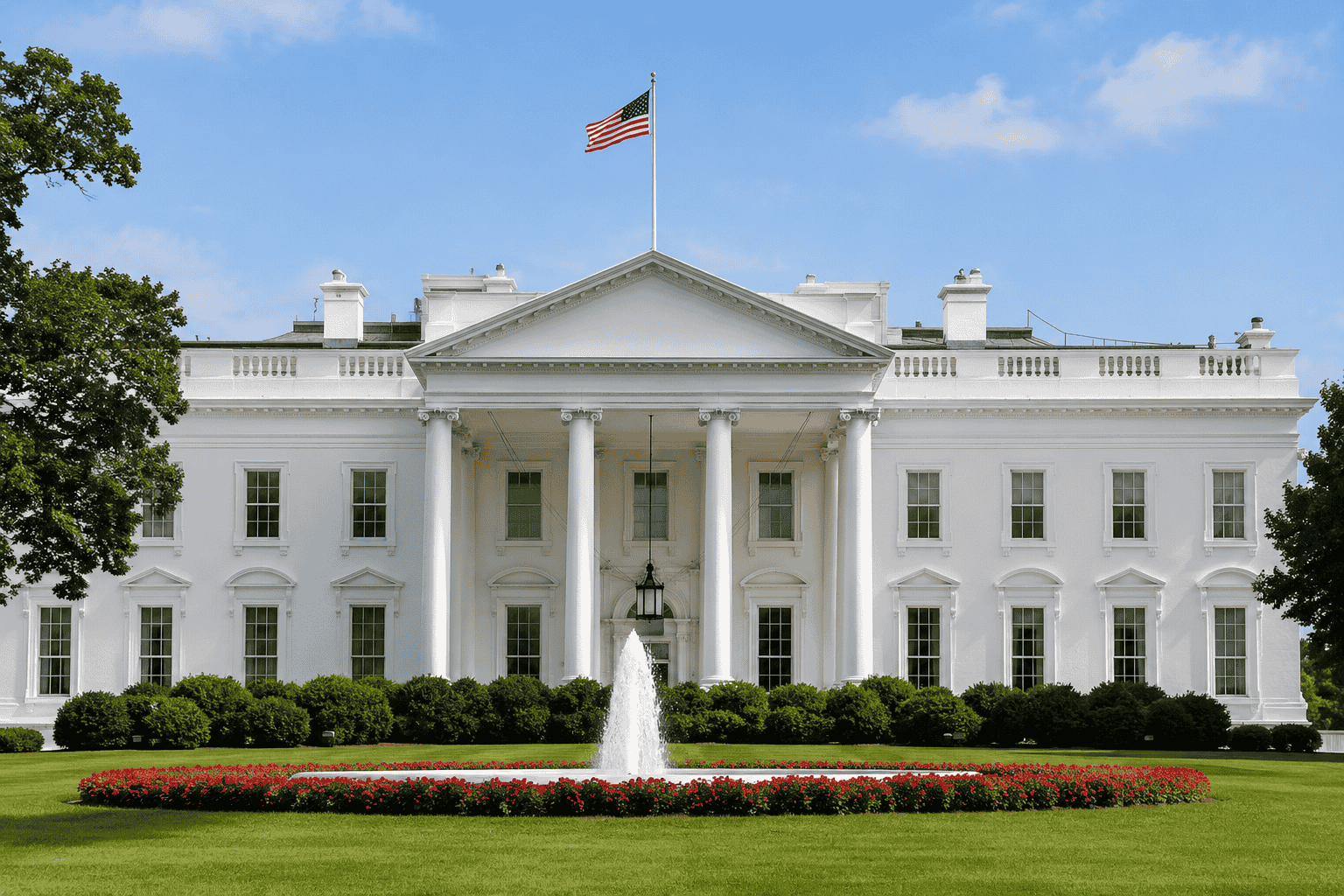
WASHINGTON — Three major news organizations have taken the Trump administration to federal court, arguing that President Donald Trump’s decision to bar their reporters from the White House amounts to unconstitutional retaliation against the press. CNN, MS NOW, and Politico filed the lawsuit Monday, September 21, 2026, just three days after Trump announced the ban on Truth Social.
The case has quickly become one of the most closely watched press-freedom disputes of Trump’s second term, drawing in a federal judge with direct history on this exact issue.
How the Ban Started
Trump Announces the Ban on Truth Social
Trump revealed the ban Friday, September 18, posting on Truth Social that he was barring CNN, MS NOW, and Politico over what he described as “their constant ‘reporting’ FAKE NEWS!” According to reporting from NBC News, several high-level White House aides were caught off guard by the announcement — Trump had reportedly discussed banning specific outlets earlier in his term but had previously been talked out of it or chose not to follow through.
Credentials Confiscated Over the Weekend
The ban wasn’t just symbolic. On Saturday, September 19, reporters from all three outlets attempted to enter the White House as usual and had their press badges physically confiscated. MS NOW White House reporter Akayla Gardner was among those denied entry, according to court filings and photographs taken near the White House complex that weekend.
A Ripple Effect Across the Press Corps
The fallout extended well beyond the three banned outlets. Major television networks suspended pool coverage of the president in protest, effectively halting shared video feeds of presidential events that many outlets rely on. Separately, both The Washington Post and The New York Times announced they would delay publishing photographs of presidential events until midnight, describing it as part of a “collective effort” among newsroom photographers to push back against the ban. Trump, for his part, indicated he might expand the ban to additional outlets.
Inside the Lawsuit
A 27-Page Filing Alleging Constitutional Violations
The three outlets filed a 27-page complaint in the U.S. District Court for the District of Columbia, arguing the ban violated their journalists’ First Amendment rights to newsgathering and speech, as well as their Fifth Amendment due process rights. The filing did not mince words, stating: “This ban could not be a more direct assault on the First Amendment nor a more blatant violation of our most fundamental constitutional principles.”
Who’s Named in the Suit
The lawsuit lists individual reporters — including Gardner, along with colleagues Haslett and Klein — as plaintiffs alongside their news organizations. On the other side, the defendants include President Trump himself, White House Communications Director Steven Cheung, Secret Service Director Sean Curran, and White House Chief of Staff Susie Wiles.
The Core Legal Argument: Viewpoint Discrimination
Central to the lawsuit is the claim that Trump’s motive was explicitly tied to the content of the outlets’ coverage — a legal theory known as viewpoint discrimination, which courts have historically treated as a serious First Amendment violation. The complaint states that Trump “was expressly clear about his viewpoint discriminatory motive,” pointing directly to his own public statements blaming the outlets’ reporting for the ban.
What the News Organizations Are Asking For
In a joint statement released Monday, the three outlets said: “Without notice or process, the White House revoked our journalists’ credentials because it objected to our reporting. Left unchallenged, this threatens press freedom and the public’s right to independent journalism free from government interference.” The plaintiffs asked the court for a temporary restraining order to immediately block enforcement of the ban and restore the confiscated “hard passes” that allow credentialed reporters routine access to White House grounds.
A Judge With a Familiar History
Assigned to Judge Timothy J. Kelly
Shortly after the suit was filed, the case was assigned to U.S. District Judge Timothy J. Kelly — a Trump appointee from 2017. Kelly quickly scheduled a videoconference hearing for Wednesday afternoon.
The Jim Acosta Precedent
Kelly’s assignment to this case is notable because he isn’t new to this exact type of dispute. In 2018, during Trump’s first term, Kelly oversaw CNN’s lawsuit after then-Chief White House Correspondent Jim Acosta had his press pass suspended following a contentious exchange with Trump at a news conference. CNN and Acosta argued at the time that the suspension violated due process — the same core argument being made today. Kelly ultimately ordered the Trump administration to temporarily restore Acosta’s credentials, finding he had been denied due process. Days later, the administration backed down entirely and restored the pass permanently, prompting CNN to drop its case before Kelly ever issued a full written ruling.
Trump’s Reaction to the Judge Assignment
Trump appeared to anticipate an unfavorable outcome. In a Truth Social post Monday afternoon, he wrote: “They have drawn a great judge for them, a man who ruled in favor of Jim Acosta,” adding, “In other words, almost without question, and as usual we’ll go for appeal.”
Broader Legal Context: A Pattern of Press Access Fights
Courts Have Consistently Sided With Journalists
This isn’t the first time press credential access has ended up in federal court during Trump’s presidencies. In his first term, both Acosta and Playboy correspondent Brian Karem had their press passes suspended, each triggering separate lawsuits. In his second term, the Associated Press was denied access to the Oval Office and Air Force One over a naming dispute involving the Gulf of Mexico, prompting its own litigation. In nearly every instance, courts have sided with the journalists involved, relying in part on a 1977 legal precedent establishing that the government cannot arbitrarily deny White House press access without due process — though courts have stopped short of guaranteeing unlimited or unfettered access.
This Case Cites the Karem Precedent Directly
Monday’s lawsuit specifically points to the Karem case as its central legal precedent, arguing that the badge deactivations under the current ban are unconstitutional under the same reasoning that governed that earlier dispute.
What Happens Next
Judge Kelly’s videoconference hearing, scheduled for Wednesday, will be the first real test of how the court intends to handle the request for a temporary restraining order. Based on the outcome of the 2018 Acosta case — where the administration reversed course within days of an unfavorable ruling from the bench — there’s a real possibility this dispute could resolve quickly if Kelly rules against the White House. Trump has already signaled, however, that he expects to lose at the district court level and plans to appeal regardless of the outcome.
Why This Case Matters
Press freedom advocates argue this dispute carries implications well beyond the three outlets directly involved. If the ban is allowed to stand, media law experts and the plaintiffs themselves warn it could set a precedent enabling future administrations — of either party — to selectively exclude journalists from covering the White House based purely on the content of their reporting. Conversely, if courts continue the pattern established since 2018 of ruling in favor of press access, it would reinforce that White House credentials cannot be revoked simply because a president dislikes how he’s being covered.
Either way, the case is shaping up to be a defining press-freedom fight of Trump’s second term — one being decided, notably, in front of a judge who has already ruled on nearly identical facts once before.
About the Author
Anam Younas
Editor of Daily Press Release
I write about technology, AI, business, finance, and global news, bringing readers clear insights into the latest trends and developments.
For more informative content Follow the Daily Press Release channel on WhatsApp: https://whatsapp.com/channel/0029Vb8gRyoIHphMqA6T2w0U