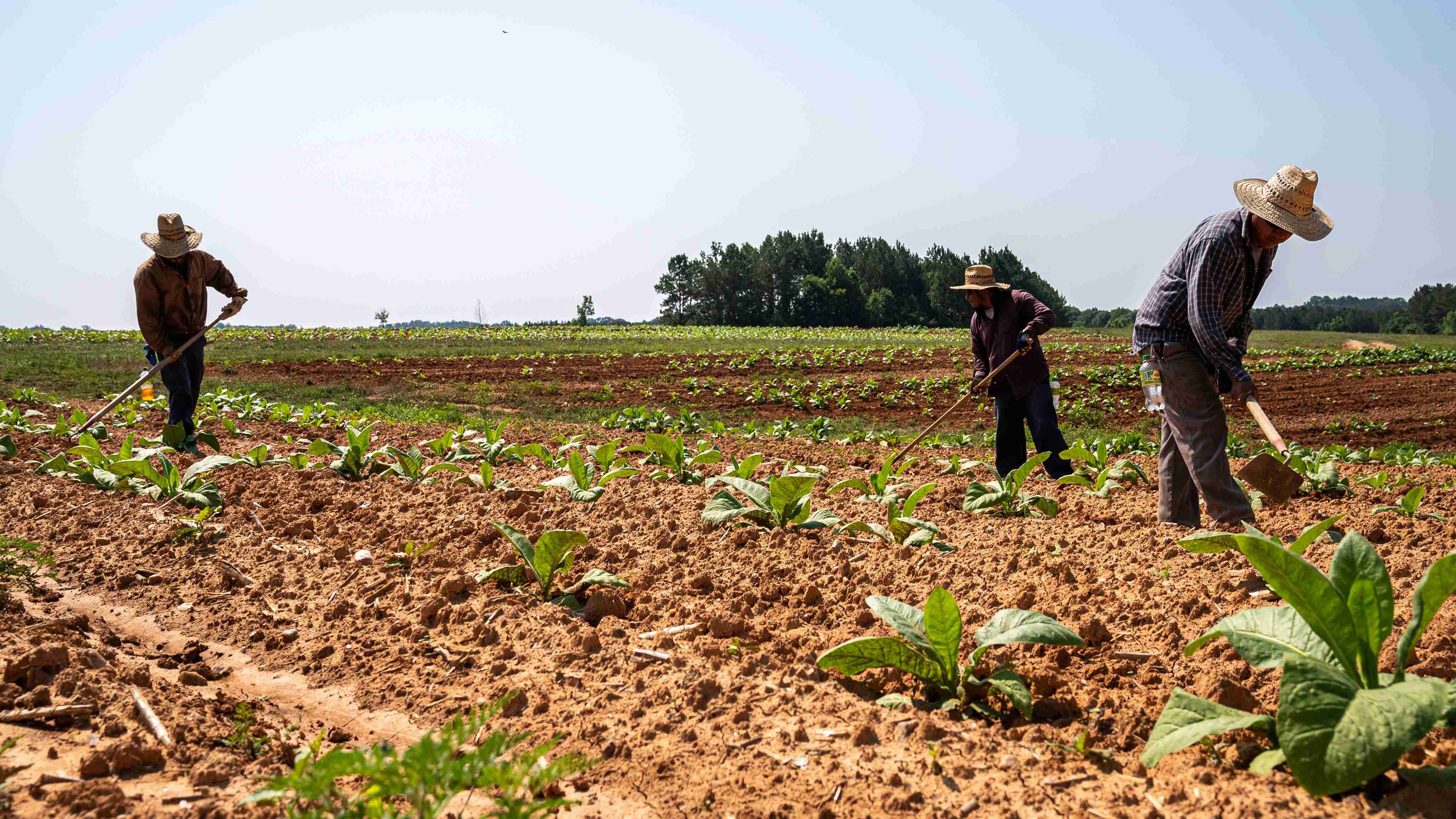
Record-high diesel prices are hitting American farmers at the worst possible moment — right in the middle of harvest season, when tractors, combines, and other heavy equipment need to run nearly nonstop. John Boyd Jr., president of the National Black Farmers Association, says the fuel spike has become severe enough to call it a full-blown national farm crisis.
A $1,000 Fill-Up in the Middle of Harvest
One Farmer’s Saturday Trip to the Pump
Boyd, a fourth-generation farmer in southwest Virginia who grows soybeans, corn, and wheat while also raising beef cattle, filled up his tractor this past Saturday. The bill came to roughly $1,000. He is currently in the middle of harvesting corn, a period when his combines and other heavy machinery run constantly from early morning until dark.
Diesel Prices Have Nearly Doubled in a Year
Boyd says he’s now paying about $7 a gallon for diesel — nearly double what he paid just a year ago. That personal cost tracks closely with the national picture: according to AAA, the national average price for diesel has climbed above $6.51 a gallon, breaking the previous record of roughly $5.85 a gallon set at the beginning of September. Officials and analysts point to the war with Iran as a key driver behind the spike, adding fuel costs to the growing list of economic ripple effects tied to the conflict.
“This Is a National Farm Crisis”
Boyd’s Warning to NPR
Speaking with NPR’s Morning Edition, Boyd didn’t mince words about the severity of the situation. “This is a national farm crisis for farmers,” he said. “I’m having to come up with money that’s really not in the budget.”
No Storage Means No Buffer
Unlike some larger farming operations, Boyd doesn’t store diesel on-site. That means every fill-up requires a separate trip: he loads a truck with a couple hundred gallons at a time, hauls it back to the farm, and transfers the fuel directly into his combine. Without on-farm storage to buy in bulk or lock in prices ahead of time, Boyd — like many smaller farmers — is left paying whatever the market demands at the moment, with no ability to hedge against sudden spikes.
“Robbing Peter to Pay Paul”
To cover the unexpected fuel costs, Boyd says he’s had to shift money away from other parts of his farm budget. “I’m, as my daddy would say, robbing Peter to pay Paul,” he explained, describing how funds meant for other operational needs are now being redirected just to keep the harvest moving.
The Math Doesn’t Add Up for Farmers Right Now
Rising Costs, Flat Crop Prices
The real financial squeeze comes from a mismatch between what farmers are paying and what they’re earning. Corn is currently selling for about $5 per bushel — while the cost of the diesel required to harvest that same corn continues climbing sharply. With little room to absorb the added expense, farmers like Boyd are watching their margins shrink in real time, even as they bring in a full harvest.
Fuel Costs Add to Existing Financial Pressure
Boyd says the spike in diesel prices isn’t happening in isolation — it’s compounding financial strain that was already building across the farming community. He noted that more than 400 Black farmers are currently at risk of losing their farms entirely and are in need of financial assistance, a crisis that predates this year’s fuel price surge but is now being made significantly worse by it.
Why This Matters Beyond the Farm
Harvest Season Leaves No Room to Wait
Unlike many industries that can delay major purchases during a price spike, farmers don’t have that flexibility during harvest. Crops have to be brought in on a strict seasonal timeline, regardless of fuel costs. That means diesel price spikes hit hardest precisely when farmers have the least ability to cut back or postpone spending — making harvest season an especially vulnerable window for the agricultural economy.
A Broader Economic Signal
Boyd’s experience offers a ground-level look at how geopolitical events — in this case, the war with Iran — can move quickly from global headlines to the family farms actually growing the country’s food supply. As diesel prices set new records, the strain is likely to extend beyond individual farmers like Boyd to the broader agricultural supply chain, with potential downstream effects on crop yields, farm survival rates, and ultimately food prices for consumers.
What Comes Next
With diesel prices at record highs and harvest season still underway, farmers across the country are facing similar tough choices about where to cut costs just to get their crops in before the season ends. Boyd’s call for financial assistance for at-risk farmers highlights a growing question facing policymakers: whether additional support will be made available to help farmers absorb fuel costs that show no clear sign of easing in the near term.
About the Author
Anam Younas
Editor of Daily Press Release
I write about technology, AI, business, finance, and global news, bringing readers clear insights into the latest trends and developments.
For more informative content Follow the Daily Press Release channel on WhatsApp: https://whatsapp.com/channel/0029Vb8gRyoIHphMqA6T2w0U