Introduction
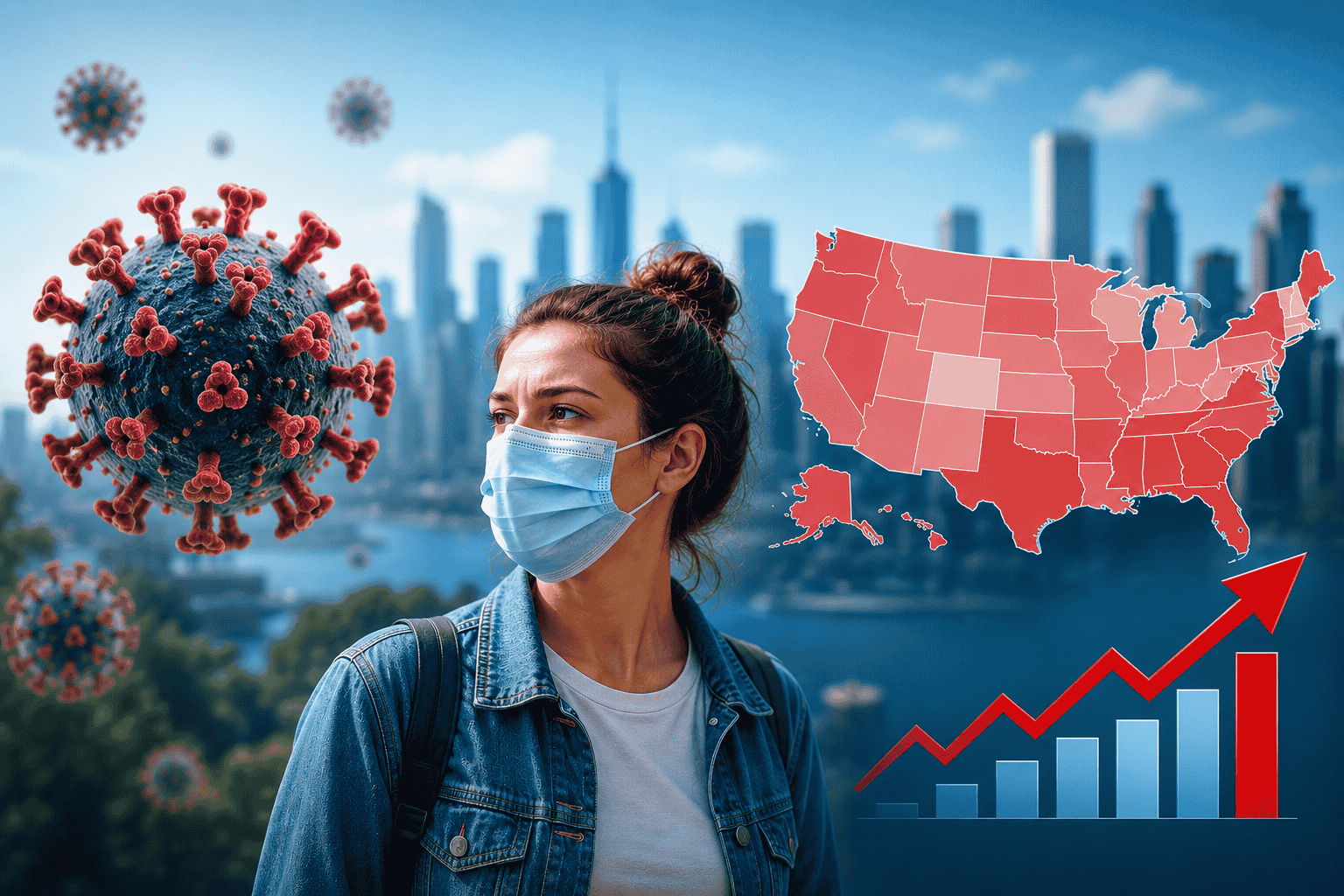
COVID-19 is once again making headlines across the United States as infections increase during the summer of 2026. While COVID-19 is no longer dominating daily life as it did during the pandemic years, the virus continues to circulate, evolve and produce periodic waves.
The latest increase is particularly notable because COVID-19 is traditionally associated with fall and winter respiratory illness. In August 2026, however, infections are growing or likely growing in many parts of the United States.
The current summer wave appears less disruptive than the largest surges of previous years, but rising infections, wastewater signals and healthcare activity show that COVID-19 remains an important public-health issue.
So, why are COVID-19 cases rising in US, and what should Americans know as summer comes to an end?
Why Are COVID-19 Cases Rising in Summer 2026?
COVID-19 does not follow exactly the same seasonal pattern as influenza. The virus can spread throughout the year, and waves can develop when several factors come together.
One important factor is population immunity. Protection from previous infections and vaccinations can decline over time, leaving more people susceptible to infection.
Another factor is the continued evolution of SARS-CoV-2. New variants and subvariants can spread efficiently when they have an advantage over earlier strains.
Summer behavior also matters. Millions of Americans travel during July and August, attend concerts, festivals, sporting events and family gatherings, and spend time in airports and other crowded locations.
These activities create more opportunities for respiratory viruses to move between communities.
Wastewater Is Showing Increased Viral Activity
One of the most useful tools for monitoring COVID-19 in 2026 is wastewater surveillance.
People infected with COVID-19 can shed viral material into wastewater. Testing sewage systems can therefore provide an indication of increasing or decreasing community transmission, including infections that never result in a doctor’s visit or laboratory test.
Recent wastewater measurements have shown rising SARS-CoV-2 activity during the summer.
This is especially important because traditional case counts are less useful than they were during the height of the pandemic. Many people now use at-home tests, do not test at all, or experience mild infections without visiting a healthcare facility.
Wastewater surveillance can help identify a wave earlier than traditional reporting.
COVID-19 Is Increasing Across Much of the Country
The current increase is not restricted to one city or region.
Recent epidemic estimates indicate that COVID-19 infections are increasing or likely increasing across much of the United States, demonstrating that the summer wave has a broad geographic footprint.
However, the intensity of transmission varies between states and communities.
Some areas are experiencing clearer increases in wastewater activity and healthcare visits, while others are seeing relatively limited activity.
This regional variation is one reason Americans should pay attention to local conditions rather than relying only on national headlines.
New COVID-19 Variants Continue to Evolve
Another important factor behind the 2026 summer wave is the continued emergence and spread of newer SARS-CoV-2 variants.
The virus continuously changes through mutation. Most changes have little practical effect, but occasionally a variant gains characteristics that allow it to spread more efficiently or partially evade existing immunity.
Several newer lineages have been monitored during 2026, including variants associated with the current summer increase.
However, the appearance of a new variant does not automatically mean that it causes more severe disease.
Scientists evaluate several characteristics, including:
- Transmissibility
- Immune escape
- Hospitalization patterns
- Severity of illness
- Ability to spread among previously infected or vaccinated people
For most people, the key issue remains whether infection leads to serious disease rather than simply whether a particular variant is circulating.
What Are the Symptoms of COVID-19 in 2026?
COVID-19 symptoms in 2026 can resemble those caused by other respiratory infections.
Common symptoms may include:
- Sore throat
- Cough
- Congestion
- Runny nose
- Fever or chills
- Headache
- Fatigue
- Muscle aches
- Shortness of breath
- Loss or change of taste or smell
Not everyone develops the same symptoms.
Some people may experience only mild cold-like symptoms, while others can become seriously ill.
Because symptoms overlap with influenza, respiratory syncytial virus and other infections, symptoms alone cannot reliably identify COVID-19.
Testing can be useful when someone develops symptoms or has a known exposure, particularly when the result could influence treatment decisions or contact with people at higher risk.
Who Is Most at Risk From Severe COVID-19?
Although COVID-19 can affect anyone, serious illness remains more likely among certain groups.
Older Adults
Older people generally face a greater risk of severe COVID-19, hospitalization and complications.
People With Certain Health Conditions
Some underlying health conditions can increase the risk of serious illness.
People With Weakened Immune Systems
People with weakened immune systems may have greater difficulty fighting respiratory infections and may need additional protection.
Pregnant Women
Pregnancy can also change the risks associated with respiratory infections, making medical guidance particularly important.
People in higher-risk groups should discuss prevention and vaccination options with an appropriate healthcare professional.
How Summer Travel Can Spread COVID-19
The 2026 summer travel season has created additional opportunities for COVID-19 transmission.
Airports, airplanes, hotels, cruise ships, festivals and large gatherings bring people from different communities together.
A person who becomes infected while traveling may return home before developing symptoms and unknowingly transmit the virus to family members, colleagues or friends.
This helps explain why respiratory-virus activity can increase after major travel periods.
The return to schools and universities in late summer and early autumn could create additional opportunities for transmission.
What Can Americans Do to Reduce Their Risk?
Americans do not need to return to the extreme restrictions used during the early pandemic simply because infections are rising.
Instead, practical precautions can reduce the risk of infection and transmission.
Stay Home When Sick
People experiencing respiratory symptoms should consider staying home and limiting close contact with others while they recover.
Improve Indoor Ventilation
Better airflow can reduce the concentration of respiratory particles in indoor environments.
Consider Testing
Testing can help determine whether symptoms may be related to COVID-19, particularly when knowing the result could affect treatment or contact with vulnerable people.
Protect Higher-Risk Individuals
People at greater risk of severe illness should take additional precautions when COVID-19 activity is high in their community.
Is Vaccination Still Important in 2026?
COVID-19 vaccines have changed considerably since the original vaccines were introduced.
Updated vaccines are designed to provide protection against currently circulating strains and reduce the risk of severe outcomes.
Protection against infection can vary over time, but vaccination remains particularly relevant for people who face greater risks from COVID-19.
As the 2026–27 respiratory-virus season approaches, Americans should pay attention to updated recommendations from healthcare professionals and public-health authorities.
Individual vaccination decisions can depend on factors such as age, health status and previous vaccination or infection history.
Could the Summer Wave Become a Larger Fall Wave?
One of the biggest questions is whether the current summer increase will continue into autumn.
A summer increase does not necessarily mean that a major winter surge will follow.
However, continued transmission during late summer could provide opportunities for the virus to circulate as people spend more time indoors during cooler weather.
The upcoming months will therefore be closely monitored.
Healthcare systems will look at:
- Wastewater activity
- Emergency-department visits
- Hospitalizations
- Variant prevalence
- Regional transmission patterns
These indicators can help determine whether COVID-19 is continuing to increase or beginning to decline.
How COVID-19 Has Changed in 2026
The current situation is very different from 2020 and 2021.
The United States now has extensive immunity from vaccination and previous infections, greater clinical experience and improved treatment options.
Testing and reporting have also changed significantly.
As a result, raw case numbers no longer provide the same picture they once did.
Health officials increasingly examine several indicators together, including wastewater surveillance, emergency-department visits and hospitalization trends.
This provides a more realistic understanding of how much COVID-19 is circulating and how severely it is affecting communities.
What Americans Should Watch in the Coming Weeks
The next few weeks will be important as the summer wave develops.
Americans should watch for changes in:
- Wastewater SARS-CoV-2 levels
- Emergency-department visits
- COVID-19 hospitalizations
- Variant prevalence
- School-related transmission
- Regional outbreaks
- Updated vaccine recommendations
The situation can change quickly, particularly if a new variant gains a significant transmission advantage.
Conclusion
The COVID-19 summer wave of 2026 is a reminder that the virus has not disappeared. Although the current situation is very different from the emergency conditions of the early pandemic, COVID-19 continues to produce waves and evolve.
The current increase appears to be influenced by several factors, including changing immunity, evolving variants, summer travel, large gatherings and the virus’s ability to circulate throughout the year.
For most Americans, the current wave does not mean a return to pandemic-era restrictions. Instead, it highlights the importance of staying informed, recognizing symptoms, taking sensible precautions when sick and paying particular attention to updated health guidance if you or someone close to you has a higher risk of severe illness.
As summer turns into fall, the key question will be whether the current increase peaks and declines or develops into a larger respiratory-virus wave.
COVID-19 may no longer define everyday American life, but the summer of 2026 shows that it remains an important part of the country’s health landscape.