Introduction
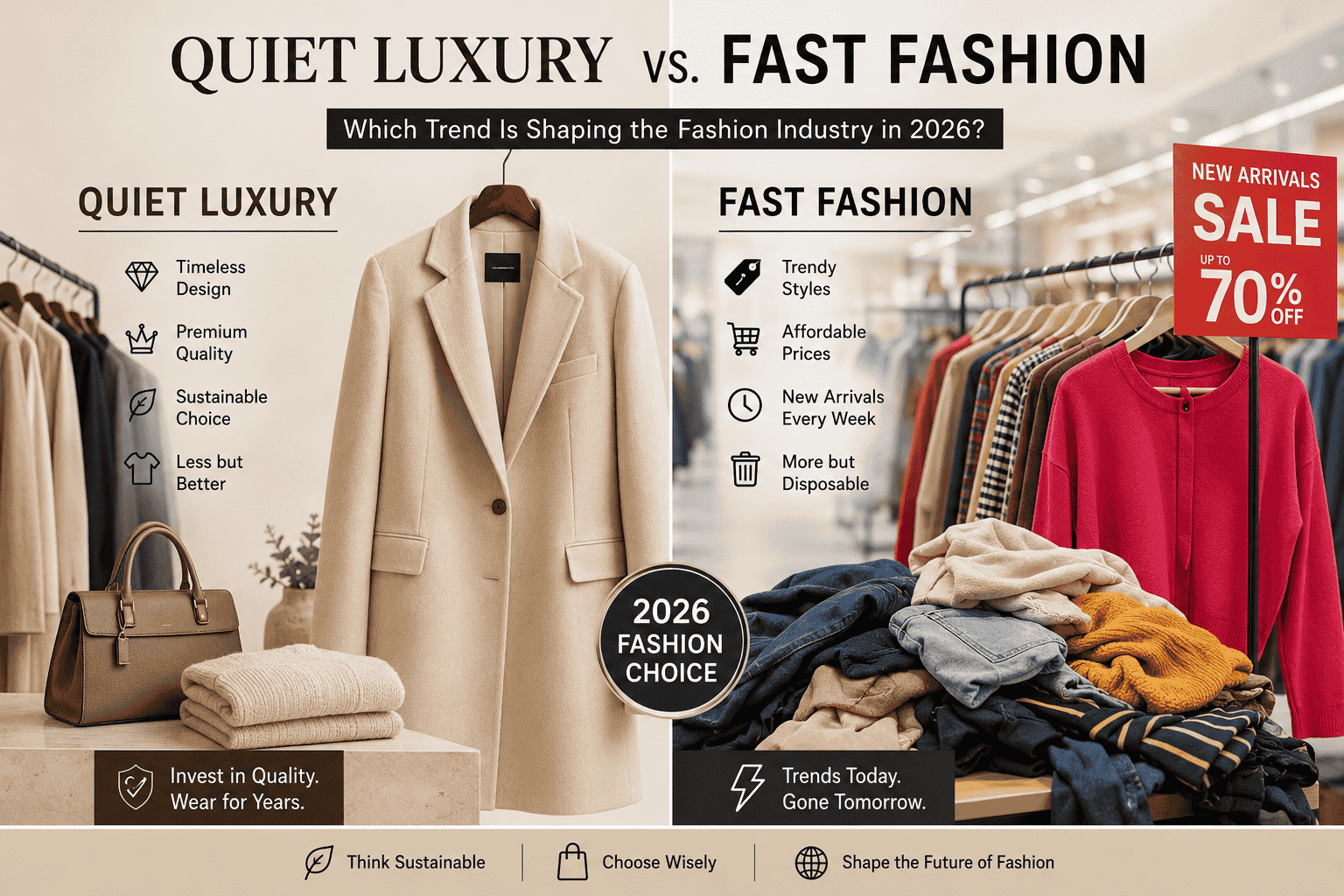
Quiet luxury vs. the fashion industry in 2026 is experiencing a major transformation. Consumer preferences are shifting, social media trends are evolving, and sustainability concerns are becoming more important than ever. At the center of this transformation are two completely different fashion movements: quiet luxury and fast fashion.
Quiet luxury emphasizes timeless designs, premium fabrics, exceptional craftsmanship, and understated elegance. Instead of focusing on large logos and seasonal trends, this style encourages consumers to invest in versatile clothing that remains fashionable for years.
Fast fashion, on the other hand, is built on affordability, rapid production, and constantly changing trends. Brands introduce new collections at an unprecedented pace, allowing consumers to purchase trendy clothing at lower prices.
Both movements have attracted millions of followers worldwide, creating one of the most interesting debates in modern fashion. Is the future of fashion based on quality and longevity, or will affordability and rapidly changing styles continue to dominate the market?
The answer is more complex than many people realize. In 2026, both trends are influencing the industry in different ways, forcing designers, retailers, and consumers to reconsider their relationship with fashion.
What Is Quiet Luxury?
Quiet luxury is a fashion philosophy that prioritizes quality over visibility.
Unlike traditional luxury fashion, which often depends on recognizable logos and branding, quiet luxury focuses on subtle details that demonstrate craftsmanship and sophistication.
Several characteristics define the quiet luxury movement:
- Neutral color palettes
- Premium fabrics
- Minimal branding
- Classic silhouettes
- Exceptional tailoring
- Long-lasting designs
The popularity of quiet luxury has grown because consumers are increasingly rejecting excessive branding and temporary fashion trends.
Rather than purchasing multiple inexpensive garments, many consumers are building capsule wardrobes consisting of carefully selected pieces that can be worn repeatedly.
A simple cashmere sweater, a perfectly tailored blazer, or a high-quality linen shirt can become the foundation of a quiet luxury wardrobe.
This movement represents a shift from conspicuous consumption toward intentional purchasing.
Understanding Fast Fashion
Fast fashion follows a completely different business model.
The primary goal of fast fashion is to make trendy clothing available quickly and at affordable prices.
Manufacturers can now design, produce, and distribute new collections within weeks instead of months.
Several factors have contributed to the growth of fast fashion:
- Low production costs
- Affordable pricing
- Rapid manufacturing
- Social media influence
- Celebrity endorsements
Consumers who follow fast fashion often update their wardrobes frequently to keep pace with changing trends.
Instead of investing in a small collection of timeless garments, fast-fashion shoppers prefer variety and experimentation.
This business model has transformed the fashion industry by making designer-inspired clothing accessible to a much larger audience.
However, growing concerns about sustainability and product quality have created new challenges for the industry.
Why Quiet Luxury Is Dominating Fashion Conversations in 2026
The Rise of Minimalism
Consumers are becoming increasingly interested in minimalist lifestyles.
Many people are simplifying their wardrobes and focusing on fewer but higher-quality clothing items.
Minimalism encourages intentional purchasing and discourages unnecessary consumption.
Quiet luxury aligns perfectly with this philosophy.
The Influence of Social Media
Fashion influencers and digital creators have popularized concepts such as old-money aesthetics, capsule wardrobes, and investment dressing.
As these ideas have gained popularity, consumers have gradually moved away from highly visible logos and short-lived trends.
Greater Interest in Sustainability
Environmental concerns have significantly influenced consumer behavior.
People are becoming more conscious of the environmental impact of excessive clothing production and waste.
As a result, durable clothing that can be worn for years is becoming increasingly attractive.
Why Fast Fashion Remains a Powerful Industry
Affordability
Price remains one of the most important factors influencing purchasing decisions.
Fast fashion allows consumers to stay current with fashion trends without making a significant financial investment.
Trend Accessibility
Fashion trends change rapidly.
Consumers often want the freedom to experiment with different styles, and fast-fashion retailers make that possible.
Digital Shopping Culture
Online shopping has accelerated the growth of fast fashion.
Consumers can explore thousands of products and receive their purchases within days.
Social Media Trends
Social media platforms have shortened fashion cycles.
A single viral trend can influence purchasing decisions worldwide within hours, and fast-fashion companies are designed to respond quickly.
Quiet Luxury vs. Fast Fashion: Key Differences
Although both trends continue to shape the fashion industry in 2026, they differ significantly in their philosophy, production methods, and consumer appeal.
| Feature | Quiet Luxury | Fast Fashion |
| Primary Focus | Quality and craftsmanship | Affordability and trend adoption |
| Design Philosophy | Timeless and minimalist | Trend-driven and constantly changing |
| Price Range | Premium | Budget-friendly |
| Materials | High-quality fabrics | Lower-cost materials |
| Product Lifespan | Long-lasting | Short-term use |
| Production Speed | Slower and more selective | Rapid manufacturing |
| Sustainability | Encourages responsible consumption | Often associated with overproduction |
| Branding | Minimal or invisible logos | Strongly influenced by trends and marketing |
| Shopping Behavior | Fewer, carefully selected purchases | Frequent purchases and wardrobe updates |
| Target Consumers | Buyers seeking durability and elegance | Consumers seeking variety and affordability |
| Environmental Impact | Generally lower because of longer product use | Generally higher because of frequent replacement |
| Social Media Influence | Promotes understated style and capsule wardrobes | Responds quickly to viral trends |
| Wardrobe Strategy | Investment pieces | Seasonal collections |
| Long-Term Value | Higher | Lower |
| Industry Outlook in 2026 | Growing because of sustainability and minimalism | Remaining strong because of affordability |
The table clearly demonstrates that quiet luxury and fast fashion serve different consumer needs.
While one prioritizes quality and longevity, the other emphasizes accessibility and rapid adaptation to changing trends.
Consumer Behavior Is Changing
One of the most significant developments in 2026 is the evolution of consumer behavior.
Modern shoppers are becoming more selective.
Instead of choosing one fashion philosophy exclusively, many consumers are combining elements of both approaches.
For example, a consumer may invest in a premium coat, high-quality footwear, and a tailored blazer while still purchasing affordable seasonal clothing.
This balanced approach allows consumers to enjoy both quality and variety.
How Fashion Brands Are Adapting
Fashion companies are responding to changing consumer expectations.
Luxury brands are developing collections that emphasize versatility and timeless design.
At the same time, fast-fashion retailers are attempting to improve manufacturing practices and introduce more sustainable collections.
Several important trends are emerging throughout the industry.
Sustainable Production
Consumers expect brands to become more transparent.
Companies are investing in environmentally responsible manufacturing processes.
Limited Collections
Instead of producing endless collections, some brands are introducing smaller and more carefully designed product lines.
Higher Product Quality
Fast-fashion retailers are improving product quality to satisfy increasingly demanding consumers.
Personalized Shopping Experiences
Artificial intelligence is helping brands understand customer preferences and deliver more personalized shopping experiences.
Technology is becoming an essential part of modern fashion.
Which Trend Will Shape the Future of Fashion?
The answer depends largely on how consumer preferences continue to evolve.
Quiet luxury is likely to remain influential because it aligns with long-term trends such as sustainability, minimalism, and intentional purchasing.
However, fast fashion will continue to play a major role because affordability remains a priority for millions of consumers.
Instead of one trend replacing the other, the future of fashion may involve a combination of both models.
Fashion brands that successfully balance affordability, quality, sustainability, and innovation will be better positioned for long-term success.
Consumers are increasingly evaluating products according to:
- Quality
- Environmental impact
- Versatility
- Personal values
- Long-term value
This shift is fundamentally changing the global fashion industry.
Conclusion
The debate between quiet luxury and fast fashion represents more than a difference in style.
It reflects changing attitudes toward consumption, sustainability, quality, and personal identity.
Quiet luxury encourages consumers to prioritize timeless designs and exceptional craftsmanship, while fast fashion offers affordability and continuous access to new trends.
In 2026, both movements continue to shape the fashion industry, but their influence is evolving.
Consumers are becoming more intentional, brands are becoming more adaptable, and technology is transforming the shopping experience.
The future of fashion will not be determined by a single trend.
Instead, it will be shaped by consumers who demand better products, smarter purchasing decisions, and clothing that reflects their values.
Whether quiet luxury or fast fashion ultimately becomes the dominant force, one thing is certain: the fashion industry is entering a new era of innovation and transformation.