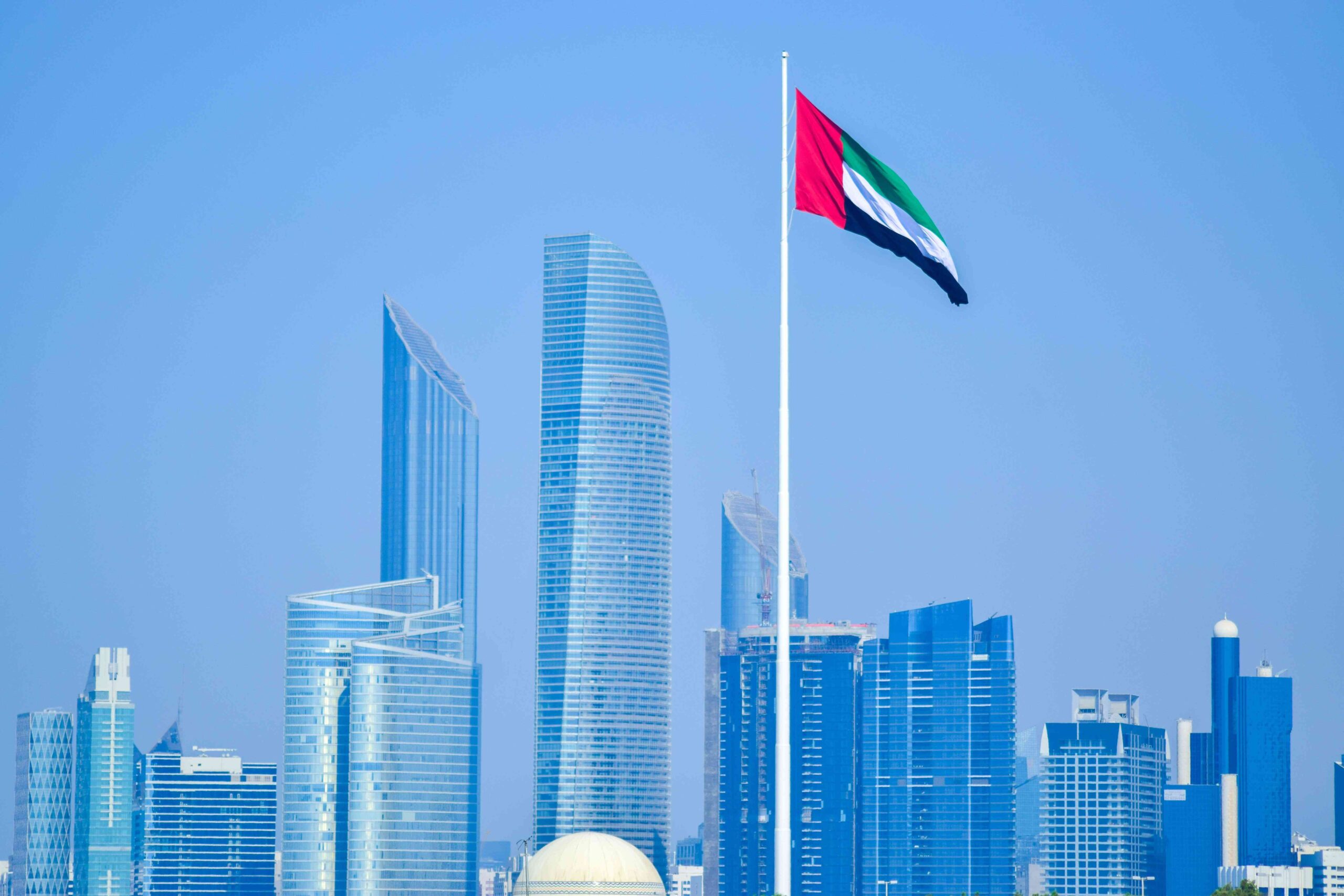
The United Arab Emirates has positioned itself as one of the world’s fastest-growing artificial intelligence hubs, backed by billions of dollars in investments, partnerships with major technology companies, and ambitious plans to build massive AI computing infrastructure.
But growing tensions in the Middle East are forcing the UAE and its technology partners to rethink how AI infrastructure is designed, secured, and protected.
The UAE’s planned $30 billion-plus AI infrastructure project is being redesigned following attacks and growing security concerns in the Gulf. The project was initially envisioned as a massive 5-gigawatt AI campus in Abu Dhabi, but plans are now shifting toward a network of facilities across the UAE to improve resilience and security.
The change highlights a much bigger issue for the global AI industry: AI data centers are becoming strategic infrastructure, and geopolitical instability is increasingly becoming an infrastructure risk.
UAE’s Ambitious AI Infrastructure Strategy
The UAE has made artificial intelligence a central part of its economic diversification strategy.
Rather than relying solely on oil and gas revenues, the country has been investing heavily in technology, cloud computing, semiconductors, data centers, and AI research.
The Stargate UAE initiative is one of the most important projects in this strategy. The partnership involves major technology companies and is designed to establish large-scale AI computing capacity in Abu Dhabi.
The broader project is expected to eventually reach around 5 gigawatts of AI computing capacity, making it one of the world’s largest planned AI infrastructure developments.
For the UAE, the project is about more than data centers. It is part of a broader effort to establish the country as a global center for AI development and sovereign computing.
Geopolitical Conflict Changes the Equation
The biggest challenge is that massive AI facilities require enormous amounts of electricity, cooling infrastructure, telecommunications capacity, and specialized equipment.
They are also difficult to relocate.
That creates a new vulnerability when geopolitical tensions increase.
Recent attacks and security concerns in the Gulf have pushed officials and technology partners to reconsider the original design of the UAE’s AI infrastructure plans.
Instead of concentrating the infrastructure in one enormous campus, a distributed approach could provide greater resilience by placing computing facilities across multiple locations.
Some facilities could also require stronger physical protection, additional security systems, and more resilient infrastructure.
This represents a major shift in how AI infrastructure is being designed.
Why Distributed AI Data Centers Matter
A single massive data center provides enormous computing efficiency, but it can also create a single point of failure.
If a major facility is damaged, disconnected from the power grid, or loses telecommunications connectivity, thousands of AI servers could potentially be affected simultaneously.
A distributed model provides greater resilience.
If computing capacity is spread across several locations, an attack or technical failure affecting one site does not necessarily shut down the entire AI network.
This approach could become increasingly important not only in the Middle East but also in other regions where governments and companies consider AI infrastructure strategically important.
AI Data Centers Are Becoming Strategic Assets
AI data centers were once primarily viewed as commercial technology facilities.
That is changing.
Modern AI infrastructure supports cloud computing, advanced AI models, enterprise applications, government systems, scientific research, and increasingly sensitive national-security operations.
As a result, governments are beginning to treat AI computing capacity as strategic infrastructure.
The UAE’s approach reflects this transformation.
The country is not simply building servers for technology companies. It is attempting to establish long-term sovereign AI capabilities and attract international technology investment.
That makes protecting data centers increasingly important from both an economic and national-security perspective.
The Energy Challenge Is Growing
Security is only one challenge facing the UAE’s AI ambitions.
Energy requirements are another.
Large AI data centers consume enormous amounts of electricity because advanced AI chips require substantial power and cooling.
A 5-gigawatt AI campus would therefore require infrastructure on an extraordinary scale.
This creates additional pressure on electricity generation, transmission networks, cooling systems, and backup power.
The UAE has significant energy resources and is investing in renewable and alternative energy technologies, giving it advantages over some other markets.
However, geopolitical disruption can still affect energy infrastructure and supply chains.
That means future AI projects will increasingly need to consider energy security alongside cybersecurity and physical security.
The AI Investment Race Is Becoming More Geopolitical
The UAE is not alone in using AI infrastructure as part of a broader national strategy.
Countries across the world are competing to attract data centers, AI companies, semiconductor manufacturers, and cloud providers.
The United States remains the largest center for many leading AI companies, while China is building its own domestic AI ecosystem.
Europe, the Middle East, and Asian economies are also trying to secure access to advanced computing.
This competition means AI infrastructure is increasingly connected to international relations.
The location of a data center can influence access to computing power, data, energy, and advanced technology.
As a result, investment decisions are no longer based only on electricity prices, land availability, and tax incentives.
Companies must also consider geopolitical stability.
Investors Face a New Risk Category
The UAE’s experience could have important implications for investors.
Data center investments have traditionally been evaluated based on factors such as:
- Electricity availability
- Land costs
- Construction expenses
- Semiconductor supply
- Cloud demand
- Financing costs
- Internet connectivity
Geopolitical risk now deserves greater attention.
Investors may increasingly ask whether a data center is located near potential conflict zones, whether it has redundant power supplies, whether computing capacity is distributed across multiple locations, and whether critical infrastructure can continue operating during regional disruptions.
This could increase construction costs but potentially reduce long-term operational risk.
AI Infrastructure Could Become More Expensive
Greater security and redundancy come with a price.
Underground facilities, hardened construction, backup power, redundant networks, and geographically distributed computing capacity can all increase capital expenditure.
For AI companies, however, the cost may be justified.
The alternative could be much more expensive: losing access to critical computing capacity during a major geopolitical crisis.
This could lead to a broader trend in which AI infrastructure is designed with resilience as a core feature rather than added later.
UAE Still Wants to Become an AI Powerhouse
Despite the risks, the UAE has shown no indication that it intends to abandon its AI ambitions.
The country continues to expand international technology partnerships and AI investments.
Its strategy extends beyond domestic data centers and includes international investments involving artificial intelligence, space technology, digital infrastructure, and advanced computing.
The UAE has also been strengthening technology and economic relationships with major international partners.
These developments indicate that geopolitical uncertainty is changing the way the UAE approaches AI rather than ending its ambitions.
What This Means for the Global AI Industry
The UAE’s situation offers an important lesson for the global AI industry.
AI development depends on physical infrastructure.
Behind every AI model are data centers, electricity networks, semiconductor supply chains, cooling systems, fiber connections, and specialized hardware.
If those systems become vulnerable to geopolitical events, AI companies must treat infrastructure resilience as part of their long-term strategy.
This could accelerate investment in geographically distributed data centers, hardened facilities, redundant networks, alternative energy supplies, and stronger physical security.
The Future of AI Infrastructure Will Be Built Around Resilience
The AI boom is creating unprecedented demand for computing infrastructure.
But the next phase of that boom may look different from the first.
Technology companies and governments are increasingly realizing that building the world’s largest data center is not enough. They also need to ensure that it can continue operating when unexpected events occur.
The UAE’s decision to rethink its massive AI infrastructure project demonstrates this shift.
The future of AI infrastructure will likely be defined by three priorities: scale, security, and resilience.
For the UAE, the challenge is balancing its ambition to become a global AI powerhouse with the realities of operating in a region facing significant geopolitical uncertainty.
For the rest of the world, the lesson is equally important: the AI race is no longer just about who has the best models or fastest chips. It is also about who can build computing infrastructure that survives the risks of the real world.
Conclusion
The UAE’s $30 billion-plus AI infrastructure strategy remains one of the world’s most ambitious technology investments. But recent geopolitical developments are forcing a fundamental rethink of how these facilities should be built and protected.
Distributed computing campuses, hardened facilities, redundant networks, and stronger security could become the new standard for strategic AI infrastructure.
As artificial intelligence becomes increasingly important to economies, businesses, and governments, protecting the physical systems behind AI may become just as important as developing the technology itself.