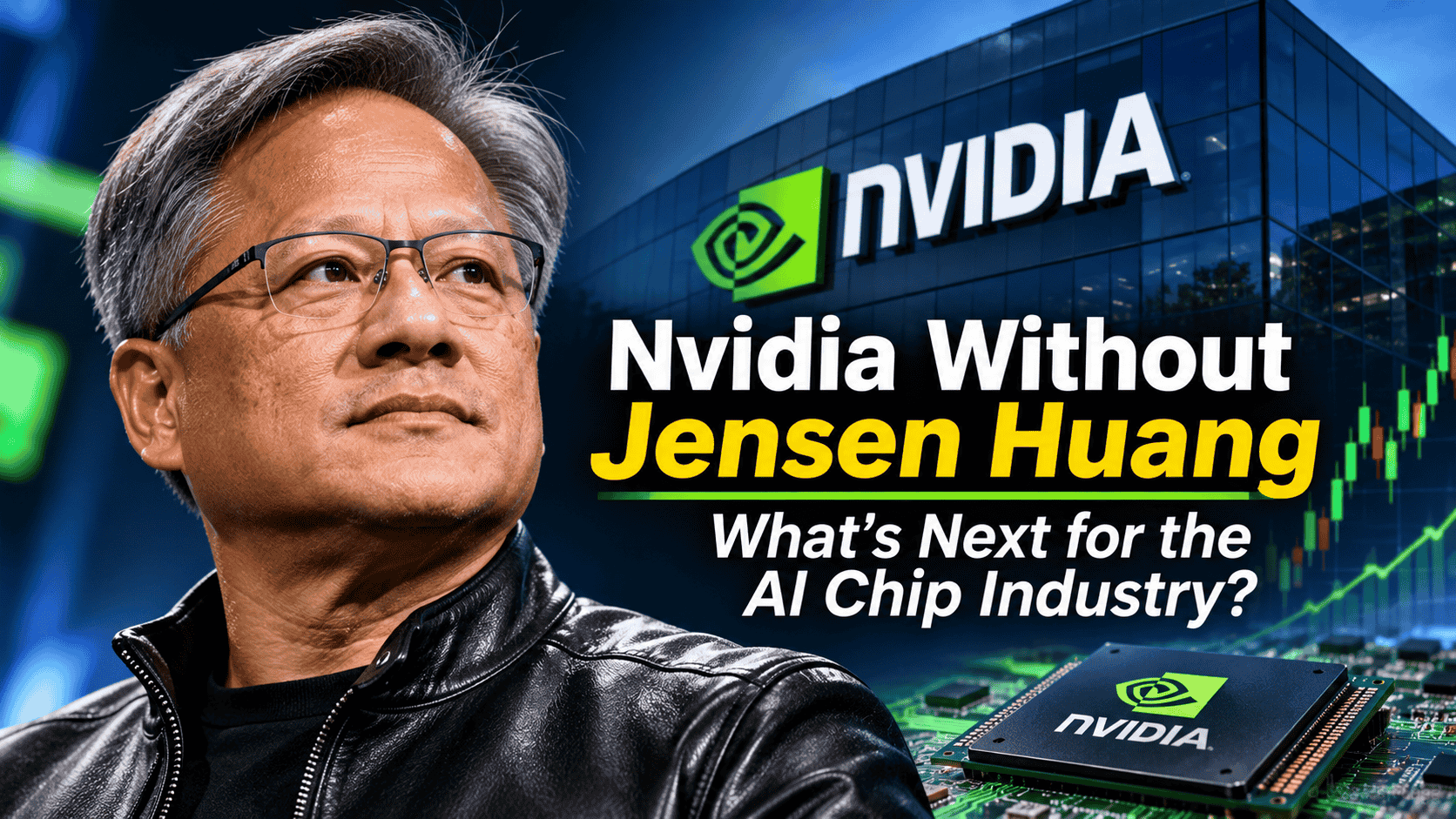
Nvidia is entering an uncertain chapter after the sudden resignation of co-founder and chief executive Jensen Huang, a development that has sent shockwaves through the global technology industry. The departure of one of the most influential figures in artificial intelligence raises important questions about the company’s leadership, future strategy and ability to maintain its dominance in the rapidly expanding semiconductor market.
On November 12, 2026, Nvidia announced that Huang had resigned as president, CEO and board member, effective immediately. The company’s board appointed longtime Chief Financial Officer Colette Kress as interim CEO while beginning a search for a permanent successor. Harvey C. Jones was also appointed as the company’s first-ever board chair.
The leadership transition comes amid intense scrutiny surrounding reports about Huang’s personal relationships and potential national security concerns involving a businesswoman suspected by U.S. authorities of having connections to Chinese intelligence. These allegations and related matters remain subject to investigation, and Nvidia has not publicly identified a specific reason for Huang’s resignation.
For investors, the bigger question is whether Nvidia can continue its extraordinary growth without the executive who helped transform it from a graphics processor manufacturer into the central supplier of the global AI computing industry.
Why Jensen Huang’s Departure Matters for Nvidia
Jensen Huang co-founded Nvidia in 1993 and spent more than three decades building the company into a global semiconductor powerhouse.
Under his leadership, Nvidia moved beyond its traditional graphics processing business and developed advanced computing technologies that became essential to artificial intelligence, machine learning and large-scale data centers.
Its graphics processing units (GPUs) now power many of the world’s most advanced AI systems. Major technology companies depend on Nvidia hardware to train and operate increasingly sophisticated artificial intelligence models.
Huang also played an important role in building Nvidia’s relationships with cloud computing providers, technology companies, governments and AI developers.
His leadership extended beyond product development. He became the public face of the global AI revolution, frequently promoting accelerated computing and positioning Nvidia as a foundational technology provider for the next generation of digital infrastructure.
His departure therefore creates more than a conventional executive succession challenge.
The company must demonstrate that its technological strategy, customer relationships and long-term investment priorities can remain consistent during a period of leadership uncertainty.
Who Is Colette Kress? Nvidia’s New Interim CEO
Nvidia has appointed Colette Kress as interim chief executive while the board searches for a permanent successor.
Kress joined Nvidia in September 2013 and has served as its executive vice president and chief financial officer. Before joining the company, she held senior finance positions at major technology businesses, including Microsoft and Cisco.
Her experience is particularly important because Nvidia has grown into a company with enormous capital requirements, complex international partnerships and an increasingly interconnected AI infrastructure ecosystem.
As CFO, Kress has been involved in managing the company’s financial strategy, capital allocation and relationships with investors.
Her appointment could provide continuity during the transition, particularly in financial management and corporate operations.
However, leading a global semiconductor company requires more than financial expertise. Nvidia must continue investing in advanced processors, software ecosystems, research and development, manufacturing partnerships and international markets.
The board’s eventual decision about permanent leadership will therefore be closely watched by shareholders and the broader technology industry.
Nvidia’s Dominance in the Global AI Semiconductor Market
Nvidia occupies a strategically important position in the artificial intelligence economy.
Its GPUs are widely used in AI data centers, where enormous computing resources are required to train large language models, generate content and operate enterprise AI applications.
The company’s competitive advantage comes from more than its hardware.
Its CUDA software platform, developer ecosystem, networking technologies and relationships with major cloud providers have created substantial barriers for competitors.
Companies developing AI models often prefer Nvidia’s integrated hardware and software environment because it provides an established infrastructure for large-scale computing.
This ecosystem has helped Nvidia build a strong competitive position against semiconductor rivals such as AMD and other emerging AI chip developers.
However, the industry is changing.
Major cloud providers are developing their own AI processors, while competitors are investing heavily in alternative accelerator technologies.
Nvidia’s next leadership team must protect its technological advantage while responding to customers seeking greater flexibility, lower costs and reduced dependence on a single chip supplier.
Could AMD and Other Competitors Benefit From Nvidia’s Leadership Crisis?
Nvidia’s leadership transition could create opportunities for competitors, particularly if uncertainty affects customer confidence or delays important strategic decisions.
Advanced Micro Devices (AMD) is one of the most closely watched alternatives in the AI accelerator market.
AMD has been expanding its data-center business and developing advanced processors designed to compete with Nvidia’s AI hardware.
Broadcom is another important competitor because of its role in custom AI chip development and networking technologies.
Intel is also attempting to strengthen its position in the semiconductor industry through investments in manufacturing and advanced computing.
Meanwhile, major cloud companies are increasingly developing proprietary processors to reduce infrastructure costs and gain greater control over their AI operations.
However, Nvidia’s competitive position should not be underestimated.
Its established software ecosystem, developer relationships, manufacturing partnerships and extensive installed hardware base provide important advantages.
A change in executive leadership does not automatically eliminate these strengths.
The more important question is whether Nvidia’s new management can continue executing its technology roadmap at the same pace while maintaining confidence among customers and investors.
The Financial Risks Behind Nvidia’s AI Expansion
Another important issue facing Nvidia’s next leadership team is the financial structure of the wider AI industry.
The global AI boom has encouraged enormous spending on data centers, computing infrastructure, semiconductor equipment and electricity generation.
Nvidia has benefited from this investment cycle by supplying the advanced processors required to operate AI systems.
However, the company also participates in an increasingly interconnected ecosystem involving investments, partnerships and financing arrangements with AI infrastructure businesses.
These relationships can accelerate market expansion, but they also create questions about financial exposure and long-term demand.
For example, infrastructure providers require substantial capital to purchase Nvidia processors and construct data centers. Some technology companies and financing partners have developed arrangements involving investment commitments, customer contracts and infrastructure funding.
Such arrangements can support rapid growth, but investors must examine whether underlying customer demand and operating cash flows are strong enough to justify the spending.
Nvidia’s future leadership will need to balance aggressive expansion with financial discipline.
If AI infrastructure investment slows or customers become more cautious, semiconductor demand could face pressure.
This makes capital allocation and risk management increasingly important for the company’s long-term performance.
What Investors Should Watch Before Nvidia’s Next Earnings Report
Nvidia’s upcoming financial results will be particularly important for investors assessing the consequences of the leadership transition.
The company is scheduled to report its third-quarter fiscal 2027 results on November 17, 2026.
Investors will be watching several developments:
1. Revenue growth and customer demand
Nvidia must demonstrate that demand for AI processors remains strong despite uncertainty surrounding its leadership.
2. Data-center business performance
The data-center division remains central to the company’s AI strategy. Its growth and profitability will provide important information about the sustainability of infrastructure spending.
3. Management guidance
Investors will want clarity about product launches, manufacturing capacity, supply commitments and future revenue expectations.
4. Leadership succession
The appointment of a permanent CEO will be one of the most important corporate developments to monitor.
5. U.S.-China semiconductor policy
Export restrictions and geopolitical tensions could influence Nvidia’s access to international markets, particularly China.
These factors may have a greater influence on Nvidia’s long-term performance than short-term reactions to the leadership announcement.
Could Nvidia’s Leadership Change Affect the Global AI Boom?
Nvidia has become one of the most important companies in the global AI ecosystem. Its technology supports the infrastructure used by AI developers, cloud computing providers, research institutions and enterprise customers.
This means that uncertainty surrounding Nvidia could extend beyond the company itself.
Technology businesses investing heavily in AI infrastructure may reassess their supplier relationships and long-term computing strategies.
Competing semiconductor manufacturers could attract greater attention from investors and customers seeking alternative sources of advanced processors.
At the same time, governments may increase scrutiny of semiconductor exports, corporate governance and the security implications of advanced computing technologies.
Nevertheless, the broader AI industry is unlikely to stop expanding simply because one company changes its leadership.
Demand for computing power remains connected to developments in automation, enterprise software, scientific research, robotics and digital services.
The key uncertainty is how the market’s leading companies will compete for that demand in the years ahead.
Is Nvidia Still a Strong Long-Term Investment Opportunity?
In my view, Nvidia’s leadership crisis creates a meaningful short-term risk, but it does not automatically undermine the company’s long-term technological position.
Its semiconductor capabilities, software ecosystem and established customer relationships remain valuable competitive assets.
However, investors should avoid assuming that past performance guarantees future success.
The company now faces a leadership transition at a particularly sensitive moment for the AI industry.
A successful transition could demonstrate that Nvidia has developed an institutional structure capable of operating beyond its founding CEO.
A difficult transition, on the other hand, could create opportunities for competitors and raise questions about the company’s strategic direction.
Investors should pay particular attention to management decisions, financial performance, customer commitments and the company’s ability to maintain technological leadership.
Rather than reacting exclusively to headlines, a more disciplined investment approach would evaluate Nvidia’s earnings, valuation, cash flow and competitive position.
Conclusion: Nvidia’s Next Chapter Could Redefine the AI Investment Landscape
Jensen Huang’s departure marks a historic moment for Nvidia and the global semiconductor industry.
For more than three decades, his leadership helped transform the company into a central force behind modern artificial intelligence.
Now, Nvidia must demonstrate that its competitive advantages are built into its technology, workforce and business strategy rather than depending entirely on one individual.
Colette Kress faces the immediate challenge of maintaining operational stability while the board searches for permanent leadership.
For global investors, the coming weeks will be important in understanding whether the transition creates temporary uncertainty or signals a deeper change in the AI semiconductor market.
The AI revolution is far from over. But Nvidia’s next chapter could determine whether the company continues leading that transformation or gives competitors an opportunity to close the gap.
Daily Press will continue tracking Nvidia, global semiconductor competition and the financial developments shaping the future of artificial intelligence.
Frequently Asked Questions (FAQs)
1. Why did Jensen Huang resign as Nvidia CEO?
Nvidia announced Huang’s resignation on November 12, 2026, amid scrutiny surrounding reports about his personal relationships and related national security concerns. The company did not publicly specify a reason for his departure.
2. Who is replacing Jensen Huang at Nvidia?
Nvidia CFO Colette Kress has been appointed interim CEO while the board searches for a permanent successor.
3. What happens to Nvidia after Jensen Huang’s departure?
The company intends to continue its existing operations, customer commitments and technology roadmap under its interim leadership. Its longer-term direction will depend on the permanent CEO appointment and future strategic decisions.
4. Could AMD benefit from Nvidia’s leadership crisis?
AMD could gain opportunities if customers diversify their AI chip suppliers. However, Nvidia’s established hardware and software ecosystem remains a significant competitive advantage.
5. When will Nvidia announce its next earnings results?
Nvidia has scheduled its third-quarter fiscal 2027 earnings announcement for November 17, 2026.
6. Should investors sell Nvidia shares following the CEO resignation?
A leadership change alone is not sufficient to determine an investment decision. Investors should evaluate earnings, valuation, cash flow, management succession and the company’s competitive position before making investment decisions.
Follow Daily Press on X for the latest news and updates: @dailypressit.