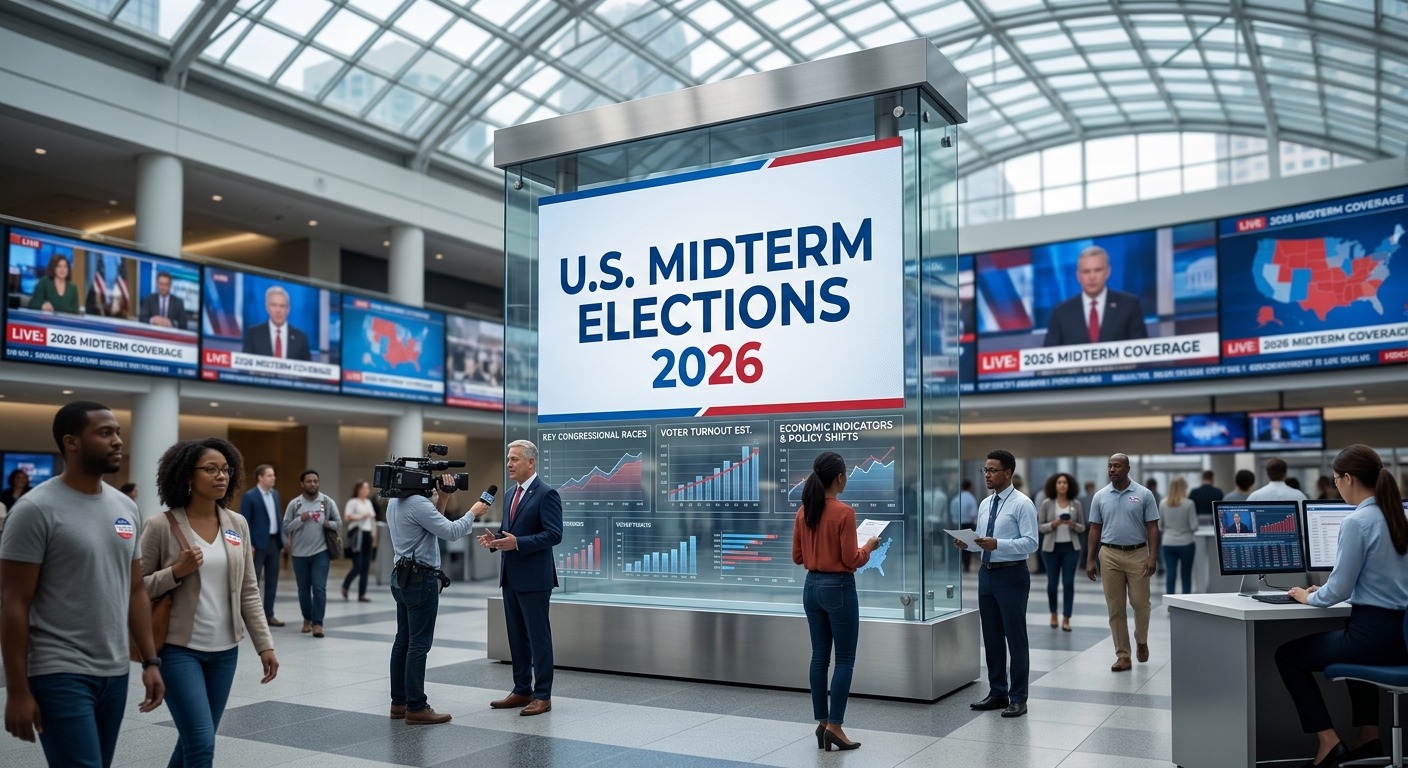
The 2026 U.S. midterm elections are increasingly shaped by the economy, inflation, healthcare expenses, housing affordability, and the rising cost of everyday essentials. With Election Day approaching on November 3, American voters are placing economic security at the center of their political decisions, creating significant challenges for candidates seeking control of Congress.
A national poll released by the Associated Press-NORC Center for Public Affairs Research on October 15 found that 85% of voters consider the economy one of the most important issues when deciding how to vote, while 84% identified the cost of living as a major concern. The findings highlight the importance of household finances in this year’s congressional elections.
For businesses, investors, and policymakers, the election represents more than a political contest. Its outcome could influence U.S. economic policy, taxation, federal spending, healthcare legislation, trade, and the direction of financial markets.
Why the Economy Is the Biggest Issue in the 2026 Midterm Elections
Economic conditions often influence American elections, particularly when households feel that essential expenses are becoming harder to manage. In 2026, concerns about prices and affordability are affecting voters across party lines.
According to the October AP-NORC poll, 85% of voters identify the economy as a major election issue. The same survey found that 84% consider the cost of living a top priority.
These figures demonstrate that economic concerns extend beyond one political party. Democratic and Republican voters may disagree about the causes of rising costs and the best policy responses, but both groups are concerned about their household finances.
For congressional candidates, the challenge is to present credible plans addressing wages, consumer prices, employment, taxes, and economic growth.
Inflation and Everyday Expenses Influence Voter Decisions
Inflation remains a central concern because its effects are visible in ordinary household budgets. Americans must balance spending on groceries, gasoline, electricity, housing, insurance, and other necessities.
Even when the rate of inflation slows, prices do not automatically return to previous levels. This distinction matters politically because voters often judge economic performance by how much their regular purchases cost rather than by changes in official inflation statistics alone.
The Pew Research Center reported on October 8 that 73% of Americans were very concerned about food and consumer-goods prices, while 74% were very concerned about gasoline and energy prices.
For families with limited savings, continued increases in essential expenses can reduce discretionary spending and make unexpected bills more difficult to manage.
Housing and Healthcare Remain Major Financial Pressures
Housing affordability is another important issue in the United States. High home prices, mortgage payments, rent, property taxes, and insurance costs can prevent households from saving or purchasing homes.
Healthcare creates a similar challenge. Insurance premiums, prescription medications, and out-of-pocket medical expenses can consume a substantial share of family income.
According to Pew Research Center’s October survey, 66% of Americans were very concerned about housing costs, while 69% expressed strong concern about healthcare costs.
These issues are especially important for younger adults, first-time homebuyers, renters, retirees, and families managing multiple financial responsibilities.
Candidates who address affordability will need to explain how their proposals would affect household costs, government spending, and access to essential services.
How the Economy Could Shape the Battle for Congress
The November 3, 2026, midterm elections will determine all 435 seats in the U.S. House of Representatives and approximately one-third of the Senate’s seats.
The results will shape the legislative environment for the remainder of President Donald Trump’s current term. Control of either chamber can influence whether the administration advances its legislative agenda, faces greater congressional oversight, or encounters stronger opposition to proposed policies.
A recent AP-NORC poll found that 47% of voters preferred Democratic control of the House, compared with 38% who preferred Republican control. For the Senate, 46% favored Democratic control and 38% preferred Republican control. The remaining respondents were unsure.
These figures represent voter preferences at the time of the survey, not predictions of the final election results.
Economic Accountability Becomes a Campaign Issue
Candidates from both parties are likely to face questions about inflation, employment, taxes, energy costs, and government spending.
Republican candidates may emphasize tax policy, deregulation, domestic energy production, immigration enforcement, and business investment. Democratic candidates may focus on healthcare affordability, consumer protection, wages, housing costs, and changes to tax or spending policies.
However, campaign promises do not guarantee particular economic outcomes. The effects of legislation depend on its details, implementation, financing, and broader economic conditions.
Voters will need to assess whether candidates offer specific and realistic proposals rather than broad promises to reduce costs.
What the 2026 Midterms Mean for American Businesses and Investors
The election also matters to companies operating in the United States and international investors with exposure to American markets.
Congress influences taxation, federal spending, infrastructure funding, energy policy, trade legislation, and regulations affecting industries ranging from technology to manufacturing.
Taxation and Business Investment
Changes in corporate taxes, investment incentives, and federal spending priorities can influence decisions about hiring, capital expenditure, and expansion.
Businesses may postpone major investments when policy uncertainty increases. Conversely, clearer rules and predictable tax arrangements can help companies plan longer-term projects.
Investors should distinguish between campaign proposals and policies that have actually passed through Congress.
Technology, Artificial Intelligence, and Regulation
Artificial intelligence is another emerging election issue. The AP-NORC survey found that 35% of voters considered AI one of the most important issues in their election decisions, below the economy, cost of living, healthcare, and the war with Iran.
Nevertheless, AI policy can have substantial implications for technology companies, financial institutions, workers, and infrastructure providers.
Congressional debates may affect data privacy, cybersecurity, workforce training, AI safety, energy demand, and the regulatory environment for technology businesses.
The precise direction of policy will depend on election results and negotiations among lawmakers.
Energy Prices and the Cost of Doing Business
Energy costs influence transportation, agriculture, manufacturing, logistics, and retail operations. Higher fuel and electricity expenses can increase production costs and place pressure on profit margins.
Energy policy is therefore relevant both to household affordability and to corporate competitiveness.
For U.S. businesses, the election could influence debates about domestic energy production, infrastructure investment, environmental regulation, and international energy trade.
Why Independent Voters Could Matter
Independent voters may play an important role in closely contested congressional districts and Senate races.
Their economic priorities can include inflation, employment opportunities, housing affordability, healthcare expenses, and confidence in government decision-making. Unlike voters who consistently support one party, independents may be more willing to reconsider their choices based on current conditions and candidate proposals.
The October AP-NORC findings also indicate broad dissatisfaction with the country’s political direction. Eight in ten voters said the country needed substantial change or a complete overhaul of how it is governed.
However, dissatisfaction does not necessarily translate into support for one specific party. Candidates must still persuade voters that their proposed policies can produce measurable improvements.
What International Observers Should Watch
The 2026 U.S. midterm elections are relevant beyond American borders because the United States remains a major participant in global trade, investment, technology, and financial markets.
For European businesses, changes in U.S. trade and industrial policies could affect exporters, manufacturers, and transatlantic investment.
For Asian economies, American decisions on tariffs, semiconductor exports, technology restrictions, and supply chains could influence trade and investment strategies.
For Pakistan, U.S. economic and trade policy may affect exporters, overseas investment, technology partnerships, and broader financial conditions. Changes in global energy prices and the value of the U.S. dollar can also affect import costs and currency pressures.
International companies should monitor congressional developments without assuming that an election automatically produces immediate policy changes. Legislation still requires political agreement, and some policies can be implemented through executive agencies while others require congressional approval.
What Happens Next Before November 3?
The final weeks of the campaign will give candidates an opportunity to clarify their economic proposals and respond to voter concerns.
Voters can compare candidates’ positions on taxes, healthcare, housing, energy, employment, and federal spending. They can also review their registration status, early-voting options, mail-ballot rules, and polling locations through official state and local election websites.
For investors and business leaders, the key indicators to monitor include polling trends, competitive congressional races, policy proposals, and potential changes in legislative control.
The election results will provide a clearer picture of the political environment facing U.S. businesses and financial markets in 2027. Until then, uncertainty over congressional control may remain an important consideration for economic planning.
Frequently Asked Questions
When are the 2026 U.S. midterm elections?
Election Day is November 3, 2026. Voters will choose members of Congress, along with candidates for state and local offices in many jurisdictions.
Why is the economy important in the 2026 midterms?
Inflation, housing, healthcare, energy prices, and household purchasing power are major voter concerns. The October 15 AP-NORC poll found that 85% of voters considered the economy a top issue and 84% said the same about the cost of living.
Which congressional seats are being contested?
All 435 seats in the House of Representatives and approximately one-third of the Senate’s seats are scheduled for election.
How could the midterms affect U.S. businesses?
The election could influence the legislative outlook for taxes, federal spending, trade, energy, technology regulation, and other policies affecting business investment.
Where can Americans find official voting information?
Voters should consult their state or local election office for registration deadlines, polling locations, early-voting details, and mail-ballot requirements.
Conclusion
The 2026 U.S. midterm elections are unfolding against a backdrop of economic anxiety and demands for greater affordability. Polling released in October shows that the economy and cost of living are central concerns for voters across party lines.
The results on November 3 could reshape congressional priorities and influence the policy environment for businesses, investors, and households. For the United States and its international partners, the important questions will be how elected officials respond to affordability concerns, whether Congress can reach agreement on major economic issues, and how policy decisions affect long-term growth.
Editorial note: The article’s poll figures are based on surveys published October 15, 2026, and should be attributed to AP-NORC and Pew Research Center when publishing.
Author: Anam Younas
Follow Daily Press on X for the latest news and updates: @dailypressit.