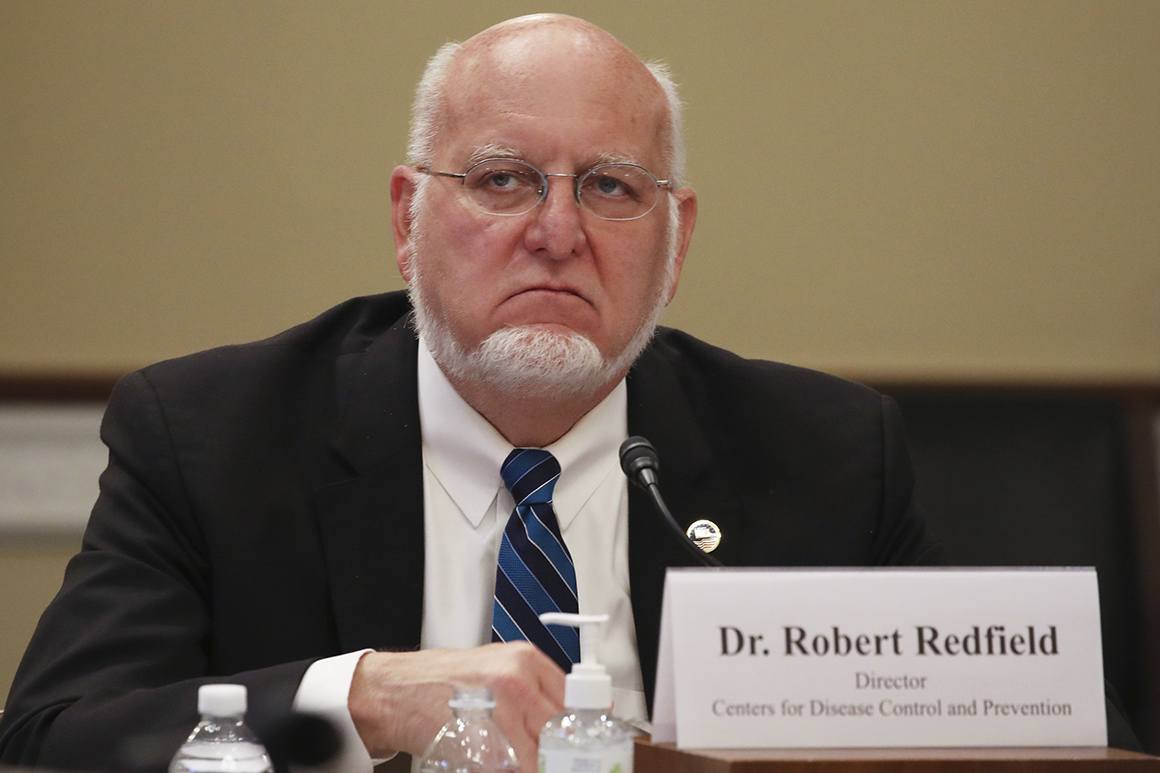
Robert Redfield is a prominent American virologist and physician best known for his leadership role as Director of the U.S. Centers for Disease Control and Prevention (CDC) from 2018 to 2021 and his decades of work on HIV and other infectious diseases. His career spans military medicine, academic research, and high-level public health leadership in the United States and abroad.
Who is Robert Redfield?
Robert Redfield is a medical doctor specializing in virology and infectious diseases, with a particular focus on HIV/AIDS, Ebola, and COVID‑19. Over more than 30 years, he has combined clinical practice, research, and policy-making to help shape modern responses to viral epidemics and global health threats.
Born in 1951, Redfield built his career at the intersection of laboratory science and frontline patient care, working in both the U.S. Army and major academic medical centers. His work on HIV in the 1980s and 1990s, as well as his leadership during the COVID‑19 pandemic, has made him a widely recognized voice in public health.
Early Life and Education
Redfield studied medicine in the United States and chose internal medicine and infectious diseases as his specialization, drawn by the challenge of emerging viral infections. After completing his medical training, he joined the U.S. Army Medical Corps, where he began focusing on retroviruses, especially HIV.
His early academic work centered around understanding how HIV spreads, how it progresses in patients, and how to stage the disease for better clinical management. These foundational years set the stage for his later leadership roles in both military and civilian public health institutions.
Military Career and HIV Research
One of the defining chapters of Robert Redfield’s career was his 20‑year service in the U.S. Army Medical Corps. During this time, he served at the Walter Reed Army Institute of Research, where he led key research efforts on HIV and other retroviruses.
At Walter Reed, Robert Redfield co‑founded and directed the Department of Retroviral Research, focusing on the clinical and virological aspects of HIV infection. His team contributed to pivotal findings on how HIV infects individuals, how it replicates, and how it can be monitored and treated over time.
Key Scientific Contributions to HIV/AIDS
Redfield’s HIV research is frequently cited in discussions of early HIV science and clinical practice. Some of his most notable contributions include:
- Demonstrating the importance of heterosexual transmission of HIV, which changed how public health agencies understood the epidemiology of the disease and expanded prevention strategies beyond high‑risk groups.
- Co‑developing the Walter Reed staging system for HIV infection, a clinical tool used to classify the severity and progression of HIV in patients.
- Showing that active HIV replication occurs at every stage of HIV disease, which influenced how clinicians approach long‑term management of infection.
These scientific insights helped public health authorities refine screening, prevention, and treatment programs during the height of the HIV/AIDS crisis.
Institute of Human Virology and Academic Leadership
After retiring from the Army, Robert Redfield co‑founded the Institute of Human Virology (IHV) at the University of Maryland School of Medicine, alongside leading researchers, including Robert Redfield. At IHV, he served in multiple leadership roles, including Director of Clinical Care and Research, Chief of Infectious Diseases, and professor of medicine, microbiology, and immunology.
In Baltimore and Washington, D.C., Redfield oversaw extensive clinical programs providing HIV care and treatment to thousands of patients. Under his guidance, IHV expanded into a global center for HIV care, research, and medical education, integrating local clinical work with international projects.
Global Health Work in Africa and the Caribbean
Robert Redfield influence extends far beyond the United States, especially through his work in Africa and the Caribbean. From the mid‑2000s through the early 2010s, he collaborated with U.S. government‑funded programs and faith‑based organizations to scale up HIV treatment in resource‑limited settings.
Programs he helped lead provided care and treatment to more than 700,000 people living with HIV in multiple African and Caribbean countries. In addition, he supported post‑graduate medical education and training for clinicians working on HIV and other infectious diseases in these regions.
Leadership at the Centers for Disease Control and Prevention (CDC)
Robert Redfield was appointed the 18th Director of the CDC in 2018, taking charge of one of the world’s most influential public health institutions. At the same time, he became Administrator of the Agency for Toxic Substances and Disease Registry, broadening his portfolio to include environmental health.
As CDC Director, he oversaw domestic and global public health programs ranging from infectious disease control and emergency preparedness to chronic disease prevention. His tenure included managing the agency’s response to multiple complex health threats and emerging epidemics.
Role During the COVID‑19 Pandemic
Redfield’s most publicly visible role came during the COVID‑19 pandemic, when he served as CDC Director and a member of the White House Coronavirus Task Force. In this capacity, he provided guidance on testing, mitigation strategies, surveillance, and vaccine rollout while dealing with rapidly evolving scientific data and intense public scrutiny.
His experience with previous epidemics, including HIV/AIDS and Ebola, informed his approach to COVID‑19, especially in areas such as surveillance, laboratory testing, and international collaboration. After leaving the CDC, he continued to engage in policy discussions about the origins of COVID‑19, including serving as a key witness in a 2023 U.S. House subcommittee hearing on the topic.
Work on Ebola, Drug Use Disorders, and Other Threats
During his tenure at the CDC, Redfield helped lead responses to several Ebola outbreaks, contributing to U.S. and global strategies to contain the virus. He also advanced initiatives to address the growing crisis of drug use disorders, recognizing the intersection of infectious disease, addiction, and mental health.
His leadership agenda included programs targeting acute flaccid myelitis in children, nicotine addiction among youth, and other emerging health concerns. He played a role in developing and promoting the U.S. presidential initiative to end HIV transmission in the United States by 2030, integrating decades of HIV expertise into a coordinated national plan.
Advisory Roles and Public Service
Outside his formal leadership roles, Robert Redfield has served on numerous national and international advisory bodies related to HIV, infectious diseases, and public health preparedness. He has been a member of the President’s Advisory Council on HIV/AIDS, including serving as chair of its international subcommittee from 2006 to 2009.
Following his service at the CDC, Redfield became a senior public health advisor to the governor of Maryland, supporting state‑level responses to COVID‑19 and other health issues. He has also been involved with organizations focused on biosafety and emerging pathogens, reflecting his long‑standing concern about laboratory safety and pandemic preparedness.
Robert Redfield Today
In recent years, Robert Redfield has continued to work in academic and advisory roles, contributing his expertise to universities, think tanks, and public health initiatives. He remains an influential voice in discussions about pandemic preparedness, HIV strategy, and the global governance of high‑risk pathogen research.
His decades of experience—from military research laboratories and inner‑city clinics to global health programs and federal agencies—shape his perspective on how societies should prepare for and respond to infectious disease threats. For many in the medical and public health community, his career illustrates how research, clinical care, and policy can intersect to improve health outcomes worldwide.