Introduction
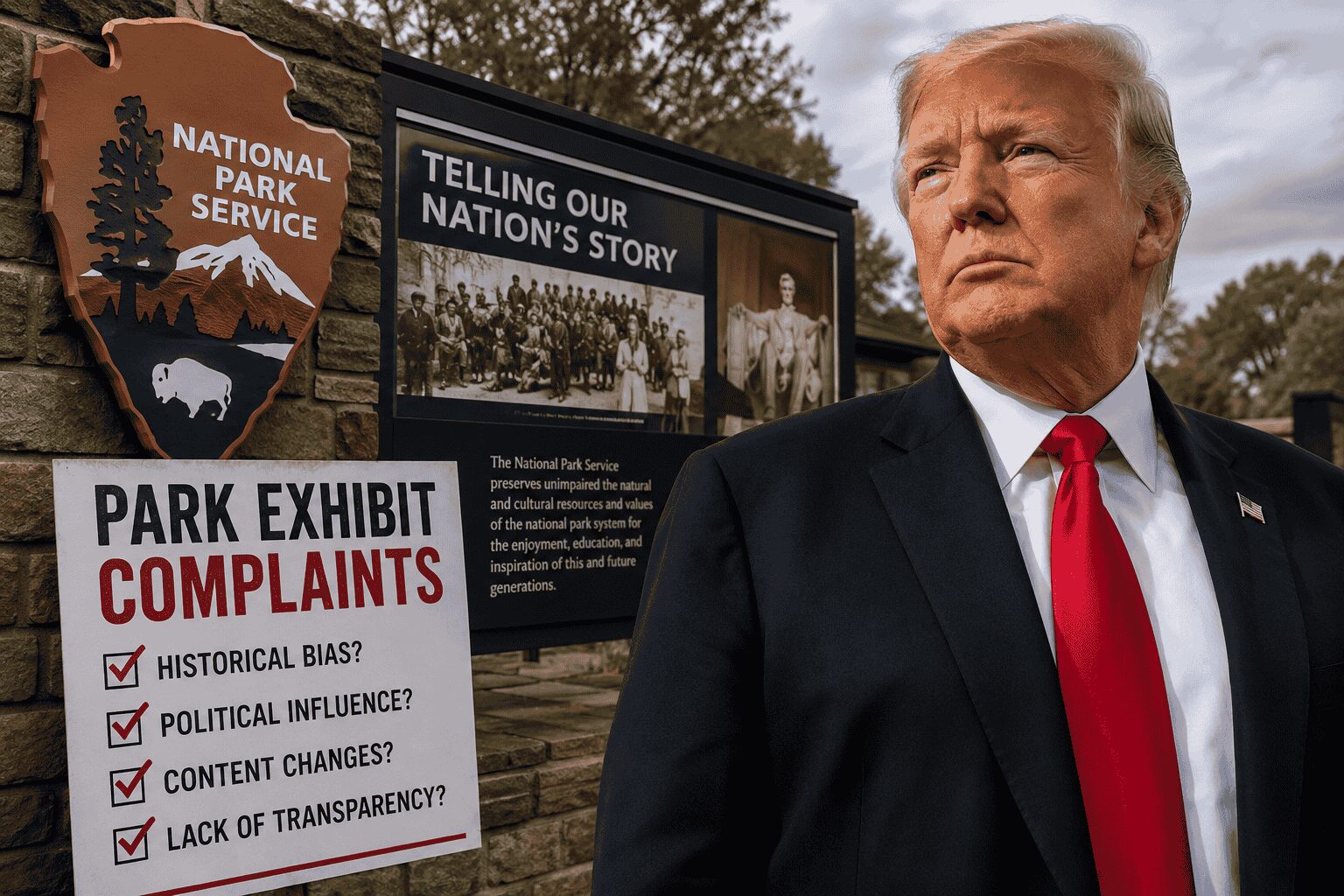
Public parks and national heritage sites in the United States are often seen as neutral spaces dedicated to history, education, and conservation. However, during the Trump administration, several park exhibits and interpretive displays became subjects of public debate and formal complaints. These concerns were primarily linked to how historical narratives were presented, what content was included or excluded, and whether political influence shaped educational messaging within federally managed parks.
This article explores the nature of these complaints, the underlying issues raised by critics, and the broader implications for public history and the Trump administration.
Background: Park Exhibits Under Federal Oversight
In the United States, national parks and monuments are managed by the National Park Service under the Department of the Interior. These sites often include museum-style exhibits, interpretive signs, and educational materials that explain historical events, cultural heritage, and environmental significance.
During the administration of the Donald Trump administration, questions arose regarding whether political considerations influenced the presentation of historical content in these federally funded spaces. While park exhibits are typically developed by historians and subject-matter experts, administrative oversight and review processes can affect final messaging.
Nature of Complaints About Park Exhibits
1. Allegations of Historical Bias
One of the most common complaints involved accusations that certain exhibits presented a selective version of history. Critics argued that some displays minimized controversial aspects of American history, including topics such as slavery, Indigenous displacement, and civil rights struggles.
Opponents of these changes claimed that revisions appeared to align with broader political narratives emphasizing national achievement over historical complexity.
2. Content Review and Political Influence Concerns
Another key issue involved concerns about content review processes. Reports and advocacy groups suggested that internal review mechanisms within federal agencies led to the modification or removal of interpretive language in certain exhibits.
Critics expressed concern that political appointees might have indirectly influenced educational materials, potentially affecting how historical events were framed for the public.
3. Removal or Modification of Interpretive Language
Some complaints focused on the wording used in exhibit panels. In certain cases, language describing systemic injustice or controversial historical figures was reportedly softened or rephrased.
While federal agencies defended these changes as efforts to ensure neutrality and clarity, critics viewed them as attempts to sanitize history.
4. Public Access and Transparency Issues
Advocacy organizations also raised concerns about transparency in exhibit development. Questions were raised about whether changes were documented publicly and whether historians and community stakeholders were adequately consulted.
The lack of clear communication in some cases contributed to public skepticism about the integrity of exhibit content.
Supporters’ Perspective
Not all responses to exhibit changes were negative. Supporters of the administration’s approach argued that national park exhibits should maintain a balanced and non-partisan tone.
They emphasized the following points:
- Exhibits should avoid politically charged language.
- Interpretations should be fact-based and neutral.
- Federal agencies should prevent ideological bias in public education.
- Consistency across national sites is important for credibility.
From this perspective, content revisions were seen as efforts to standardize messaging rather than distort history.
Role of Historians and Educators
Professional historians working with the National Park Service often emphasize that exhibit development is a collaborative process. It typically involves academic research, peer review, and internal agency approval.
During the period of controversy, some historians expressed concern that political scrutiny could discourage nuanced storytelling. They argued that historical interpretation naturally involves complexity and should not be reduced to simplified narratives for the sake of neutrality alone.
Legal and Administrative Framework
National park exhibits are governed by federal Trump administration guidelines that require accuracy, educational value, and public accountability. However, these guidelines also allow administrative leadership significant discretion in approving final content.
This structure creates a tension between:
- Academic independence in historical interpretation
- Administrative oversight by federal leadership
- Public expectations for transparency and neutrality
During the Trump administration, this balance became a focal point of criticism and policy discussion.
Media Coverage and Public Reaction
Media coverage of park exhibit complaints varied widely. Some outlets highlighted concerns about political interference in historical narratives, while others focused on efforts to maintain neutrality in public education.
Public reaction was similarly divided. Advocacy groups, educators, and historians often expressed concern about potential politicization, while other observers viewed the complaints as exaggerated or politically motivated themselves.
Broader Implications for Public History
The debate over park exhibit complaints reflects a larger issue in public history: who decides how history is told in public spaces.
Key implications include:
- Interpretive Authority: Determining whether historians or political appointees have final authority over exhibit content.
- Historical Complexity vs. Accessibility: Balancing nuanced historical interpretation with clear public messaging.
- Trust in Public Institutions: Maintaining public confidence in federally managed educational materials.
- Cultural Representation: Ensuring diverse perspectives are included in national narratives.
These issues extend beyond any single administration and continue to influence how public history is presented in the United States.
Conclusion
Complaints regarding park exhibits during the Trump administration highlight the sensitive intersection of history, politics, and public education. While some critics viewed changes as politically motivated alterations to historical narratives, supporters argued they reflected efforts to maintain neutrality and consistency in federal messaging.
Ultimately, the debate underscores the importance of transparency, scholarly input, and public engagement in shaping how national history is interpreted within federally managed spaces. As public parks continue to serve as educational platforms, the challenge remains to present history in a way that is both accurate and inclusive without becoming a tool for political influence.